
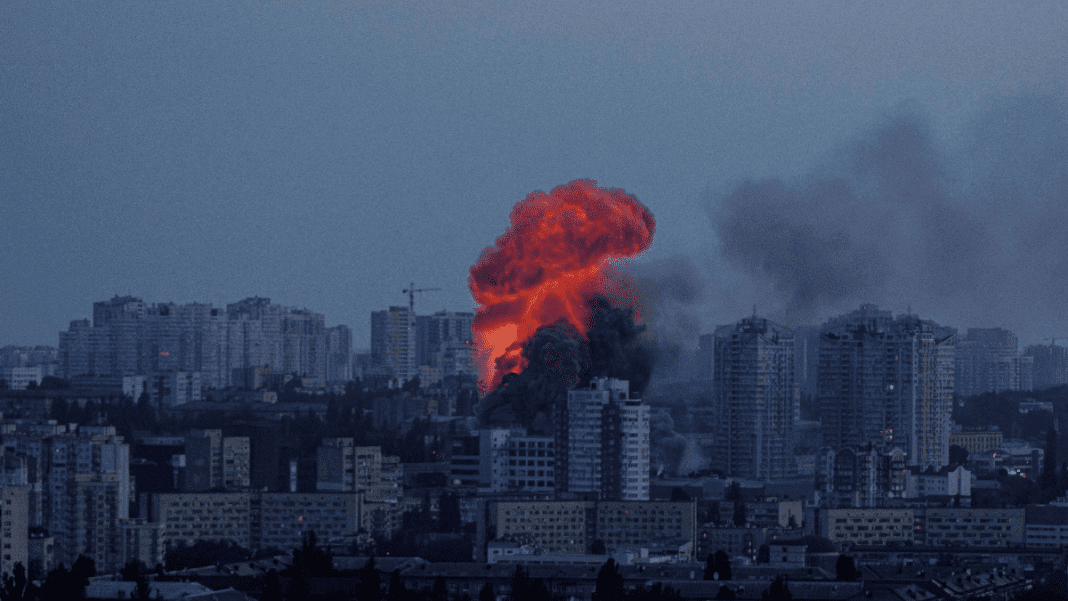

Ukraine faced one of the largest attacks in weeks early on Saturday, December 6, when Russian forces launched several waves of missiles and drones across many regions. The sudden strikes triggered nationwide air raid alerts and caused major damage to cities, homes, and key infrastructure. Officials said several people were injured in different parts of the country as explosions shook multiple areas.
Widespread Strikes Across Cities
According to the Ukrainian Air Force, Russia fired waves of missiles along with dozens of drones aimed mainly at the capital region and nearby cities. Some of the aircraft involved were capable of launching Kinzhal hypersonic missiles, which move at extremely high speeds and are difficult to intercept. Observers spotted drones as far west as Lviv Oblast, showing that the attack covered a very wide area.
Authorities confirmed explosions in Poltava, Lutsk, Odesa, Zaporizhzhia, and Bila Tserkva. In the Kyiv region, strikes heavily hit Fastiv and destroyed the local railway station. The blast sparked fires in nearby towns such as Novi Petrivtsi and Bucha. Officials said a 42-year-old man in Fastiv suffered shrapnel wounds. They also reported that two women in the Vyshhorod district, ages 40 and 46, sustained injuries, and one of them needed hospital care.
Ukrainian forces report downing Russian Su-34 bomber over Zaporizhzhia amid rising air strikes
Ukraine’s railway authority described the hit on Fastiv as a “massive shelling of railway infrastructure.” The damage to such an important station caused concern across the region, especially since rail lines are crucial for transportation, supplies, and evacuation routes. The destruction highlighted how critical structures remain at risk during large-scale attacks.
Damage from Strikes on Homes, Energy Facilities, and Businesses
The Dnipropetrovsk region also reported heavy damage. Fires broke out in several cities after missiles struck residential areas and infrastructure. In Pavlohrad, missiles set homes on fire, while strikes damaged important facilities in Kryvyi Rih. Officials said an 11-year-old boy in Nikopol suffered injuries, adding to the list of civilian casualties.
In Lutsk, strikes ignited major fires after they hit several food warehouses, sending thick smoke over parts of the city. These fires caused temporary power outages as emergency crews worked to contain the flames. In the Lviv region, authorities reported partial blackouts after attacks hit local energy sites.
Emergency services confirmed that strikes targeted energy facilities in the Chernihiv region. The attacks started several fires, but crews quickly brought them under control. They reported no injuries in that area, though the strikes added pressure to the already strained power network.
The wide reach of the attacks showed that Russia targeted several types of infrastructure at once—rail lines, homes, warehouses, and energy sites. This made it difficult for emergency services to respond everywhere at the same time and increased the risk for civilians in multiple regions.
International Implications and Diplomatic Efforts
The attacks took place while important diplomatic talks were happening in Miami between Ukrainian and U.S. officials. These meetings are part of a plan aimed at finding possible ways to end the war. However, Kyiv raised concerns that some early proposals could force the country to give up parts of its territory.
The talks in Miami continued for a third day, following a separate visit by U.S. representatives to Moscow earlier in the week. The initial draft proposal, created without input from European partners, suggested that Ukraine may need to pull back from parts of the Donetsk region. It also included language that would effectively acknowledge Russia’s control over Donetsk, Luhansk, and Crimea. This suggestion was met with sharp criticism in Kyiv and other European capitals.
Due to this backlash, U.S. officials revised the proposal. However, the details of the updated version have not been released. The uncertainty surrounding these talks created tension, especially in light of the fresh strikes across Ukraine.
During the hours-long assault, Poland’s Air Force scrambled fighter jets to secure its airspace, demonstrating how the attack affected not only Ukraine but also nearby countries. The strikes on energy systems, transport hubs, and homes revealed the ongoing intensity of the conflict and the continued threat to civilians throughout the region.