
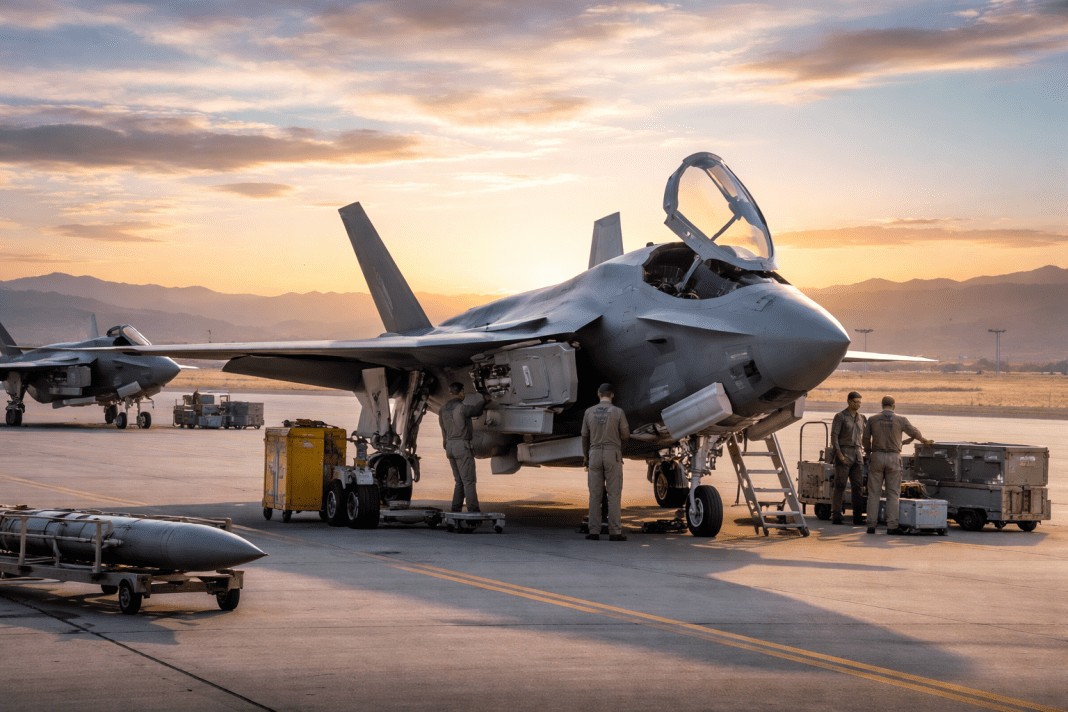

Lockheed Martin has announced an investment of more than one billion dollars to improve the daily performance of the F-35 fighter jet. The funding will increase the availability of spare parts. It will also expand repair capacity. The goal is to ensure more aircraft are ready to fly. The move addresses past maintenance and repair shortages that kept many of the advanced jets grounded.
Strengthening operational readiness of the F-35 fleet
Operational readiness means having aircraft that are reliable, available, and capable of carrying out missions at short notice. For the F-35, this depends heavily on how fast broken parts can be replaced and how efficiently repairs can be completed. Lockheed Martin has acknowledged that earlier gaps in spare parts availability and repair infrastructure limited the number of jets that could be used at any one time.
To improve this situation, the company is increasing spending on building a larger stock of spare parts. This will help reduce waiting times when aircraft need maintenance. At the same time, more resources are being directed toward repair facilities so that damaged or worn components can be fixed more quickly. Together, these steps are expected to raise the number of F-35 aircraft that are mission-ready on a daily basis.
The F-35 is no longer just a fighter — it’s becoming the commander of a robotic air war
Improving readiness also helps reduce long-term costs for operators. When aircraft spend less time on the ground, they can be used more efficiently. This lowers the need to buy additional jets or maintain large reserve fleets. For Lockheed Martin, stronger operational performance also builds confidence in the F-35 program and supports its long-term stability.
The company has stated that this effort is part of a wider push to deliver a high-quality aircraft. By improving real-world performance, Lockheed Martin aims to create operational benefits for users while improving efficiency across production and support systems.
Continued upgrades and steady production levels
In addition to improving maintenance and readiness, Lockheed Martin is investing heavily in upgrading the F-35’s capabilities. Around one billion dollars is being allocated to support future Block 4 upgrades. These upgrades are designed to improve the jet’s systems and software, helping it remain effective in modern combat environments.
Although total deliveries in 2026 are expected to be lower than the previous record year, production levels will remain steady. The company plans to continue producing around 156 aircraft per year. Maintaining this level of production supports supply chains and helps sustain the global network of suppliers involved in the program.
US Air Force orders second batch of JSM missiles to expand precision strike options for F-35
During 2025, Lockheed Martin secured contracts worth around 15 billion dollars related to the F-35. These agreements covered new production batches, maintenance services, and revised commitments for future production lots. The contracts highlight continued demand for the aircraft and long-term support for the program.
The F-35 program has also faced challenges. Lockheed Martin absorbed a large financial penalty linked to a classified aviation development effort. Despite this setback, the company continued to invest in advanced projects and maintained strict risk management practices. This shows a focus on keeping major defense programs on track while managing unexpected costs.
Investment in advanced aviation and unmanned systems
Beyond the F-35, Lockheed Martin is also investing in advanced aviation development. One key effort includes a self-funded prototype unmanned aircraft, often described as a wingman drone. This aircraft is designed to operate alongside crewed fighter jets during complex missions.
The unmanned system is intended to integrate closely with fifth-generation platforms like the F-35. By working together, crewed and uncrewed aircraft can share data, extend mission range, and reduce risk. Although Lockheed Martin did not secure the first major contract for such systems, it continues to seek opportunities with both the Air Force and the Navy.
Lockheed Martin explores F-35 upgrade to expand fighter capabilities toward 6th generation
These investments come at a time of strong financial performance. In 2025, Lockheed Martin reported revenues of 75 billion dollars and an operating profit of 6.7 billion dollars. Its order backlog grew for the fourth consecutive year, reaching 194 billion dollars. This growth reflects steady demand across defense programs, including aircraft production, maintenance services, and advanced aviation technologies.
Overall, the increased spending on F-35 readiness, upgrades, and unmanned systems highlights how Lockheed Martin is strengthening existing programs while continuing to invest in advanced aviation development.