
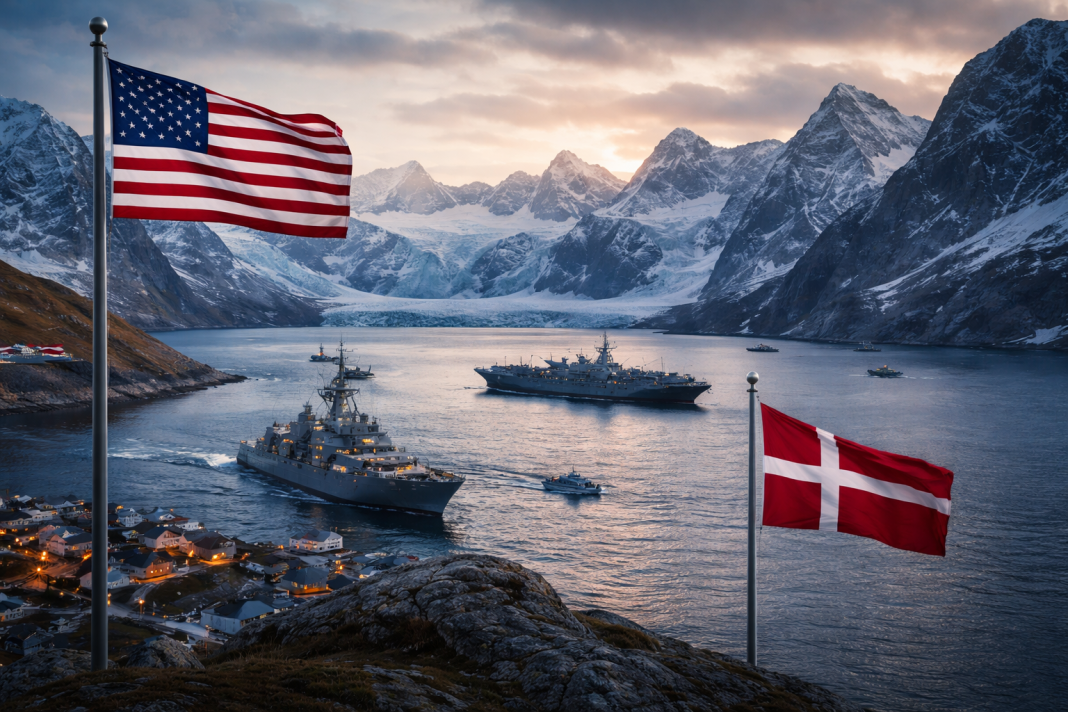

After weeks of pressure and bold claims, Donald Trump backed away from efforts to gain greater control over Greenland. He settled for an agreement that largely restated existing defense arrangements. The episode shows that in today’s interconnected world, even powerful countries face limits when contested sovereignty threatens global markets and alliances.
Military Pressure Met Economic Reality
Trump’s interest in Greenland focused on its strategic Arctic location and its valuable rare earth minerals. To push talks forward, the U.S. administration used tough tactics, including tariff threats against European allies and public hints that military options were possible.
In January, Trump announced a “framework agreement” with Mark Rutte, NATO’s chief, presenting it as a diplomatic breakthrough. In reality, the deal largely repeated defense arrangements in place since 1951. Greenland stayed under Danish sovereignty, and the United States gained no new territorial control.
Russia warns of military response if Greenland becomes heavily militarized
The retreat was not caused by weak military power. Instead, taking disputed territory would have created instability across alliances, markets, and legal systems. Investors and allies depend on stability, and when that stability is threatened, the economic and political costs rise quickly.
How Alliances and Markets Push Back Together
Modern economies are deeply connected. Countries trade with each other, share supply chains, and depend on common legal rules. When one major power threatens to change borders or ignore alliances, the effects spread far beyond the location involved.
During the Greenland standoff, several NATO countries reacted with concern. Nations including Norway, France, Germany, Britain, and others took part in coordinated military activities in and around Greenland. These moves were widely seen as signals that allies were worried about U.S. intentions. Rather than accepting pressure, they showed unity and caution.
This matters because alliances work on trust. Countries stay aligned when they believe commitments will be honored. When that trust weakens, allies start to protect themselves. They invest more in their own defenses and reduce reliance on a single partner.
Greenland police fine German broadcaster after US flag stunt sparks public outrage
Markets notice these signals too. Large investors, especially pension funds, plan decades ahead. During the crisis, Denmark’s AkademikerPension announced it would reduce its exposure to U.S. government debt. The decision was linked to concerns about political reliability. For long-term investors, even small doubts about stability can change how money moves.
These reactions were not acts of protest. They were risk management. When sovereignty is contested, legal systems become unclear. Contracts may be challenged. Regulations can change. For investors who need 40 or 50 years of certainty, that level of risk is unacceptable.
Why Sovereignty Can No Longer Be Secured by Territory Alone
In the past, powerful countries could take land and benefit from it. During the Cold War, the United States effectively controlled Greenland for military reasons, even though Denmark officially governed it. Global markets were less connected then, and security goals often mattered more than economic risks.
Today, the situation is very different. Rare earth mining, a key reason Greenland drew attention, needs massive investments that last for decades. Companies require clear laws, stable governments, and strong relations between countries. When land ownership is disputed, these conditions disappear.
Any attempt to take control of Greenland would likely have sparked legal fights in European courts, damaged relations with NATO allies, and possibly triggered trade retaliation. Supply chains could have been disrupted, and trust in U.S. leadership weakened. These risks would have made long-term mining projects far less attractive to investors.
This created a clear contradiction. The move meant to unlock economic value would have destroyed the stability needed to create that value. Even a successful military action would not have solved the problem, because the biggest damage would come from global reactions, not events in Greenland itself.
The Greenland episode shows that modern power comes less from owning land and more from maintaining trust within global systems. Influence now flows through alliances, laws, and markets. When these systems are disturbed, even the strongest nations face real limits.