
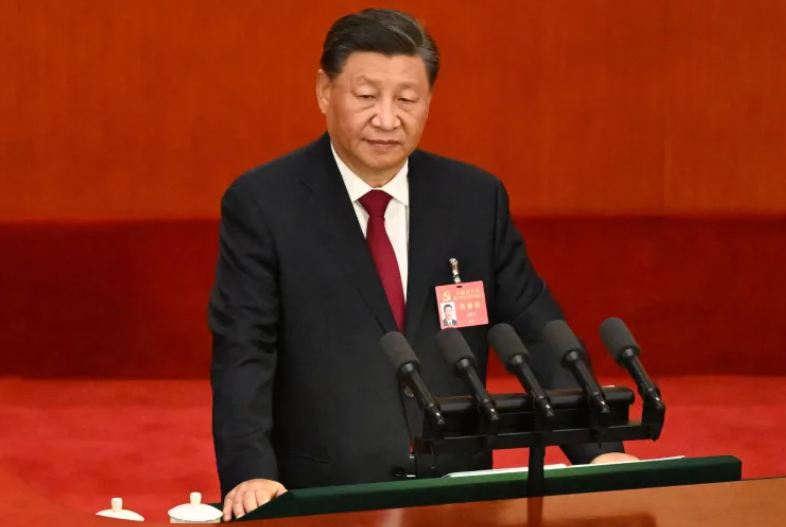

Recent U.S. and Israeli strikes on Iran, including its leader’s death, reinforced Xi Jinping’s belief in the need for strength. He warns that the U.S. threatens China and has built a “Great Wall of Steel” army. Xi sees military power and a sound military strategy as essential to protect the nation and earn respect, viewing Trump’s actions as proof that diplomacy alone is not enough.
China Monitors U.S. Power and Refines Its Military Strategy
Chinese experts say President Trump’s willingness to strike countries like Iran and Venezuela shows that the United States uses military power to pursue its goals. Both Iran’s Ayatollah Ali Khamenei and Venezuela’s Nicolás Maduro were strategic partners to China, making the attacks especially worrying. While China does not expect the U.S. to target Xi directly because of China’s nuclear capability, Beijing sees the U.S. as its biggest long‑term threat. Analysts say China must adapt its military strategy to respond to unpredictable American actions.
Political scientists like Zheng Yongnian warn that U.S. allies such as Japan and the Philippines could become staging points for broader conflicts if they follow Washington’s lead without restraint. Experts argue that China’s military strategy must consider regional power dynamics to limit adversaries’ advantages.
China-made weapons face scrutiny after reported failures in Pakistan, Venezuela and Iran
Other analysts, including Shen Dingli, stress that recent U.S. strikes force China to reassess the balance of power. China is watching closely to refine its military strategy around firepower, self‑reliance, and defense readiness.
Lessons From U.S.-Israeli Strikes Shape China’s Defense
China’s military recently shared a graphic highlighting key lessons from the Iran attacks. The top lesson was “guard against the enemy within,” reflecting Beijing’s concerns about foreign spies and internal disruption. Xi Jinping has already strengthened domestic security through anti-corruption campaigns and expanded intelligence measures, which are central to China’s broader military strategy.
The strikes also emphasized the importance of superior firepower. Analysts say this confirms Xi’s long-term push to modernize the People’s Liberation Army, which now includes advanced stealth drones, hypersonic missiles, and a powerful navy. These upgrades are part of a comprehensive military strategy designed to counter U.S. influence and strengthen China’s defense capabilities.
China develops hypersonic missile components with steel alloys amid debate over aerospace materials
Military modernization is particularly focused on sensitive regions such as Taiwan. China aims to ensure it can protect its interests if challenged. Maintaining a strong and technologically advanced military remains a top priority for Beijing, reinforcing the importance of a robust military strategy.
China is also pursuing technological and economic power. Its five-year plan prioritizes artificial intelligence, quantum computing, and other strategic industries. Control over critical minerals further enhances Beijing’s leverage in global trade and defense production, complementing China’s overall military strategy and position as a global power.
Xi Sees Power as the Path to Security and Influence
Experts in China stress that diplomacy alone is not enough. The timing of U.S. strikes while talks were ongoing in Iran is seen as a warning that negotiations can be overshadowed by military action. Chinese state media noted that such actions show diplomacy is “an instrument subject to the whims of the dominant power,” not a forum of equal negotiation. A clear and flexible military strategy remains essential in Xi’s view.
China continues to portray itself as a stabilizing power that seeks peace through strength rather than domination. Scholars like Wang Dong from Peking University argue that unlike the U.S., which relies on raw force, China’s goal is to maintain stability and protect itself from external threats.
Iran close to deal with China for supersonic anti-ship missiles that could threaten US Navy
At the same time, foreign analysts point out that China’s growing military capabilities may also draw it into global conflicts in the future. While Beijing emphasizes defense and stability, its expanding reach and advanced technology could make involvement in international disputes more likely.
The ongoing U.S.-Israel-Iran conflict is serving as a powerful reminder in Beijing that strength matters. Xi Jinping sees Trump’s reliance on military action as confirmation that China must continue building power, both militarily and technologically, to defend itself and assert influence. China is studying these strikes closely, reinforcing its focus on superior firepower, self-reliance, and vigilance against internal and external threats—all key components of its military strategy.