
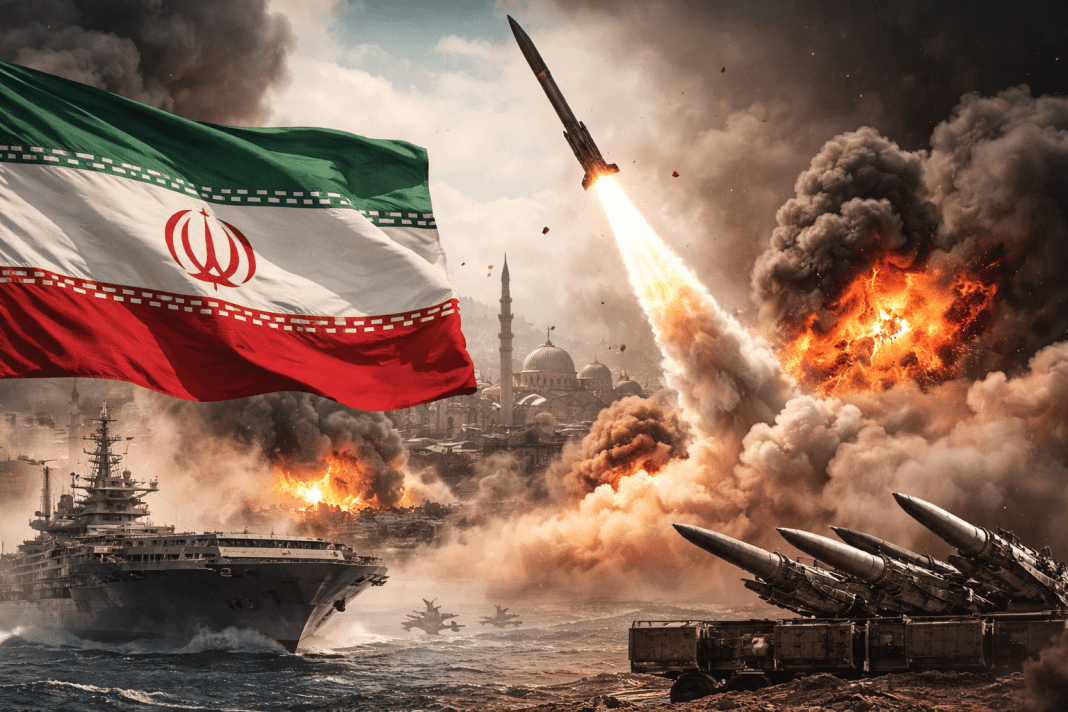

China has warned the United States against taking any military action in Iran, calling such moves “military adventurism” that could plunge West Asia into chaos. Speaking at the United Nations Security Council (UNSC), Chinese envoy Fu Cong described Iran as an “independent sovereign state” and stressed that the region should not become a “wrestling ground for major power rivalry,” especially amid the ongoing West Asia conflict.
China Issues Strong Warning Against Military Action in Iran
“Any military adventurism will only push the region into an abyss of unpredictability,” Chinese envoy Fu Cong told the United Nations Security Council. He added that countries outside the region should not turn West Asia into a victim of geopolitical contests, stressing that foreign interference could worsen tensions.
Fu also urged all parties to fully respect the purposes and principles of the United Nations Charter. He emphasized that no nation should interfere in the internal affairs of other countries, highlighting the importance of diplomacy and restraint in preventing further instability in the region.
United States moves warships toward Iran as tensions in the Gulf sharply escalate
China’s warning comes as U.S.-Iran tensions reach a critical flashpoint. Analysts say Beijing’s statement is a clear signal to Washington that unilateral strikes could have serious consequences, potentially escalating the West Asia conflict and threatening broader regional stability.
Trump Intensifies Pressure as Iran and Allies Respond in West Asia Conflict
U.S. President Donald Trump has intensified his rhetoric against Iran, issuing fresh warnings that “time is running out” and suggesting that any forthcoming attack on Tehran will be “far worse” than previous threats. Trump also urged Iran to negotiate a nuclear deal that ensures the country does not acquire nuclear weapons.
This warning follows the U.S. deployment of two naval “armadas” in international waters near Iran, signaling a heightened readiness for potential military action in the West Asia conflict zone. However, Iran has pushed back strongly against U.S. threats. Iranian Foreign Minister stated that Tehran’s forces have their “fingers on the trigger” and are ready to respond “immediately and forcefully” to any attack.
Contrary to U.S. claims, Iran has not been in contact with U.S. special envoy Steve Witkoff recently, nor has it requested any negotiations. Nevertheless, Tehran’s mission to the United States emphasized that it is open to dialogue—but only on terms of mutual respect.
Iran’s allies in the so-called “Axis of Resistance” have also issued stark warnings amid the West Asia conflict. Hezbollah chief Naim Qassem stated that any war on Iran would ignite the entire region. The group expressed its readiness to defend Iran’s Supreme Leader, Ayatollah Ali Khamenei, and raised concerns about reports suggesting attacks on their leadership in the event of U.S. action. Iraqi paramilitary group Kataib Hezbollah warned of “total war” if Iran is targeted, while Houthi rebels in Yemen threatened new attacks on ships passing through the Red Sea corridor.
Germany Signals Urgency Amid Regional Unrest
Adding to the pressure, German Chancellor Friedrich Merz commented on the volatile situation, highlighting the fragility of Iran’s internal regime. Merz said that the current government in Tehran relies on “sheer violence and terror” to maintain control and noted that “it could be a matter of weeks” before the regime faces critical instability, further intensifying the West Asia conflict.
Germany’s statement underscores the growing international concern over the rapidly escalating U.S.-Iran tensions, particularly as economic protests in Iran continue to challenge the regime’s authority. Merz’s remarks were made in the context of global fears that renewed conflict could destabilize the wider West Asia region. Experts say that the ongoing West Asia conflict involves not just Iran and the U.S., but also several regional actors, making the situation highly unpredictable.
The convergence of warnings from China, escalating threats from President Trump, and Iran’s stern pushback has created a tense standoff in the West Asia conflict zone that experts are watching closely. Military deployments, verbal confrontations, and alliances in the region have all contributed to a situation where even small incidents could have far-reaching consequences for the West Asia conflict.