
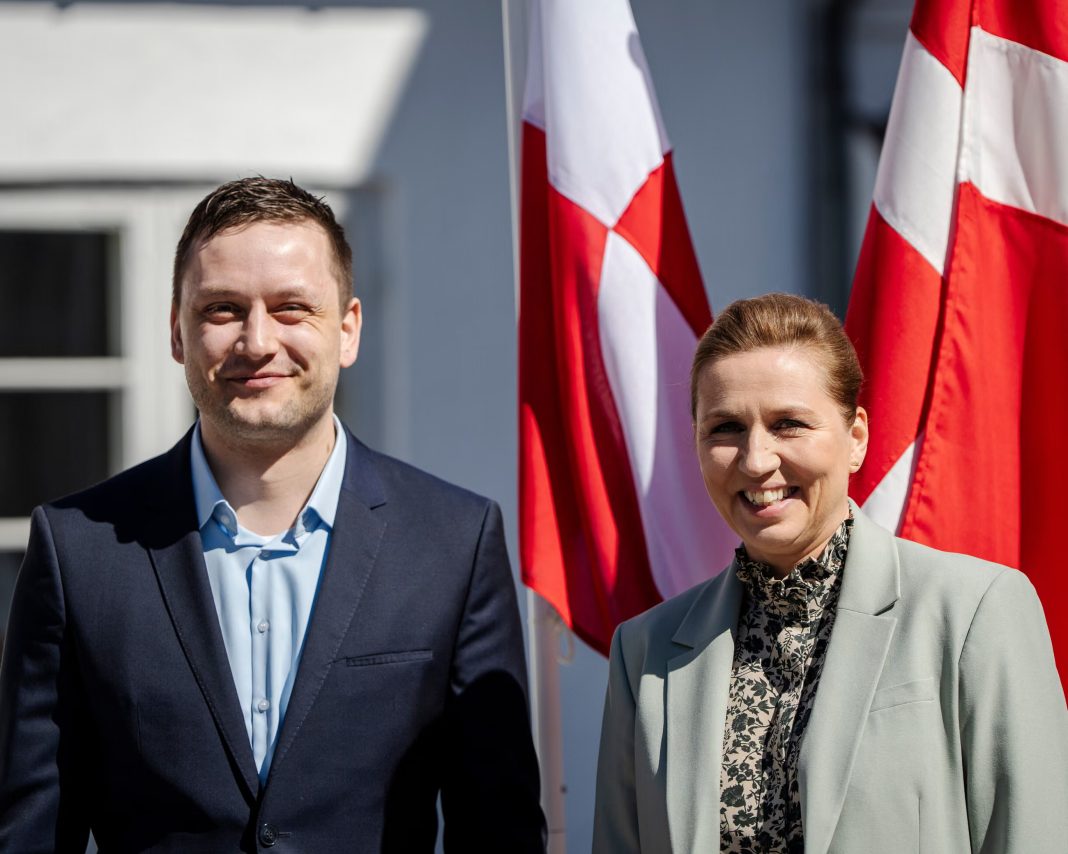

The relationship between the United States, Denmark, and Greenland has entered a sensitive moment after recent U.S. actions brought renewed attention to Greenland’s political status. What might appear at first as a diplomatic appointment has instead reopened a long-standing debate about borders, sovereignty, and control in the Arctic. Leaders in both Denmark and Greenland responded quickly and firmly, making it clear that Greenland is not available for takeover or control by any foreign country.
This issue has drawn global attention because it touches on international law, security, natural resources, and the rights of people living in one of the world’s most strategically important regions. While no military action or direct threat has been made, the language and timing of recent moves raised concerns strong enough to trigger a rare joint warning from Denmark and Greenland.
Why Greenland matters so much in global politics
Greenland is the largest island on Earth, even bigger than many countries. It sits between North America and Europe, right in the Arctic region. This location makes it extremely important for global security, air travel routes, and military monitoring. The Arctic has become more important in recent years because melting ice is opening new shipping paths and making it easier to access underground resources.
Greenland is rich in minerals, including rare earth elements that are used in phones, electric vehicles, renewable energy systems, and advanced technology. Because of this, many powerful countries have taken interest in Greenland. At the same time, the island plays a key role in weather monitoring, satellite tracking, and early-warning defense systems.
Greenland governs most of its own daily affairs. It manages education, healthcare, natural resources, and local laws. However, Denmark still handles defense and foreign policy. This arrangement gives Greenland a high level of self-rule while remaining part of the Kingdom of Denmark.
Most people living in Greenland support having control over their own future. While many favor eventual independence, surveys show they do not want to become part of another country. Greenland’s political status is clearly defined, and any change must come from the will of its people, not from outside pressure.
What triggered the strong reaction from Denmark and Greenland
Tensions rose after the United States announced the appointment of a special envoy focused on Greenland. While envoys are often used for diplomacy, this move caused concern because it followed repeated statements suggesting that Greenland should fall under U.S. control for security reasons.
These statements were seen as crossing a diplomatic line. Denmark and Greenland responded with a rare joint message stating that national borders must be respected and that no country has the right to annex another. The response was firm but calm, stressing international law rather than confrontation.
Denmark made it clear that Greenland is an inseparable part of the Danish kingdom under current law. Greenland’s leadership echoed this, stating clearly that Greenland belongs to its people and that decisions about its future are made at home.
This reaction was not just symbolic. It showed unity between Denmark and Greenland at a time when global powers are paying closer attention to the Arctic. The message was simple and direct: interest in Greenland does not give anyone ownership or authority over it.
Greenland’s 13 billion-barrel oil discovery sparks U.S. and Canadian scramble for Arctic control
The situation also led to diplomatic steps, including calls for explanations through official channels. These actions were taken to clarify intentions and to ensure that respect for sovereignty remains central to international relations.
How the Arctic and sovereignty became a sensitive global issue
The Arctic has become one of the most closely watched regions in the world. As ice melts, new shipping lanes are emerging that can shorten travel between Asia, Europe, and North America. This has increased competition and concern among major powers.
Energy security, climate research, and military readiness are all tied to the Arctic. Because of this, countries are strengthening their presence and influence in the region. Greenland’s position makes it a key point in this wider global picture.
At the same time, international law clearly states that borders cannot be changed by force or pressure. Sovereignty is a core principle shared by most nations. This is why Denmark and Greenland emphasized legal foundations rather than political arguments in their response.
Greenland has also been careful to protect its culture, environment, and way of life. Large-scale foreign involvement raises concerns among residents about land use, environmental damage, and political influence. For this reason, Greenland closely controls how foreign partnerships are formed.
The current situation reflects these realities. While cooperation with other countries already exists in areas such as research and defense agreements, it operates within agreed rules. Any suggestion that Greenland’s status could be changed without consent immediately triggers resistance.
This episode has highlighted how sensitive Arctic politics have become. Even symbolic moves can carry heavy meaning. The firm response from Denmark and Greenland shows how seriously sovereignty is taken, especially in regions where global interests are growing fast.
Denmark steps in with billion-crown lifeline to ease Greenland’s economic and healthcare crisis
The Greenland issue is not about future plans or speculation. It is about existing borders, legal status, and respect between nations. The facts are clear: Greenland governs itself, Denmark protects its sovereignty, and international law does not allow annexation. These principles formed the foundation of the response and continue to guide how the issue is handled.