
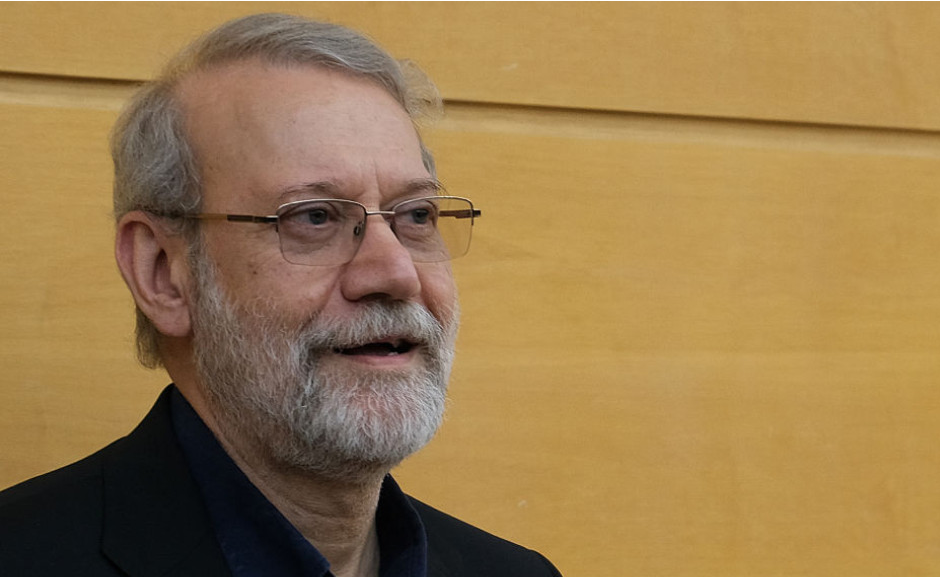

The reported killing of Ali Larijani in an Israeli strike has shaken Iran’s political and security system. While some compare it to the earlier death of Ali Khamenei, analysts say Larijani’s loss could create deeper challenges. According to The Guardian, his influence went far beyond his official role, as he acted as a crucial link connecting powerful groups within Iran and key international partners.
Ali Larijani and His Unique Role Connecting Every Power Center
Ali Larijani was not a typical political figure. While many leaders in Iran align with either the military, religious leadership, or political system, he stood apart. He maintained strong ties with the Revolutionary Guards while also building relationships with more moderate politicians, allowing him to work across different power groups.
This made him a rare figure who could communicate with everyone. Beyond internal politics, he also had strong connections with global powers like China and Russia. These relationships were especially important during periods of tension with the West, helping Iran maintain crucial international links.
Top Iranian strategist Ali Larijani reported killed in latest Israeli military operations
Unlike Ali Khamenei, whose authority was more centralized, Larijani worked quietly behind the scenes. He acted as a bridge between military and political leaders, helping balance competing interests and prevent internal conflicts—something that will be very difficult to replace.
More Than a Title: The Power of a “Middle Man”
Ali Larijani held an important position as head of Iran’s Supreme National Security Council, but his real influence came from how he used that role. He was not just involved in making decisions; he played a key part in coordinating them. His ability to bring different arms of the system together made him far more influential than his title alone might suggest.
During times of rising tension, Larijani ensured that both military and political leaders remained aligned. This coordination helped prevent confusion and reduced the chances of miscalculations, which can be dangerous during conflicts. His presence acted as a stabilizing force in moments when quick and clear decisions were critical.
Leaked audio claims Mojtaba Khamenei escaped airstrike that killed Ali Khamenei by minutes
He also carried strong credibility across multiple groups. Military leaders trusted his understanding of security matters, while political figures saw him as practical and solution-oriented. At the same time, international partners viewed him as a reliable point of contact who could clearly communicate Iran’s position.
Because of these qualities, analysts often described him as a “power broker.” In simple terms, he acted like a bridge connecting different centers of power. Without such a figure, systems can become divided and harder to manage, making his absence deeply significant.
A Dangerous Gap Inside Iran’s Leadership
The biggest impact of Ali Larijani’s death may be the gap it leaves behind. Analysts say he was one of the few leaders capable of handling both internal tensions and external pressures at the same time. His absence removes a key option for managing crises smoothly, especially in moments when careful coordination is needed.
In situations where Iran might need to negotiate or reduce tensions, Larijani could have played a central role. He had the experience, trust, and credibility to act as a mediator. Without him, decision-making may become more rigid, allowing hardline leaders—who prefer stricter approaches—to gain more influence.
Ali Larijani alleges Epstein-linked network planning 9/11-like incident to blame Iran
This shift could make communication with other countries more difficult, as such figures may lack the same level of international acceptance. Inside Iran, the challenge is equally serious. Larijani helped connect the military, political institutions, and strategic bodies, ensuring they worked together effectively.
His absence weakens that coordination, affecting how quickly and clearly decisions are made during crises. Another concern is the lack of strong alternatives. With very few leaders able to step into his role, the system becomes more fragile, highlighting how deeply his presence shaped Iran’s overall functioning.