
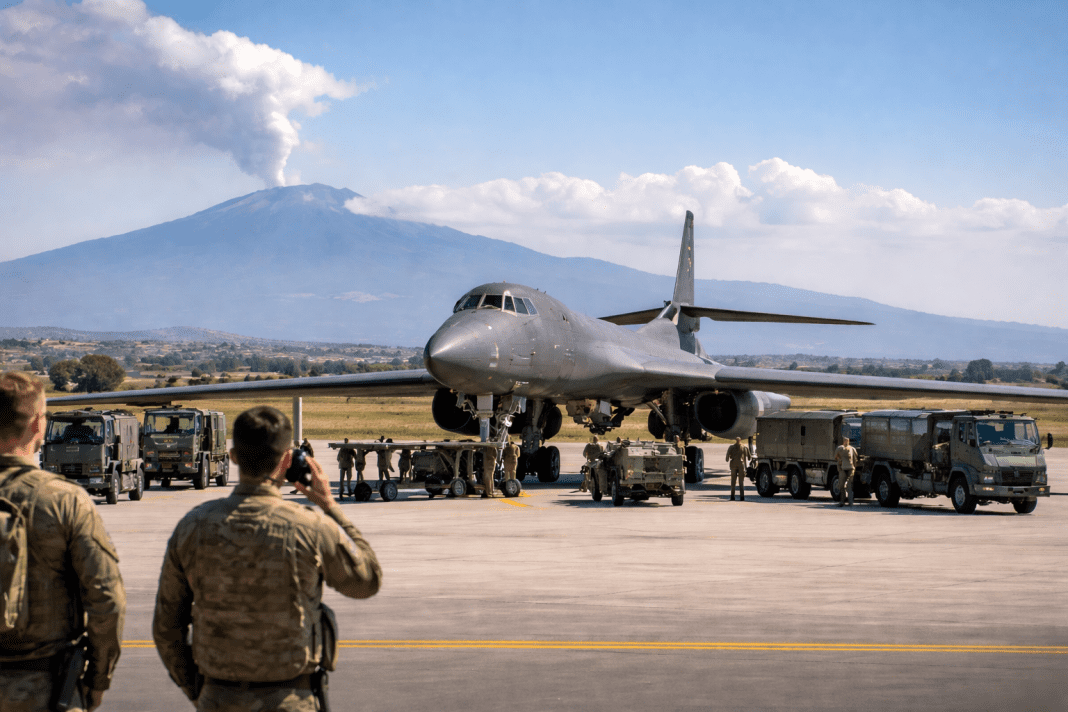

A new strain has emerged within NATO. Differences are growing over support for US military operations in the Middle East. Recent developments have raised concerns, including issues linked to Sicily. These concerns involve procedures, communication, and coordination. They are affecting long-standing alliances.
Growing Tensions Over Military Base Use in Europe
A new disagreement has emerged within NATO as a European country showed hesitation in supporting a United States military operation. The situation has drawn attention due to long-standing defense cooperation between allies and the sensitive nature of shared military arrangements in Sicily.
Reports indicate that American bombers were scheduled to land at a military base in Sicily before continuing toward the Middle East. However, the request for landing permission in Sicily reportedly arrived very late, when the aircraft were already airborne. The Sigonella base has been used by the United States for many years, and operations from the facility in Sicily usually follow established procedures agreed upon by both sides.
Donald Trump calls NATO a paper tiger and considers withdrawing the United States
The use of military bases abroad is governed by formal agreements between governments. These agreements require official approval before any operation can proceed. They also involve consultation with parliament to ensure transparency and oversight. Officials stated that all requests are handled in line with existing rules and reviewed carefully on a case-by-case basis, following standard international procedures.
Strict Rules and Delayed Communication Raise Concerns in Sicily
The timing of the request has raised questions among officials. Receiving a request after aircraft have already taken off makes it difficult for authorities to follow proper procedures. It also puts pressure on decision-makers, who must act quickly while still respecting legal requirements.
Military cooperation within NATO usually depends on strong communication and trust between allies. When procedures are not followed, it can create uncertainty and tension. In this case, the lack of advance notice appears to have caused concern.
Authorities emphasized that their position has not changed. They reiterated that all decisions regarding military base use must follow international agreements and national laws. This includes ensuring that parliament is involved when required.
Germany rejects Trump’s call for NATO to secure the Strait of Hormuz
The situation highlights how complex military coordination can be, even among close allies. While countries may share common goals, they also have their own rules and responsibilities. These must be respected in every operation.
At the same time, the United States has interpreted the response as a sign of hesitation. Some officials see it as reluctance among European partners to fully support ongoing operations in the Middle East.
This perception could add to existing tensions within the alliance. NATO relies on cooperation between its member states, and any disagreement can affect how smoothly joint operations are carried out.
Spain Takes Stronger Stand by Blocking Access
While the situation in Sicily reflects caution, another NATO member has taken a stronger stand. Spain has refused to support US military operations linked to the Middle East. Reports indicate that Spain denied access to its military bases for the mission, signaling a clear position on the issue.
In addition, Spain closed its airspace to American aircraft involved in the conflict on Monday, March 30. This is a significant move, as it prevents military planes from flying over the country. As a result, aircraft may need to take longer or alternative routes, which can affect both timing and operational planning.
In a major shift, survey finds citizens of key Western allies now trust China over the United States
Spain’s decision goes beyond simply reviewing requests. It shows a firm refusal to assist in the operation, setting it apart from other countries that are still considering such requests individually. This action highlights a stronger stance compared to the more cautious approach seen elsewhere.
These developments underline differences within NATO. While some members support military actions, others remain cautious or unwilling to get involved. Each country follows its own legal procedures and national interests, and such decisions can directly impact coordination, especially when access to bases and airspace plays a crucial role.