
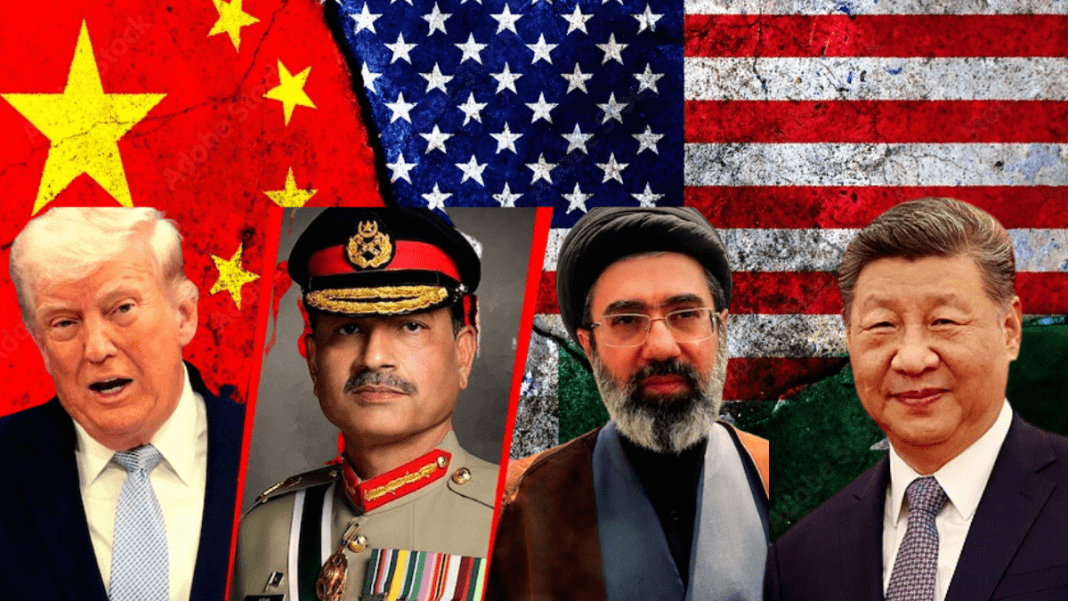

A sudden shift from the brink of war to a ceasefire within hours has raised questions about what really happened behind the scenes. Tensions between the United States and Iran peaked on Tuesday with strong warnings, broken diplomatic ties, and fears of a major conflict. Yet, in just 10 hours, both sides agreed to a ceasefire, and Iran reopened the Strait of Hormuz — a key global oil route. China has now come under scrutiny.
This sudden change has sparked a key question: who actually made the ceasefire possible?
China’s Quiet but Decisive Intervention
For most of the month-long conflict, China stayed in the background while countries like Pakistan communicated between the United States and Iran. However, as tensions rose and the threat of a full-scale war increased, China stepped in directly. Reports suggest Chinese officials engaged with Iran at the highest level just hours before the ceasefire, marking a shift from indirect to direct diplomacy.
Earlier, China worked through intermediaries such as Pakistan, Turkey, and Egypt, but growing pressure pushed it to act more firmly. Its strong economic and political ties with Iran gave it greater influence, unlike Pakistan’s role, which was largely limited to passing messages between both sides.
At the United Nations Security Council, China, along with Russia, blocked a resolution that could have allowed military action to reopen the Strait of Hormuz, calling it biased. While China has not officially confirmed its role, its actions suggest it played a key part behind the scenes.
Pakistan’s Role Raises Questions
While the United States openly credited Pakistan for helping secure the ceasefire, several developments have raised questions about how significant its role actually was. Pakistan did act as a communication bridge between the US and Iran, helping pass messages and keeping diplomatic channels open, but its overall influence appears limited.
A major controversy emerged from a social media post by Pakistan’s Prime Minister. Before the ceasefire announcement, he shared a message asking for a delay in military action and urging Iran to reopen the Strait of Hormuz. However, the original version of the post reportedly included the words “Draft – Pakistan’s PM message,” which drew global attention and triggered speculation about who actually authored it.
Larijani’s death could shatter Iran’s strategic ties with China and Russia
This unusual detail led some analysts to suggest the message may not have been fully written by Pakistan, but instead prepared elsewhere and shared by it. It also raised broader doubts about whether Pakistan was acting independently or simply relaying positions shaped by more powerful actors.
Adding to the uncertainty, Iran reportedly showed reluctance to engage directly with Pakistan during the conflict. It refused to meet US officials on Pakistani soil and stated that Pakistan’s diplomatic platforms were not suitable for such talks. Experts argue that while Pakistan helped facilitate communication, real mediation requires influence over decisions and outcomes, and that level of impact may have come from other players behind the scenes.
Why China Had Strong Reasons to Act
China’s involvement was not only diplomatic but also closely tied to its own strategic interests. As the world’s largest importer of crude oil, China depends heavily on oil routes passing through the Strait of Hormuz. During the conflict, when Iran restricted access to this key waterway, global oil supplies were disrupted and prices began to rise.
Although China managed to reduce immediate pressure by using its reserves and continuing limited imports through alternative channels, the risk of a full-scale war remained a major concern. A wider escalation could have completely stopped Iranian oil exports, severely impacting China’s energy security. There was also the possibility of the US gaining control over key shipping routes, which could have further restricted China’s access to oil flows.
China and Pakistan join forces to present a new five-point peace plan for the Middle East
Beyond energy concerns, a prolonged Middle East conflict could have destabilized the global economy. As a major manufacturing hub, China relies on stable international markets to sustain its exports and economic growth. Any major disruption would have posed significant risks.
These combined factors gave China strong motivation to prevent escalation. By intervening at a critical moment, it aimed to safeguard its interests while contributing to de-escalation. Meanwhile, Pakistan continued to act as a communication channel, and many observers widely see China’s strategic involvement as providing the decisive push toward the ceasefire.