
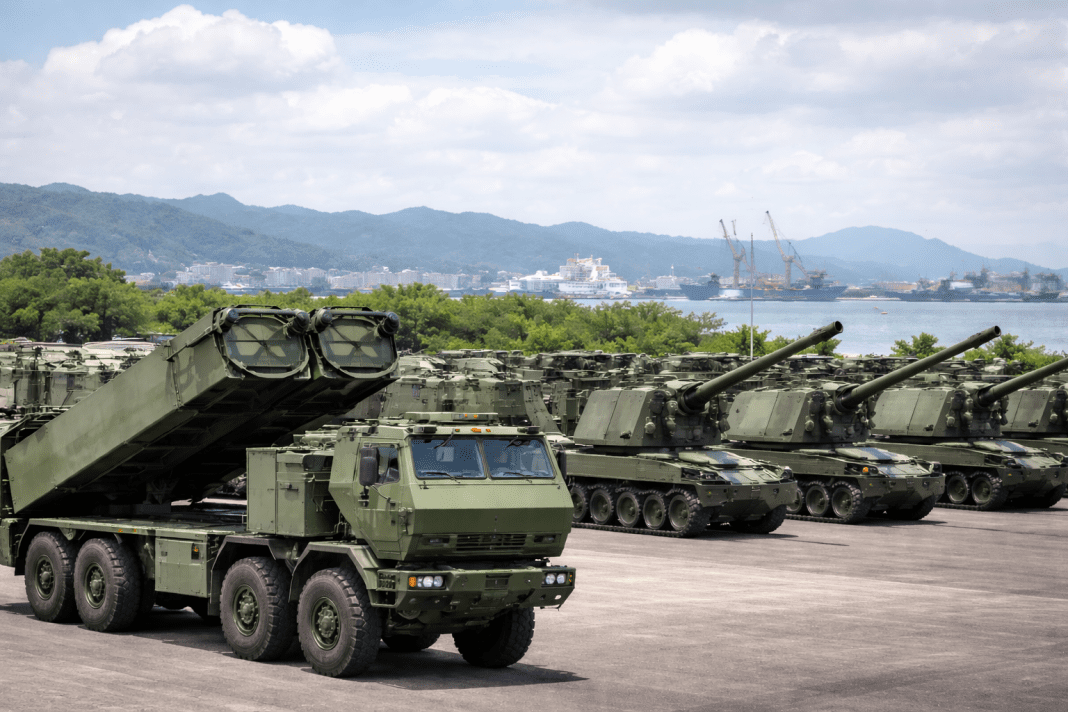

The United States has approved a more than $10 billion arms sales package for Taiwan, including missiles, drones, and artillery, highlighting strong US support for the island’s defense. The move, announced by the State Department, is expected to anger China amid ongoing tensions over Taiwan.
Details of the $10 Billion Arms Sales Package
The arms sales package approved by the United States includes eight separate agreements worth more than $10 billion in total and focuses on strengthening Taiwan’s defensive capabilities. A major portion of the deal centers on mobile and long-range weapons designed to improve deterrence. The package includes 82 High Mobility Artillery Rocket Systems, known as HIMARS, and 420 Army Tactical Missile Systems, or ATACMS, with a combined value of more than $4 billion.
The United States will also sell 60 self-propelled howitzer systems and related equipment worth more than $4 billion. These artillery units can fire powerful shells and relocate quickly to avoid counterattacks. The deal further includes drones valued at more than $1 billion, reflecting Taiwan’s push to modernize its military with advanced surveillance and defense technology.
In addition, the United States approved more than $1 billion in military software to help Taiwan better coordinate its defense systems. Other items include Javelin and TOW anti-tank missiles worth over $700 million, helicopter spare parts valued at $96 million, and refurbishment kits for Harpoon anti-ship missiles worth $91 million.
Why the US Says the Sales Are Important
In official statements, the US State Department said the arms sales serve “US national, economic, and security interests.” The department explained that the goal is to support Taiwan’s ongoing efforts to modernize its armed forces and maintain a credible defensive capability.
According to the statements, the sales aim to improve Taiwan’s security and help maintain political stability, military balance, and economic progress in the region. The US stressed that the weapons serve a defensive purpose and help Taiwan protect itself rather than threaten others.
China blacklists U.S. naval shipbuilder Huntington Ingalls in fury over Taiwan weapons sales
Under US federal law, Washington must assist Taiwan in maintaining its self-defense. This obligation comes from long-standing legislation that governs US-Taiwan relations. However, this policy has become a major point of conflict with China, which strongly opposes any foreign military support for Taiwan.
China has repeatedly criticized US arms sales to Taiwan, saying they interfere in its internal affairs and undermine Chinese sovereignty. Beijing has vowed to take Taiwan by force if necessary, making the issue one of the most sensitive topics in US-China relations.
The arms sales were also linked to recent legislation passed by the US Congress. The National Defense Authorization Act includes measures aimed at strengthening US support for Taiwan. President Trump is expected to sign the bill into law shortly.
Taiwan and China React to the Announcement
Taiwan’s government welcomed the US decision, saying the arms sales would strengthen the island’s ability to defend itself. In a statement on Thursday, Taiwan’s Defense Ministry thanked Washington and said the deal would help maintain “sufficient self-defense capabilities,” which it described as essential for peace and stability in the region. Foreign Minister Lin Chia-lung also expressed gratitude, noting that strong defense capabilities are key to preventing conflict in the Taiwan Strait.
The announcement comes as Taiwan plans to increase defense spending. The island aims to raise military spending to 3.3% of its gross domestic product next year and reach 5% by 2030. These plans follow calls from President Donald Trump and the US Pentagon for Taiwan to significantly boost defense spending, though the suggestion to spend up to 10% of GDP has faced resistance from the opposition Kuomintang party and parts of the public.
Last month, President Lai Ching-te announced a special $40 billion budget for arms purchases and spread the funding over eight years, from 2026 to 2033. The funding includes plans to develop a new air defense system known as Taiwan Dome, designed to improve threat detection and interception.
China reacted sharply to the broader US support for Taiwan. The Chinese embassy in Washington criticized the US defense legislation, accusing it of portraying China as a threat and undermining China’s sovereignty. Despite Beijing’s objections, the US Senate passed the defense bill on Wednesday, clearing the way for the latest arms sales announcement.