
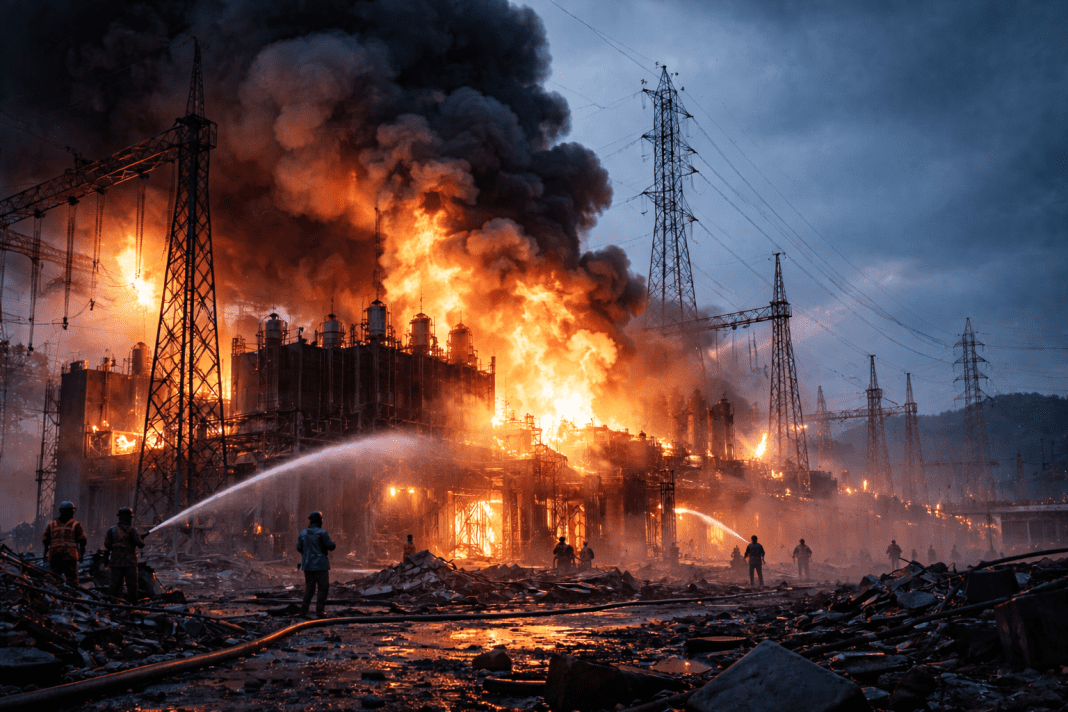

Ukraine’s Power Grid has suffered one of its hardest blows in nearly four years of war. A large wave of drones and missiles hit key energy facilities across the country. Officials said the attacks targeted electricity generation and distribution systems. Parts of Ukraine are now struggling to maintain power during freezing winter conditions. The strikes have added new pressure to already strained civilian infrastructure.
Relentless Strikes Batter Ukraine’s Power Grid and Energy Network
According to official statements, the attack involved at least 450 drones loaded with explosives, along with around 70 missiles of different types and ranges. These weapons were launched toward power plants, substations, and other critical facilities linked to the Power Grid in at least five regions of Ukraine. The main goal appeared to be disrupting electricity production and delivery on a wide scale.
Many of the drones flew at low altitudes, making them harder to detect and intercept. Missiles followed soon after, striking several locations almost simultaneously. This combination placed enormous strain on air defense systems and on teams responsible for protecting the Power Grid, as emergency services had to respond to multiple threats at once.
A major private energy company said this was the biggest attack on the energy system so far this year. Several workers were injured while carrying out essential duties to keep the Power Grid functioning, even as explosions damaged equipment and surrounding areas.
Emergency crews rushed to affected sites to extinguish fires, assess damage, and begin repairs. However, repeated air raid alerts slowed efforts to stabilize damaged sections of the Power Grid, forcing teams to pause work until conditions were safer.
Cold Weather Raises the Human Impact
The timing of the strike made the damage more severe. Ukraine is facing harsh winter weather, with temperatures dropping far below freezing. In these conditions, the Power Grid is essential for heating, hospitals, water systems, and communication networks.
Officials said the attacks aimed to spread fear and hardship among civilians. Power outages left families in cold homes, relying on blankets and shelters with limited generator power. The damage showed how deeply the conflict now affects daily life, as continued pressure on the Power Grid leaves millions vulnerable during winter.
Ukraine downs Su-34 bomber and Su-30 fighter, dealing costly blow to Russian air force
In some regions, temporary blackouts were reported as safety systems shut down damaged sections of the grid to prevent further harm. Energy workers worked around the clock to reroute power where possible and restore limited electricity to critical services such as hospitals and water pumping stations.
Authorities urged residents to conserve electricity where it was still available. They also reminded people to prepare for possible outages by keeping flashlights, warm clothing, and basic supplies ready. Schools and public buildings in some areas adjusted schedules due to heating problems caused by the strikes.
Attack Linked to Diplomatic Tensions
The strike took place on a day of intense diplomatic activity in Ukraine’s capital. Officials said the timing suggested a possible link to international political developments, though no direct confirmation was given. The coincidence drew wide attention as it added tension to an already sensitive moment.
At the same time, representatives from Russia, Ukraine, and the United States were holding talks in Abu Dhabi. These discussions aimed to explore ways to reduce the conflict or move toward ending it. The energy attack occurred as the meetings were nearing their final stages, raising concerns about its broader implications.
Russia fires Zircon and Oreshnik missiles at Ukraine to demonstrate power and pressure the West
Despite the scale of the assault, energy officials said the power system did not collapse completely. Emergency planning, past repairs, and the efforts of workers operating under dangerous conditions helped prevent a total shutdown. Still, the damage was serious and placed heavy strain on the grid.
People in affected areas reported loud explosions, shaking buildings, and long power cuts. Many spent the night in cold homes or shared shelters where generators provided limited heat and light. Authorities shared updates through radio and other channels where internet access failed.
The attack highlighted how vital energy infrastructure has become a main target in the conflict, deeply affecting civilian life during winter.