
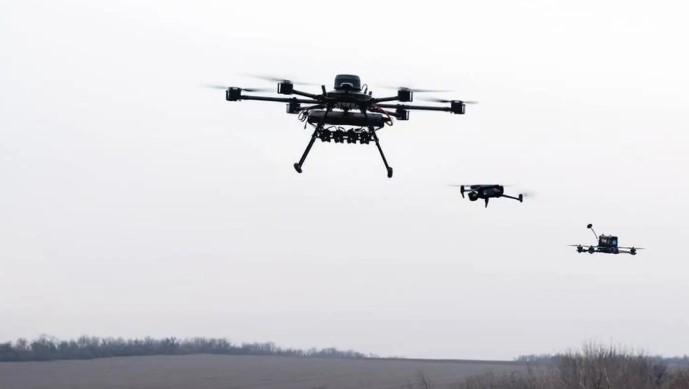

Ukraine’s drone forces are entering a remarkable new phase in drone production. Almost all long-range unmanned aerial vehicles (UAVs) now flown by Ukrainian forces are built domestically. Recent updates reveal that 95% of these systems are made in Ukraine. This surge in drone production is reshaping the way the country’s military operates and is expected to make a visible impact on the battlefield by 2026.
Ukrainian Drone Production Hits Unprecedented Levels
Over the past few years, Ukrainian companies have steadily increased drone production to meet the growing demands of the military. Previously, Ukraine relied heavily on drones supplied by foreign partners, which sometimes caused delays and limited operations. By focusing on domestic manufacturing, the country has overcome these challenges and ensured that its forces have a reliable and steady supply of UAVs.
Meanwhile, the 1st Separate Center of the Unmanned Systems Forces, a key unit in Ukraine’s army, now operates almost entirely with drones made in the country. This unit uses reconnaissance drones capable of flying up to 50 kilometers to gather detailed information on enemy positions, movements, and defenses. As a result, these drones play a critical role in planning operations and maintaining situational awareness on the battlefield.
Ukraine hits Russia’s Syzran oil refinery and Valday radar in coordinated drone operations
In addition, the unit deploys long-range kamikaze drones designed for precise strikes against high-value targets. These capabilities allow Ukrainian forces to attack deep inside enemy territory with accuracy and efficiency. By combining reconnaissance and strike capabilities, the unit has become central to Ukraine’s military strategy, increasing operational independence and strengthening its ability to respond quickly to threats.
Drone Strikes Target Russian Infrastructure
As the war with Russia enters its fourth year, Ukraine continues to strike critical Russian infrastructure. Long-range drones have been used to target oil refineries, offshore platforms, port facilities, and tankers. This month alone, Ukraine reportedly hit more energy infrastructure than at any previous point in the conflict.
The focus on energy and defense facilities is highly strategic. By hitting these high-value targets, Ukraine aims to weaken Russia’s ability to sustain its military operations. At the same time, Russia continues to attack Ukrainian cities, striking residential areas and power grids.
US signals readiness for new Russia sanctions linked to Ukraine peace talks
These attacks are intended to leave civilians without electricity and heating during freezing winter months. Ukrainian drones have become essential in countering these threats, helping to protect key infrastructure and support frontline operations.
Thanks to a fully domestic drone production system, Ukrainian units no longer need to wait for foreign deliveries. The ability to produce, deploy, and recover drones entirely within the country gives the military a crucial advantage and ensures continuous operations even during intense fighting.
From Foreign Dependence to Domestic Strength
Before Ukraine began producing drones at home, military units relied on foreign-made UAVs supplied by allied nations. These drones were tested in combat but often faced delays in support and limited availability. This experience highlighted the importance of developing homegrown systems tailored to Ukraine’s operational needs.
Now, almost all long-range drones in use are made locally. As a result, this domestic production allows the military to scale operations efficiently and reduces reliance on foreign suppliers. Ukrainian manufacturers focus on building versatile drones that can handle long-range reconnaissance and precise strike missions. Consequently, this variety of capabilities makes the drone units adaptable to different battlefield scenarios.
The impact of this transformation is already visible. Units report that supply issues are virtually non-existent. Therefore, drone squads can carry out reconnaissance, strike operations, and frontline support using the tools currently available. The 1st Separate Center of the Unmanned Systems Forces, formerly the 14th Separate Regiment formed in 2022, remains at the forefront of these operations. Moreover, its units are deployed on the front lines and carry out a significant portion of Ukraine’s deep-strike missions, estimated at 30–40% of such operations.
Overall, this surge in domestic drone production marks a significant milestone for Ukraine’s military. By producing nearly all long-range UAVs locally, the country has strengthened its self-sufficiency, improved operational readiness, and enhanced its ability to carry out complex missions across the battlefield. Additionally, the scale-up in production ensures that Ukrainian forces remain equipped with modern, reliable drones, capable of tackling a wide range of challenges during the ongoing conflict.