
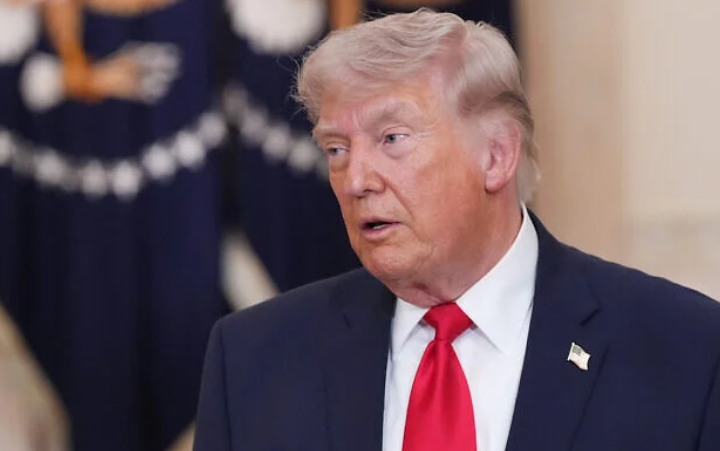

Tensions have escalated after Donald Trump threatened possible strikes on Iran’s infrastructure if it does not reopen the Strait of Hormuz. In response, Iranian media reports say Tehran has warned that any such action could expand the conflict beyond the Middle East and potentially impact U.S. territory, raising global concerns.
Trump’s Threat Targets Iran’s Critical Infrastructure
The latest escalation began when Donald Trump posted a strongly worded message on social media, urging Iran to reopen the Strait of Hormuz, a key route for global oil shipments. He warned that failure to comply could lead to direct U.S. military action, including strikes on power plants and bridges, and hinted at a possible timeline by calling Tuesday “Power Plant Day, and Bridge Day.” The statement also drew attention in Tehran, where officials closely monitored the developments.
The message stood out not only for its direct threat but also because it included profanity, which is unusual for statements of this level. The tone signaled a sharp rise in tensions and highlighted the seriousness of the situation between the two sides, particularly as reactions continued to emerge from Tehran.
Donald Trump issues a sharp ultimatum to Iran to reopen the Strait of Hormuz
The Strait of Hormuz remains one of the world’s most important trade routes, with a large share of global oil passing through it daily. Any disruption in this narrow passage can impact fuel prices and economies worldwide, and Iran has previously used its position near the Strait as leverage during periods of conflict.
Tehran Responds With Stark Warning
Following Trump’s statement, Iranian media outlets reported a strong and direct response from officials in Tehran. According to these reports, Iran warned that any attack on its infrastructure would not go unanswered.
The most striking part of Iran’s response was the claim that the effects of war could reach the United States itself. This warning suggests that Iran may be prepared to expand the conflict beyond the Middle East if it is attacked.
While Iranian officials did not provide detailed specifics about how such retaliation might occur, the message was clear: any military action against Iran would have serious and far-reaching consequences.
Iran moves to tighten control over Strait of Hormuz after conflict, alarming energy markets
Iran’s warning reflects the broader tensions that have existed between the two countries for many years. Both sides have often exchanged strong words, but direct threats involving attacks on infrastructure and homeland consequences mark a more dangerous phase.
The Iranian response also highlights concerns about escalation. In modern conflicts, warfare is not limited to traditional battlefields. It can involve cyber attacks, proxy groups, and other indirect methods that can affect countries far from the original conflict zone.
Rising Tensions Around a Critical Global Chokepoint
The situation has drawn renewed global attention to the importance of the Strait of Hormuz, a narrow but highly strategic passage that connects the Persian Gulf to the open ocean. This route plays a vital role in global trade, especially in the transportation of oil, making it one of the most sensitive and closely monitored waterways in the world.
A significant share of the world’s oil shipments moves through this route every single day. Because of this heavy dependence, even a brief disruption can have immediate consequences. Fuel prices can rise quickly, supply chains can face delays, and economies across multiple countries can feel the pressure of uncertainty in energy markets.
Due to its strategic importance, the Strait has long remained at the center of geopolitical tensions. Iran has, in the past, hinted at the possibility of restricting or blocking access during times of conflict. On the other hand, the United States and its allies have repeatedly stressed that the waterway must remain open to ensure smooth and uninterrupted global trade.
The latest exchange between Donald Trump and Iran has once again brought this region into sharp focus. Strong statements, direct threats, and warnings of retaliation from both sides have heightened concerns about regional stability, with analysts closely monitoring potential impacts on global markets and energy security.