
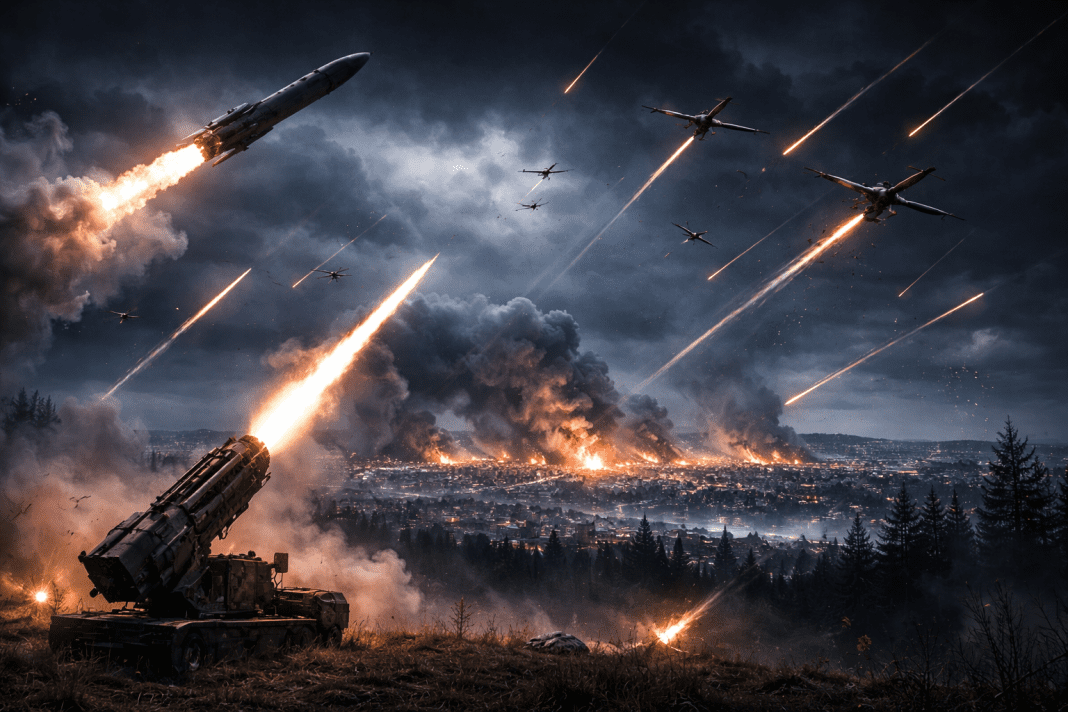

A large-scale overnight attack shook multiple regions. Enemy forces launched a mix of ballistic missiles and hundreds of unmanned aerial vehicles (UAVs). The strike took place on the night of April 15, 2026. It involved three Iskander-M ballistic missiles and a total of 324 drones. Air defence systems responded quickly. They managed to destroy or suppress most of these threats. This information was released in the morning by officials.
Iskander-M Strikes Mark Large-Scale Night Attack Across Multiple Regions
The attack began late at night, with missiles fired from the Rostov region, including the use of Iskander-M ballistic missiles. Alongside the missiles, a swarm of drones was launched, including Shahed-type drones as well as Gerbera, Italmas, and other variants. Reports indicate that around 250 of the drones were Shahed-type, known for their ability to travel long distances and strike targets with precision.
These drones were sent in large numbers to overwhelm air defence systems. They approached from different directions, targeting various parts of the country, including the north, south, east, and central regions. The use of multiple types of drones made the attack more complex, as each type can behave differently in the air.
The Russian navy activates air defenses in Novorossiysk as drones reach a key warship
Ballistic missiles like the Iskander-M are especially dangerous because they travel at very high speeds and are harder to intercept. The deployment of Iskander-M missiles alongside drones suggests a coordinated attempt to create maximum pressure on air defence systems during the night.
Air Defence Responds and Intercepts Majority of Drones
Air defence units responded within minutes of detecting the incoming attack, showing a high level of coordination and preparedness. Multiple branches worked together at the same time, including the air force, anti-aircraft missile units, electronic warfare teams, unmanned system units, and mobile fire groups. Each of these units worked to counter threats such as drones and high-speed missiles like the Iskander-M, creating a strong and layered defence system.
The air force monitored the situation from above and tracked the movement of drones and missiles. Anti-aircraft missile units focused on targeting and destroying threats at longer ranges. Meanwhile, mobile fire groups on the ground used rapid-response weapons to shoot down drones flying at lower altitudes.
Ukraine air defense shoots down more than 2,300 drones and missiles during a month of heavy strikes
Electronic warfare teams played a key role by interfering with the drones’ navigation and communication systems. By jamming signals, they forced many drones to lose their path or crash before reaching their targets. This reduced the pressure on other defence units.
By 7:00 a.m., reports showed that 309 enemy drones had been either shot down or neutralized. This strong and coordinated response ensured that most of the incoming UAVs were stopped, limiting the overall damage caused by the attack.
Impact and Damage Reported in Multiple Locations
Despite the strong interception efforts, a small number of missiles and drones were still able to reach their intended targets. Officials confirmed that ballistic missiles along with 13 attack drones struck nine different locations. These strikes caused damage on the ground, though complete details about casualties or the extent of destruction have not yet been shared. Emergency teams are likely assessing the situation in the affected areas.
Apart from the direct hits, debris from drones that were destroyed mid-air was discovered in at least ten different locations. When air defence systems intercept drones, the wreckage often falls from the sky, which can still be dangerous. Falling debris can damage buildings, vehicles, and infrastructure, and may also pose a risk to people if it lands in populated areas.
Ukraine air defense shoots down more than 2,300 drones and missiles during a month of heavy strikes
Authorities have issued warnings that some enemy drones could still be active in the airspace. Because of this, residents have been strongly advised to stay alert and follow all safety guidelines. Emergency alerts, sirens, and official updates continue to play an important role in informing people and helping them respond quickly.
The incident shows how modern aerial attacks combine missiles and large numbers of drones to increase pressure on defence systems. Launching many UAVs at once can create confusion and stretch resources. Air defence teams remain fully alert as the situation continues to be monitored closely.