
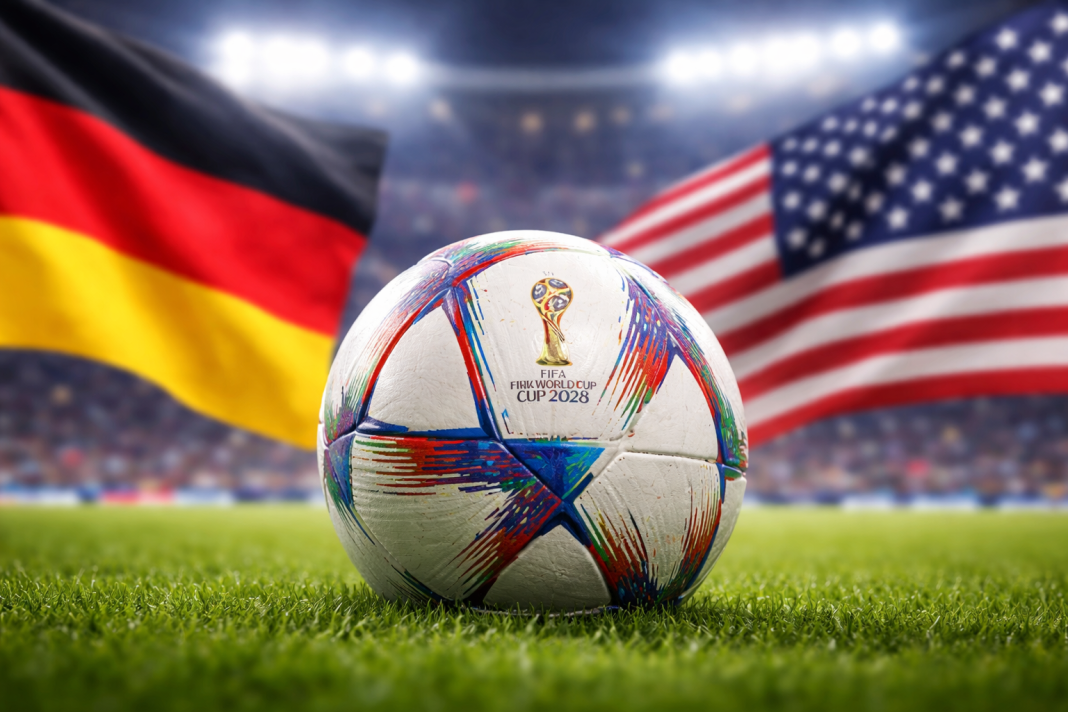

A senior German soccer official has called for serious discussions about boycotting the 2026 World Cup, citing U.S. President Donald Trump’s controversial actions in Europe as a potential threat.
Oke Göttlich, president of Bundesliga club St. Pauli and one of the ten vice presidents of the German Football Federation, told the Hamburger Morgenpost on Friday that “the time has come” to seriously consider a boycott. He said the issue deserves urgent debate given recent tensions between the United States and European countries.
Trump’s moves have caused concern across Europe. Earlier this month, the U.S. president expressed interest in Greenland, a semi-autonomous territory of Denmark and a NATO member, and suggested that the U.S. might attempt to take it over. He later threatened tariffs on eight European countries that opposed his plans. These actions prompted criticism from several NATO allies, who warned that such conflicts could weaken the alliance.
Trump’s Actions Spark Concern in Europe
Göttlich compared the potential danger posed by Trump’s recent moves to past political boycotts of major sporting events. He referenced the Olympic Games of the 1980s, when countries boycotted competitions for political reasons. “By my reckoning, the potential threat is greater now than it was then,” he said, stressing the need to discuss the matter openly.
British veterans push back as Trump questions NATO’s front-line role in Afghanistan
The United States will co-host the World Cup from June 11 to July 19, alongside Canada and Mexico. However, fans from some countries worry they may not attend because the Trump administration imposed high ticket prices and travel restrictions.
Despite these worries, Göttlich insisted that the debate should focus on defending values rather than the interests of individual players. “The life of a professional player is not worth more than the lives of countless people in various regions who are being directly or indirectly attacked or threatened by the World Cup host,” he said.
Resistance Expected from Soccer Authorities
Calls for a boycott are likely to face resistance from football authorities. German Football Federation president Bernd Neuendorf and FIFA president Gianni Infantino have not indicated support for such measures. Göttlich’s statements highlight a broader tension between politics and sport, particularly given Germany’s previous opposition to the 2022 World Cup in Qatar.
Trump says US gets ‘total access’ to Greenland — Denmark and Greenland say otherwise
Göttlich criticized what he described as a shift toward apolitical attitudes in football, arguing that clubs and organizations have a responsibility to set moral boundaries and defend core values. “As organizations and society, we’re forgetting how to set taboos and boundaries, and how to defend values,” he said. He questioned whether threats and attacks on people cross a moral line and called on both Trump and football leaders to take clear positions.
St. Pauli, Göttlich’s club, combines sport with political activism and has built a strong reputation in Germany for it. Located near Hamburg’s red-light district, the club has long embraced left-wing values and social causes. Local squatters originally popularized its famous skull-and-crossbones logo, and fans identifying as punks later adopted it.
Global Reactions and Political Context of the World Cup
International reactions to the idea of a World Cup boycott remain mixed. France’s sports minister, Marina Ferrari, said her country is not currently considering a boycott over the Greenland dispute but did not rule it out entirely. “At the moment we are speaking, there is no desire from the ministry to boycott this major, much-anticipated competition,” she said, adding that future decisions could change.
Trump’s board of peace draws support from Middle East powers, caution from the West
Göttlich stressed that any discussion about a boycott should focus on defending shared values rather than political rivalries. He warned that failing to confront ethical issues could normalize threats and attacks on nations or individuals, creating long-term challenges for global sports and society.
As the 2026 World Cup approaches, Germany’s soccer community may face tough questions about the intersection of sport, politics, and morality. Göttlich’s statements have already sparked debate, highlighting the tensions that arise when international politics touch one of the world’s most popular sporting events.