
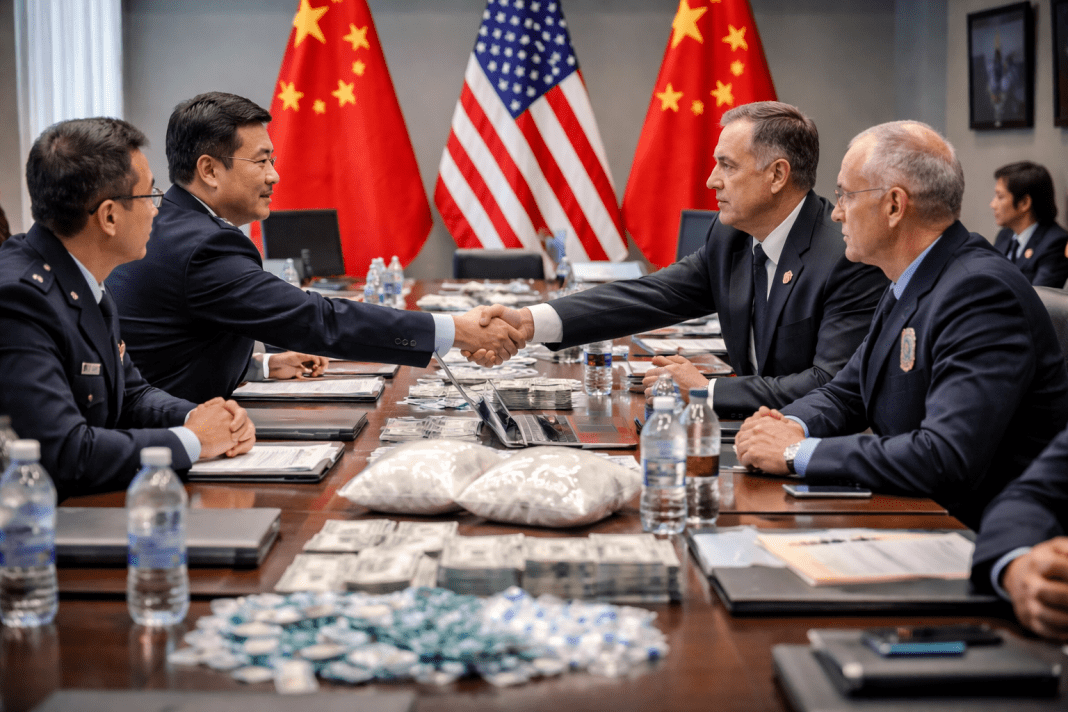

In a notable development, China has acknowledged the return of a suspected drug offender from the United States as a sign of growing cooperation against illegal drug networks. The move is seen as a rare example of joint action between the two countries, even as broader relations remain tense. Officials say it reflects closer coordination on tackling cross-border drug crimes.
Rare Repatriation Signals Shift in Cooperation
In a rare development, the United States has returned a Chinese fugitive suspected of drug-related crimes to China. Beijing authorities described the move as a sign of improving cooperation between the two countries in tackling illegal drugs.
According to state media, US Immigration and Customs Enforcement (ICE) deported the suspect and handed him over to Chinese police. Authorities carried out the transfer through existing cooperation channels after China’s narcotics control agencies shared intelligence.
Officials identified the individual only by the surname Han. They suspect him of involvement in drug smuggling and trafficking. However, officials did not provide details about the specific drugs or the scale of the alleged crimes.
This case is notable as such handovers have been rare in recent years. Despite the absence of a formal extradition treaty, both countries were able to complete the transfer through law enforcement cooperation.
Drug Control Emerges as Key Area of Collaboration
In recent years, China and the United States have often experienced strained relations due to disagreements over trade, technology, and broader global political issues. These tensions have limited cooperation in several areas. However, both countries have continued to work together steadily on drug control.
This cooperation has become especially important for the United States because of the ongoing fentanyl crisis. Fentanyl is a powerful synthetic substance that causes a large number of overdose deaths. US authorities have repeatedly said that China manufactures many of the precursor chemicals used in its production and exports them, either legally or illegally, to other regions.
Deadly cartel operation busted near Atlanta as agents seize 40 pounds of fentanyl
In response, both countries have taken steps to improve coordination and restrict the flow of illegal substances and related materials. The recent return of a suspected offender from the United States to China shows how this ongoing cooperation is producing visible results.
Officials from both sides have maintained regular communication, including sharing intelligence, conducting virtual and in-person meetings, and discussing major trafficking cases. These joint efforts have helped authorities respond faster, improve coordination, and strengthen their ability to monitor and disrupt cross-border illegal networks.
Recent Actions Highlight Ongoing Anti-Drug Efforts
The handover of the suspect is not the only recent example of cooperation between China and the United States in the fight against drug-related crimes. In fact, several recent actions show that both countries are continuing to work together despite ongoing tensions in other areas.
In late November, Chinese authorities intercepted a large shipment of cocaine weighing around 430 kilograms. The substances were hidden inside an international shipping container at a port in Shenzhen. Officials said the success of this operation was largely due to timely intelligence shared by US authorities, highlighting the importance of information exchange between the two sides.
China has also stepped up efforts to control the production of chemicals linked to fentanyl. In December, authorities launched a major crackdown in Hubei province, targeting companies suspected of supplying illegal precursor materials and stimulants. One such company was raided after a tip-off from US anti-narcotics agencies, again showing active cooperation.
Beyond enforcement, both nations have also engaged at the policy level. Reports suggest that discussions led to an agreement involving fentanyl-related tariffs, where certain duties were reduced in return for stronger action against illicit trafficking networks.
The timing of the repatriation is also significant, as it comes ahead of a planned visit by a senior US leader to China. This visit had been delayed due to international conflicts, and such cooperation may influence upcoming discussions between the two countries.