
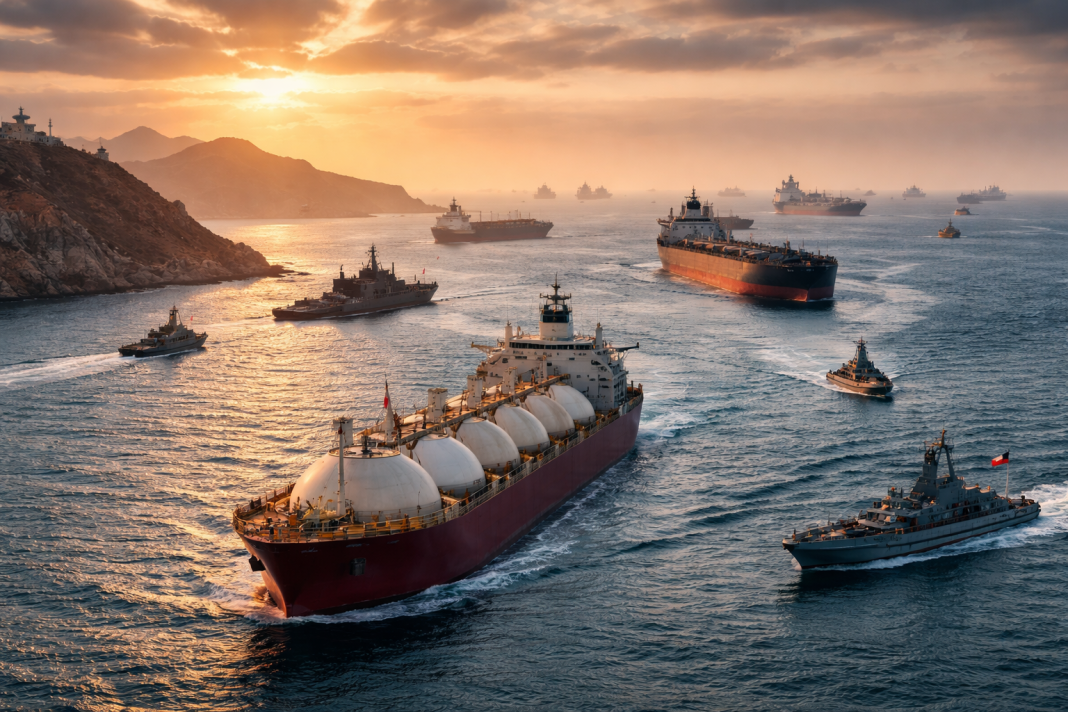

Iran has said it plans to introduce new shipping rules for ship traffic through the Strait of Hormuz after the ongoing conflict ends. This narrow stretch of water is one of the most important routes for global energy transport. A large share of the world’s oil and gas moves through it every day.
Officials in Iran described the move as necessary for security and control. During the conflict, the country has already taken steps to block certain vessels from passing through the strait. These include ships linked to nations seen as hostile or aligned against Iran, as part of its broader approach to enforcing shipping rules in the region.
A Critical Waterway Faces New Rules
From Iran’s point of view, the Strait of Hormuz lies close to its coastline. Because of this, it believes it has the right to control how the route is used, especially during times of war. Authorities say these restrictions were not taken lightly but were needed due to rising threats and tensions, reinforcing the need for stricter shipping rules.
The conflict has already changed how ships move through the area. Many shipping companies are avoiding the route due to safety concerns. Some vessels are delayed, while others are being rerouted entirely. This has created uncertainty for global trade and energy supply chains, highlighting the growing importance of clear shipping rules.
Now, Iran wants to turn these temporary wartime measures into long-term rules. It has called for a new system, or “protocol,” to manage how ships pass through the strait in the future. These proposed shipping rules, according to officials, would aim to ensure safe and peaceful navigation while also protecting regional interests.
Shipping Rules Disrupt Energy Shipments Across the Region
The situation in the Strait of Hormuz is already affecting global energy supplies in a serious way. This narrow waterway is one of the most important routes for transporting oil and gas across the world. Because it is a key chokepoint, even small disruptions can quickly impact international markets, increasing the urgency around stable shipping rules.
Due to the current restrictions and rising security risks, several shipments have been delayed in the region. Large quantities of liquefied petroleum gas (LPG) are currently stuck on vessels that are unable to move forward. Many ships are waiting for official clearance or safer conditions before they can continue their journeys, as uncertainty around shipping rules slows down trade activity.
India-bound oil tanker reaches Mumbai safely after going dark through conflict-hit Strait of Hormuz
India, which depends heavily on imported energy, has been directly affected by the situation. Officials have reported that multiple Indian-flagged ships are positioned in or near the strait. These include LPG carriers, liquefied natural gas (LNG) tankers, crude oil vessels, as well as container ships and bulk carriers carrying essential goods.
Although some cargo has started moving again, delays are still a major concern. Ports across India have been instructed to stay alert and manage incoming shipments carefully. Authorities are arranging extra storage space to handle delayed or diverted cargo, while also taking special care of perishable goods that could spoil if held up for too long.
Rising Strategic Importance of the Strait
The Strait of Hormuz is not just a busy shipping lane; it is a vital link in the global energy network. Around one-fifth of the world’s oil passes through this narrow corridor every day. A large portion of liquefied natural gas also travels along the same route, making it essential for energy supply worldwide.
Because of this importance, any change in how the strait is managed carries global significance. Iran’s proposal to introduce new shipping rules signals a major shift. It could change how this key waterway is governed in the future. It may also alter long-standing practices.
U.S. Navy halts maritime military escorts for commercial vessels in Strait of Hormuz
Experts believe the country is trying to use its current position to gain long-term influence. By setting new conditions for navigation through updated shipping rules, Iran could increase its control. This control would extend over one of the world’s most critical trade routes. It could also strengthen its strategic role in the region.
At the same time, the proposal has raised concerns among many countries. Energy-importing nations are especially worried. Shipping companies are also closely monitoring the situation. New shipping rules could affect costs. They may also impact shipping routes and safety procedures. This adds further uncertainty to an already tense environment where security risks continue to shape maritime activity.