
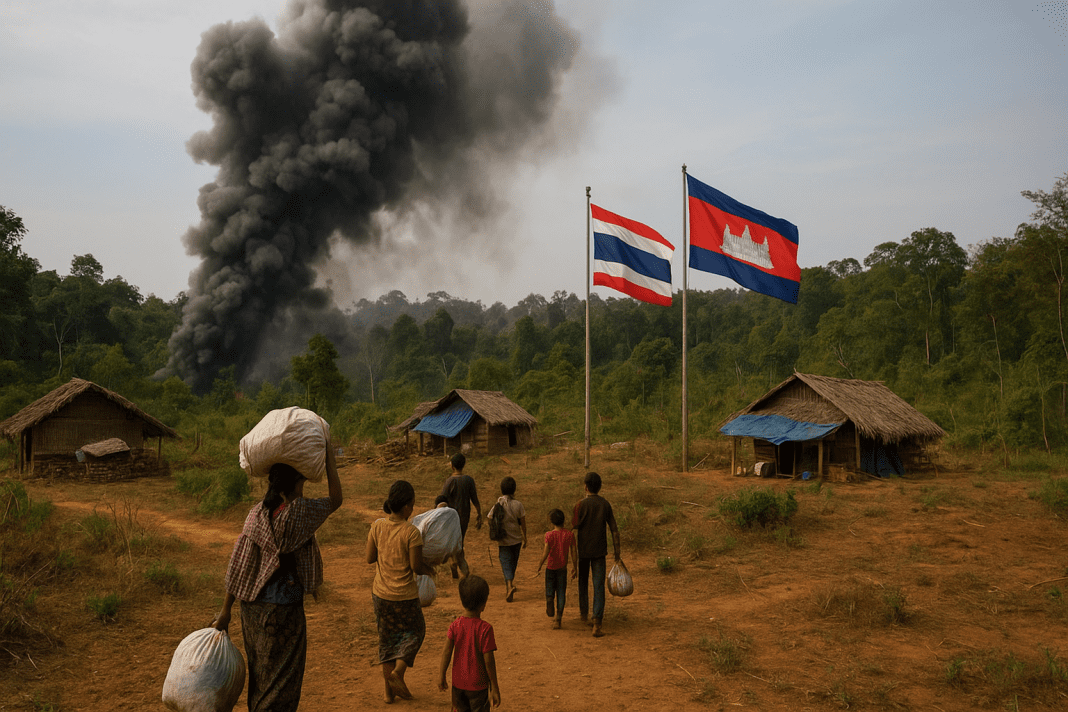

Hostilities have surged once more along the long and disputed border between Thailand and Cambodia. Only two months after signing a peace agreement, the two neighboring countries have returned to armed conflict, forcing tens of thousands of worried residents to flee their homes.
Hostilities Erupt Again Along the Border
Both sides accuse each other of triggering the latest round of hostilities. Thai officials say their actions were taken only to protect national sovereignty. Cambodian forces, however, insist Thailand fired the first shots. The renewed hostilities have deepened fear among border communities who had hoped that last year’s ceasefire would finally bring stability.
According to foreign media reports, Thailand stated that its military operations will continue until its territorial integrity is secured. Thai troops said they were repairing a road on the 7th when Cambodian soldiers allegedly crossed into Thai territory and opened fire, injuring two Thai soldiers.
Cambodia rejects this claim. Its forces say Thai troops entered Cambodian land first and began shooting, sparking fresh hostilities. With both governments presenting conflicting explanations, the exact starting point of this phase of hostilities remains unclear.
F-16 Jets and Rising Casualties
Hostilities escalated sharply when Thailand deployed F-16 fighter jets—one of the strongest air assets in Southeast Asia. Thailand said its airstrikes were aimed only at military targets inside Cambodia and insisted the operations were precise and did not harm civilians.
Both countries have reported rising casualties since the hostilities resumed. Thailand confirmed that one soldier was killed and 18 others injured. Cambodia reported six civilians killed and nine injured. These numbers have added to the pain and uncertainty felt by families on both sides of the border.
As hostilities spread across several border pockets, thousands of civilians packed their belongings and escaped to safer areas. Many rushed out with only a few essential items, leaving behind homes, farms, and schools. Temporary shelters filled quickly with families who arrived exhausted and frightened.
Thailand Tries to Calm U.S. Tariff Fury with Open Market & $6B Safety Net
Thailand’s Ministry of Education ordered the closure of more than 650 schools following the intensifying hostilities. Streets in border districts became unusually quiet, with many residents staying indoors or evacuating to other provinces.
The two countries share an 800-kilometer border that has been the center of disputes for more than a century. Troops from both sides patrol the region regularly, and even small disagreements sometimes lead to major hostilities. This historic tension continues to affect the daily lives of many communities living near the boundary.
Hostilities Return After Recent Ceasefire
This renewed violence comes barely months after the two nations engaged in deadly hostilities last July. That clash lasted five days and resulted in at least 48 deaths. The fighting drew immediate international attention, and pressure mounted on both nations to stop the hostilities and prevent further loss of life.
After strong diplomatic pressure, both sides agreed to a ceasefire in October. They withdrew heavy weapons from the border region and began clearing landmines that had been buried for decades. For a short period, residents believed the hostilities had finally come to an end.
However, the latest outbreak shows that the underlying tensions were never fully resolved. With hostilities resurfacing and military forces once again in action, border communities are facing fear, displacement, and uncertainty all over again.
Thailand finalizes Gripen purchase from Sweden with focus on defense and industry growth
Tens of thousands of people remain displaced as the fighting continues. Families are staying in temporary shelters, waiting for updates and hoping for safety. Schools are closed, farms lie abandoned, and many villages near the border are nearly empty. The region is once again caught in a cycle of conflict that has returned repeatedly over the years.
For now, the facts remain clear: hostilities have resumed, advanced weapons like F-16s have been deployed, and thousands of civilians are bearing the impact of a conflict neither country has been able to fully resolve.