
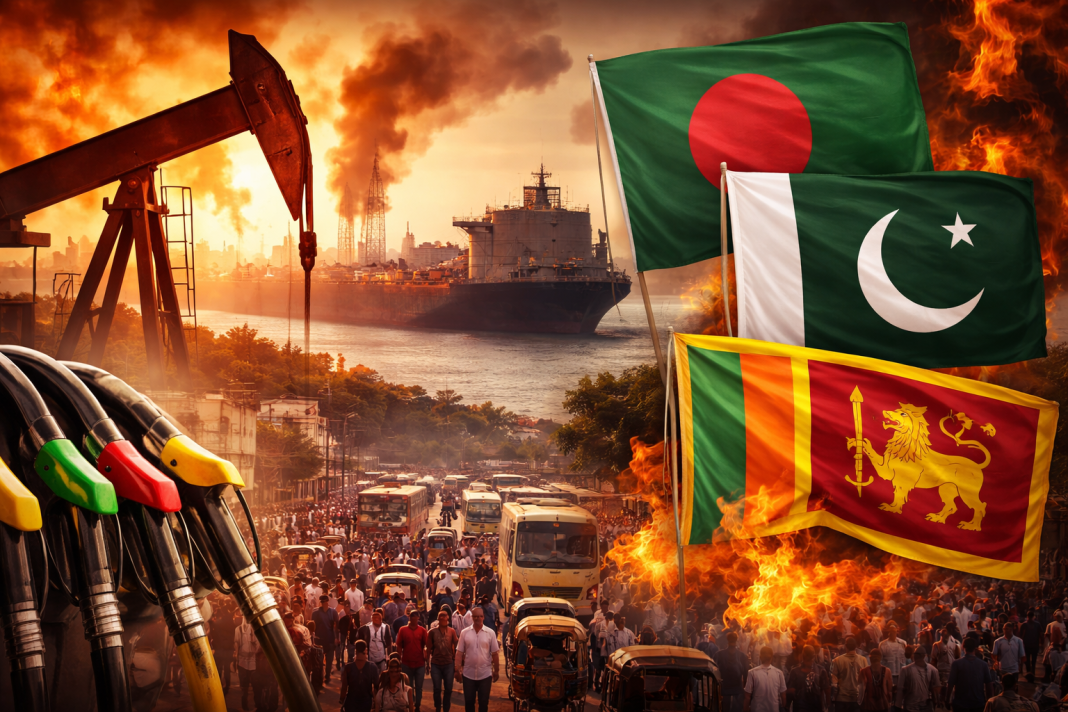

The Middle East conflict is creating fresh uncertainty in global energy crisis conditions, with South Asian countries feeling the impact quickly. Nations like Bangladesh, Pakistan, and Sri Lanka depend heavily on imported oil and gas, making them highly vulnerable to price changes and supply disruptions. As energy costs rise, it affects electricity, transport, and overall economic stability across the region.
Middle East Conflict, Energy Crisis Trigger Price Shock in South Asia
The ongoing crisis in the Middle East, including tensions linked to the Iran war situation, is creating serious pressure on the global energy crisis environment. Countries that depend heavily on imported fuel are feeling the impact first. Among the most exposed nations in South Asia are Bangladesh, Pakistan, and Sri Lanka.
A recent analysis shows that these countries rely strongly on imported oil and gas to run their economies. Even small changes in global supply or price levels can quickly worsen the energy crisis, affecting transport, electricity, and industrial production. Oil is a key fuel for almost every sector of daily life.
Middle East conflict expands as Shiraz airport is hit and Iran launches drone attacks
The Middle East plays a major role in global energy supply. Any conflict or uncertainty in the region can intensify the global energy crisis and raise oil prices worldwide. For import-dependent countries, this creates immediate financial stress and higher costs for basic goods and services.
Bangladesh and Pakistan Face Rising Pressure on Inflation, Imports, and Energy Supply
Bangladesh is among the most exposed countries in South Asia to a worsening energy crisis. It depends heavily on imported crude and refined oil, making it vulnerable to disruptions in international supply chains and shipping routes during conflict situations.
The country’s oil reserves are limited and may last less than a month under normal conditions. This creates a constant need for fuel imports during an energy crisis. Any delay or disruption in supply can force restrictions on fuel use to manage shortages and keep essential services running.
Electricity production in Bangladesh also relies significantly on natural gas, with nearly half of power generation coming from gas-fired plants. A large share of this gas is imported. When global gas prices rise, the energy crisis deepens, increasing electricity costs and affecting households and businesses.
UNICEF warns of rising child deaths in Middle East conflict as Iran reports most fatalities
Inflation is already high, rising from 8.6 percent to 9.2 percent in a month. Higher fuel costs linked to the energy crisis increase transport and production expenses, making food and daily essentials more expensive. This adds pressure on low-income families.
The country also faces weak fiscal capacity, with a revenue-to-GDP ratio of around 9 percent, limiting its ability to handle external shocks. Although foreign exchange reserves have improved to about $29.6 billion, energy imports continue to strain external stability.
Pakistan faces similar pressure due to reliance on imported fuel, which raises import bills and adds to inflation. Sri Lanka is also affected, as limited financial buffers and fuel dependence impact transport, electricity, and public services.
Global Energy Instability Deepens Economic Risks for South Asia
The global energy crisis triggered by Middle East conflict is not limited to fuel markets alone. It spreads into inflation trends, trade balances, and currency stability. Countries with weaker economic structures feel these effects more strongly and more quickly, especially those dependent on imports.
In South Asia, many economies are still in recovery mode. However, this recovery is fragile and closely tied to the global energy crisis. When energy becomes expensive, transport costs rise, goods become costlier, and inflation becomes harder to control. This creates pressure on both businesses and households.
Oman dragged into Middle East war as drones strike Salalah port, Iran denies role
International financial analysis shows that countries with stronger energy systems, such as those relying on domestic renewable sources, are less exposed to the energy crisis. However, South Asian economies depend heavily on imported fuel, making them more vulnerable to external disruptions.
Rising energy prices also increase trade and logistics costs during an energy crisis. Shipping goods becomes more expensive, industrial production slows down, and overall economic activity weakens. This reduces competitiveness in global markets and adds further pressure on developing economies that rely on exports and imports for growth.