
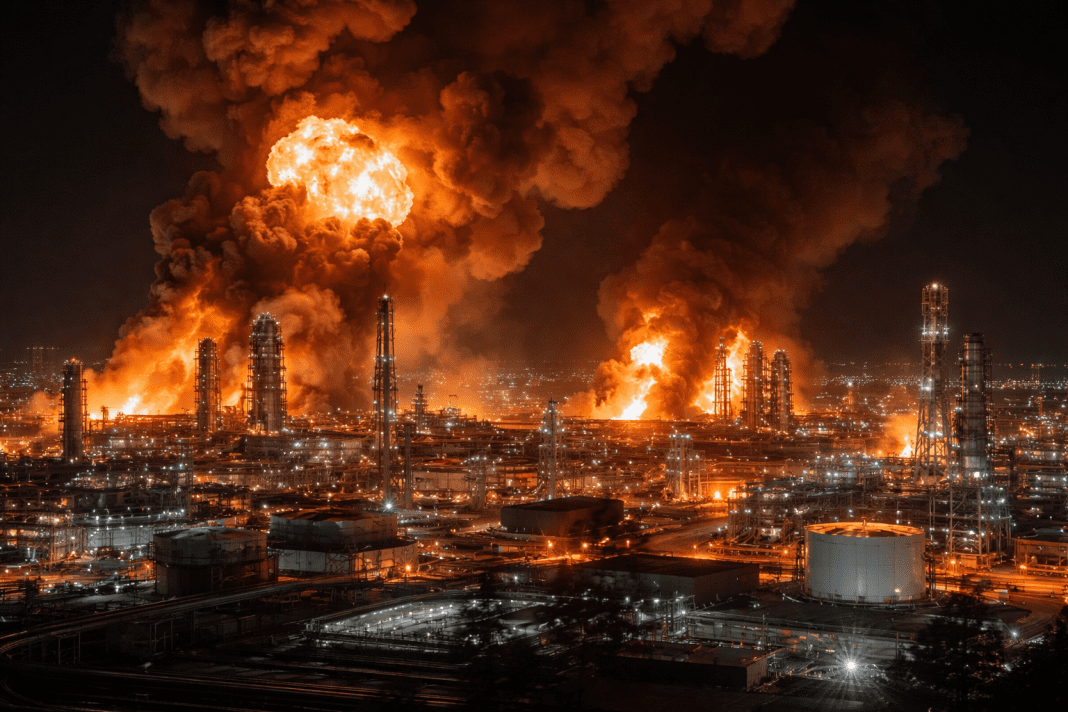

A major incident has been reported in southern Asaluyeh. Powerful explosions were heard in the area, causing alarm across the industrial zone. The region is home to a key petrochemical and energy hub that plays an important role in Iran’s oil and gas sector. Early reports suggest that a strike targeted critical industrial support systems. The disruption affected one of the country’s most important oil and gas processing zones.
Large Explosions Reported at Asaluyeh Petrochemical Hub
Early local reports say a reported strike hit a key petrochemical facility in southern Asaluyeh, causing powerful explosions in a major industrial area. The area is part of Iran’s vital energy and industrial network and plays an important role in oil and gas processing.
Multiple loud blasts were reported across the South Pars Petrochemical Complex, one of the country’s largest petrochemical hubs. The complex is crucial for producing and processing gas and petrochemical products that support both domestic use and exports.
Experts warn that a quick end to the Iran war could leave the West at a disadvantage
Reports say the strike targeted critical infrastructure, including systems supplying electricity, water, and oxygen to industrial units. These utilities are essential for safe and continuous operation of large plants in the region.
While utility services were affected, the main production units of the Pars Petrochemical Company were reportedly not directly damaged. However, the sudden disruption caused concern across the industrial zone, with workers facing interruptions in essential services, especially electricity supply.
Power and Utility Systems Targeted Across South Pars Industrial Zone
Reports indicate that a strike in southern Asaluyeh targeted multiple support systems that power one of Iran’s most important industrial regions. These systems include electricity networks, water supply units, and oxygen facilities that are essential for the safe and continuous operation of petrochemical plants. The area plays a major role in Iran’s energy production chain.
According to Fars News Agency, people heard several loud explosions across different sections of the industrial zone. The blasts immediately disrupted essential services and forced operators to halt activities at multiple points within the complex. Workers reported sudden interruptions in power and other utilities during the incident.
Iran moves to tighten control over Strait of Hormuz after conflict, alarming energy markets
Tasnim News Agency reported that a strike completely cut off electricity supply to a large number of petrochemical units. This led to a partial shutdown of industrial activity and affected several interconnected facilities that depend on shared infrastructure. The sudden blackout made normal operations difficult to continue.
Emergency response teams quickly deployed to inspect damaged utility systems and begin restoration work. The South Pars industrial zone has a highly interconnected system, so damage to shared infrastructure can spread disruption across many plants at once. Officials stated that the strike did not directly damage core production units, but the loss of essential services such as power and water created significant operational challenges across the region and slowed industrial activity.
Background of Rising Strikes on Energy Infrastructure
The latest incident in southern Asaluyeh comes after earlier strikes on energy facilities in the same region. In March, Israel attacked Iran’s South Pars gas field and nearby industrial infrastructure, which form part of Iran’s main energy production system. These facilities closely support national output and export capacity.
Following those earlier developments, reports suggested that Iran carried out responses targeting energy-related sites in other parts of the Middle East. This series of exchanges increased pressure on already sensitive energy and industrial networks across the region.
US urges Israel to pause strikes on Iran oil infrastructure citing risks to global energy supply
The current strike appears to follow a similar pattern, focusing on industrial support systems rather than civilian areas. Utilities such as electricity and water supply were among the reported targets, suggesting an effort to disrupt operations rather than directly destroy production units.
The affected area remains one of Iran’s most important energy corridors, handling a large share of petrochemical output. According to Fars News Agency and Tasnim News Agency, teams are still assessing damage and restoring power, while officials state that core production units were not directly hit.