
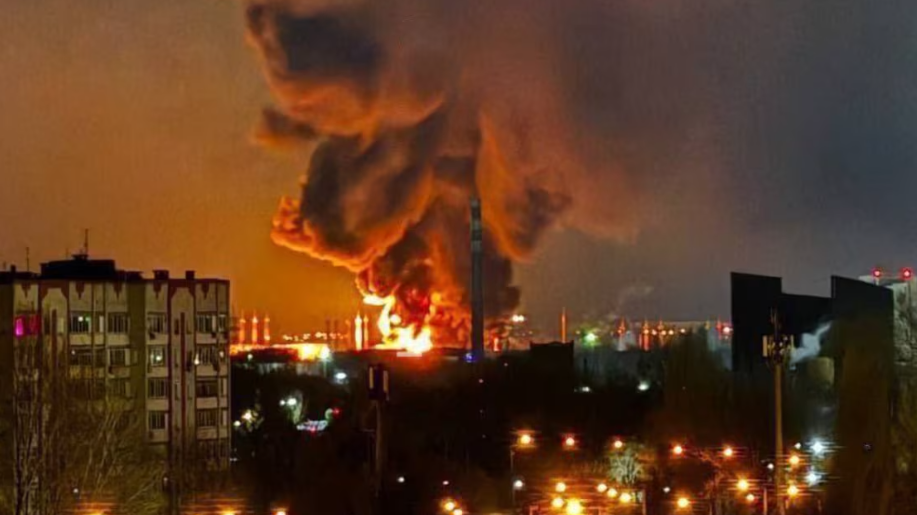

Ukraine has intensified drone attacks on Russia’s energy infrastructure. Major oil refineries have been targeted, along with key export routes. The strikes have caused fires and shutdowns across multiple facilities. As a result, output has been reduced in several regions. Fuel production has been disrupted, and oil transportation has also been affected.
Refineries Across Russia Hit by Drone Attacks, Causing Shutdowns and Fires
Ukraine has increased drone attacks on major Russian energy facilities, targeting some of the country’s largest oil refineries. These strikes have led to fires, shutdowns, and reduced production in several regions, disrupting the process of turning crude oil into fuel.
A major incident occurred at the Kirishinefteorgsintez refinery in northwestern Russia, one of the country’s largest oil plants. Drone strikes caused fires that forced a complete halt in operations, stopping normal refining activity.
The Saratov refinery was hit on March 21, leading to the shutdown of its crude distillation unit, a key system used to process oil into fuel. In southern Russia, the Ilsky refinery suffered fire damage after a February 17 drone attack, while the blaze was later controlled.
The Volgograd refinery was fully shut down after strikes on February 11, and the Ukhta refinery also faced fire damage in February, reducing output. Earlier in January, the Afipsky refinery was hit, causing a fire and affecting its export-focused operations.
Core Processing Units Damaged, Reducing Fuel Output Across Multiple Facilities
Beyond full shutdowns, several key internal processing units have been damaged in the attacks. One of the most critical is the crude distillation unit, often called the “heart” of a refinery. It is the first stage in breaking crude oil into different fuel products. When this unit is damaged, refinery output drops sharply or stops completely.
At the Volgograd refinery, a major processing unit handling a large share of production was hit, forcing a full shutdown. Similar damage was reported at other facilities where fires spread into central processing areas, disrupting core operations rather than minor equipment.
Precision drone attack turns Volgograd oil refinery into towering fireball
The Saratov refinery also had its main distillation system shut down after being struck, reducing its ability to process crude oil into usable fuels. In Ukhta, a fire damaged an important processing section, forcing lower output even after the blaze was controlled. At Ilsky, the refinery was not fully shut for long, but the fire still disrupted operations and delayed normal activity.
Across all incidents, the pattern shows that core processing systems are being targeted instead of peripheral infrastructure. This leads to immediate production losses and slower recovery, as refineries require extensive repairs and safety checks. As a result, several plants are now operating at reduced capacity or facing temporary shutdowns at different times, creating uneven disruption across Russia’s refining network.
Oil Export Network Disrupted: Ports, Pipelines, and Tankers Affected
The impact of the attacks extends beyond refineries and into Russia’s oil transport system. Key export routes, including ports, pipelines, and tankers, have also been disrupted, affecting how crude oil and fuel move from production sites to international markets.
Major Baltic Sea ports used for oil exports have been repeatedly targeted. These ports play a key role in loading crude oil onto ships for global delivery. Due to drone strikes, operations at some locations were temporarily suspended, slowing export activity.
Ukraine hits Russia’s Syzran oil refinery and Valday radar in coordinated drone operations
One major export hub later resumed operations but at reduced capacity because of infrastructure damage. This led to slower loading times and reduced volumes of oil being shipped out. Pipeline systems were also affected, with a major line reducing crude intake after a pumping station was damaged. This station is essential for moving oil from inland areas to coastal terminals.
Oil tankers were also hit while sailing toward Russian export terminals, causing further disruption to transport schedules. Damage to vessels added delays in delivery and reduced shipping efficiency. Overall, market estimates suggest that a significant portion of Russia’s oil export capacity was temporarily affected. With refineries, ports, pipelines, and shipping routes all disrupted at once, the movement of oil across the supply chain has slowed sharply.