
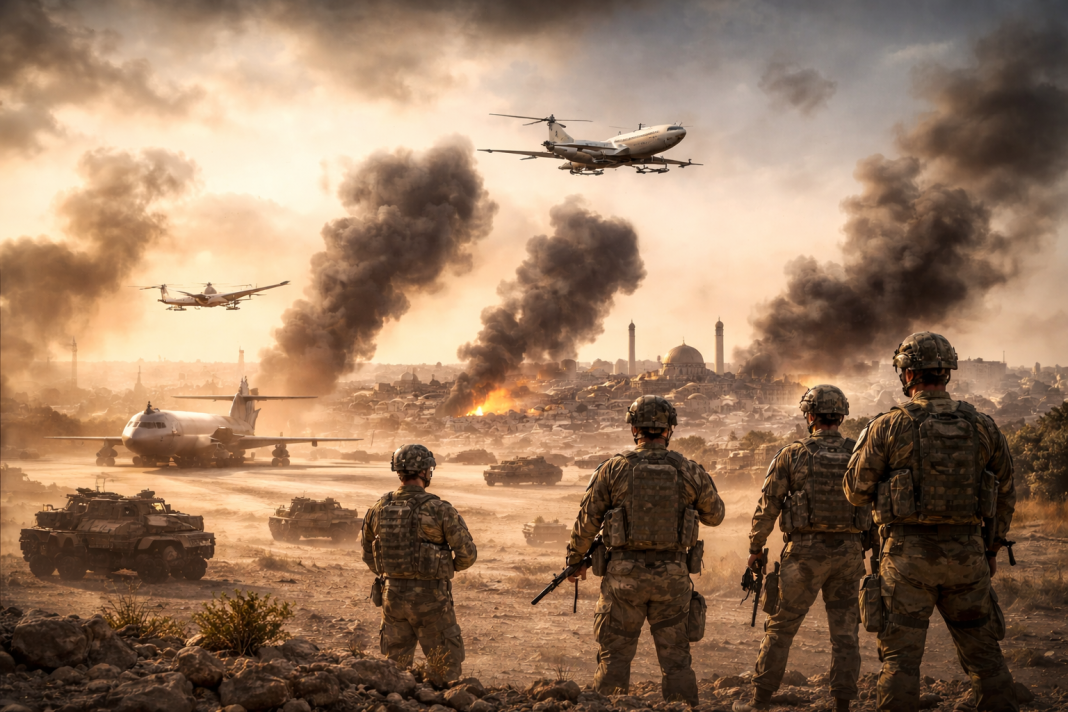

The Middle East is under intense global attention as several countries take unusual steps, including asking citizens to leave, closing embassies, and moving military forces, actions that are rarely seen and suggest leaders fear the situation could suddenly become dangerous, with many signs now pointing to rising tension around Iran and the wider region.
Citizens Asked to Leave and Embassies Shut Down
One of the clearest warning signs in any international crisis is when governments begin telling their people to leave a country immediately. This has now started happening in the Middle East.
India and Australia have both advised their citizens to leave Iran as soon as possible. Such warnings are rare and are only given when officials believe that safety could be at risk with very little notice. For families, students, and workers living there, this has created fear and urgency.
Iran’s currency collapse exposes the hidden economic power of the Revolutionary Guard
At the same time, Russia has begun evacuating its citizens from Israel. The Russian embassy in Israel has also been closed. An embassy is not just an office building. It represents a country’s official presence and its ability to help its people. Closing one shows that the security situation is being taken very seriously.
When several countries issue travel warnings and shut down diplomatic offices together, it usually means they are preparing for a situation that could quickly get worse. Airports become crowded, flights get booked out, and many people try to leave at once.
These steps also affect business, trade, and daily life across the region. More importantly, they show that governments do not see the current situation as stable or routine.
Large US Military Deployment in Middle East Raises Attention
Alongside these evacuation warnings, the United States has made major military movements across the Middle East. Several advanced aircraft and systems have been deployed to US air bases in the region.
These include the P-8 Poseidon, which is used mainly to watch the seas and track ships and submarines. The MQ-9 Reaper drone, known for long surveillance flights, is also active. In addition, the C-17 Globemaster, a large transport aircraft, has been moving troops and equipment.
These are not small or symbolic deployments. These are high-value military assets used in serious operations. When such systems are moved together and in large numbers, it usually means the military wants to be ready for many possible situations.
Some unverified reports also suggest that special forces units have been positioned near the Iraq border. While these claims are not officially confirmed, they have added to the sense that preparations are underway.
What stands out is the speed and scale of these movements. Such deployments take planning and coordination and are not done for routine exercises. For people watching from outside the region, this shows that the security situation is being treated as very serious.
In simple terms, these moves mean that the United States has increased its ability to watch events closely and respond quickly if the situation changes.
Rising Tensions Between Major Powers Add to the Pressure
The situation is becoming more serious because relations between major global powers are already under heavy strain. Tensions between the United States and Russia have been high for a long time. Recent events have made the situation even worse. The United States recently seized a Russian oil tanker that was under sanctions. This was not just a shipping issue. It sent a strong political and economic message. It also showed that disputes are no longer only about words. They are now affecting real trade and power.
After this, Russia warned about the possibility of a naval missile response. This statement increased fear and uncertainty. At the same time, Russia has started moving its citizens out of Israel. It has also closed its embassy there. These steps show that Moscow expects the regional security situation to become more dangerous.
Iran’s Khamenei reportedly plans to flee to Russia with close aides amid growing protests
All of this is happening while attention remains focused on Iran and the wider Middle East. The region has faced many crises before. But the current mix of evacuation orders, embassy closures, military deployments, and strong warnings between major powers makes this moment different.
Right now, the facts on the ground show a region on high alert. Governments are moving people. Militaries are moving equipment. Normal diplomatic work is being reduced or stopped. This reflects a period of serious tension and deep uncertainty across the Middle East.