
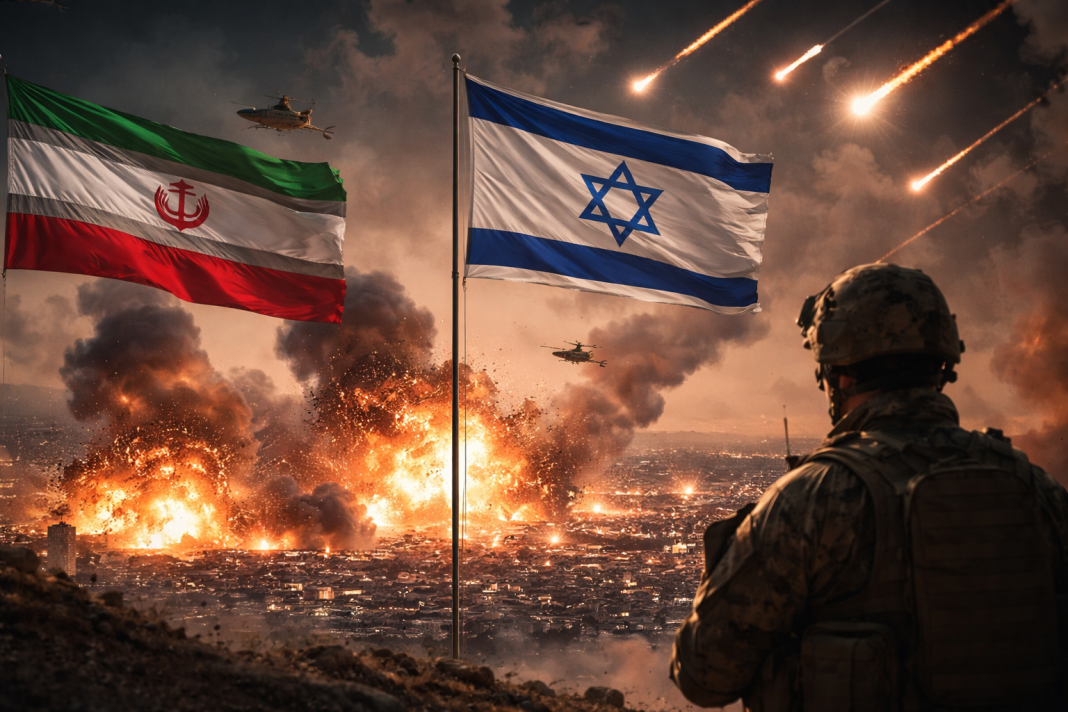

The Iran-Israel conflict has entered a more intense phase after Israeli officials assessed that several top Iranian military leaders were likely killed in recent airstrikes on Iranian targets.
Israel Says IRGC Chief Mohammad Pakpour Likely Killed in Iran Airstrikes
Among those reportedly killed is General Mohammad Pakpour, the chief of Iran’s Islamic Revolutionary Guard Corps (IRGC). Israeli intelligence assessments suggest Pakpour was present at one of the military sites targeted in coordinated strikes.
Iran has not officially confirmed his death.
Pakpour had taken charge of the IRGC after Israel killed his predecessor, Hossein Salami, at the beginning of the June 2025 war. As head of the IRGC, Pakpour played a major role in directing Iran’s missile programs, drone operations, and broader regional military strategy.
The IRGC is one of the most powerful military bodies in Iran. It operates separately from the regular Iranian army and is responsible for protecting the country’s political system, overseeing advanced weapons programs, and supporting allied armed groups across Iraq, Syria, and Lebanon.
If confirmed, the death of Pakpour would represent a serious blow to Iran’s military command structure during an ongoing conflict.
UK moves to withdraw Tehran embassy staff and begins evacuation as Iran security risks rise
Reports Say Iran’s Defence Minister and Intelligence Chief Also Targeted
In addition to Pakpour, Israeli officials assessed that Iran’s defence minister and intelligence chief may have been killed in the same wave of strikes.
While names were not officially confirmed in the reports, Israeli assessments suggest that multiple senior officials were present at the targeted military facilities.
Iranian authorities have not issued confirmation regarding these claims. The Israeli Defence Forces have also not provided final verification.
If accurate, the reported deaths of the defence minister and intelligence chief would mark one of the most significant military leadership losses for Iran in recent years.
The defence minister plays a central role in shaping Iran’s national security policy, overseeing military production, coordinating with the armed forces, and managing defence procurement. The intelligence chief is responsible for security operations, internal intelligence coordination, and strategic threat assessment.
Losing these figures during an active military confrontation could disrupt Iran’s command and control systems, at least temporarily, and may trigger a strong response from Tehran.
Reports also indicated that senior Iranian leaders, including Supreme Leader Ali Khamenei and President Masoud Pezeshkian, were among those targeted during the strikes. However, the outcome of those specific attacks remains unclear.
At this stage, much of the information comes from Israeli assessments. Official confirmation from Iran is still pending.
Iraqi Militia Threatens US Bases as Middle East Tensions Rise
The situation expanded beyond Iran and Israel when a pro-Iran Iraqi militia group accused the United States of conducting an airstrike on one of its facilities in Iraq.
Kataeb Hezbollah claimed that US forces targeted an Iraqi military base housing members of the group. The militia strongly condemned the alleged strike and warned that it would soon begin attacking American military bases in response.
This development raises serious concerns for US troops stationed in Iraq and across the Middle East.
Iran-backed militia groups in Iraq have previously carried out rocket and drone attacks against US military facilities during times of heightened regional tension. The latest threat suggests that the confrontation could widen further if retaliatory actions occur.
US officials have not released detailed information about the alleged strike mentioned by the militia. However, security levels at American bases in Iraq and neighboring countries remain high.
Military analysts warn that if Iraqi militia groups begin targeting US bases, the United States could become more directly involved in the conflict. That would significantly increase instability across the Middle East.
The current situation remains fluid. Israeli officials are continuing to assess the results of their strikes, while Iran has not officially confirmed the reported deaths of its senior military leaders.
If the reports about IRGC chief Mohammad Pakpour, Iran’s defence minister, and the intelligence chief are confirmed, the Iran-Israel war could escalate further, potentially drawing in additional regional and international actors.
Israel activates air defenses after Iran launches missiles toward major cities
For now, tensions across Iran, Israel, Iraq, and the wider Middle East remain high as governments evaluate their next steps in an increasingly volatile security environment.