
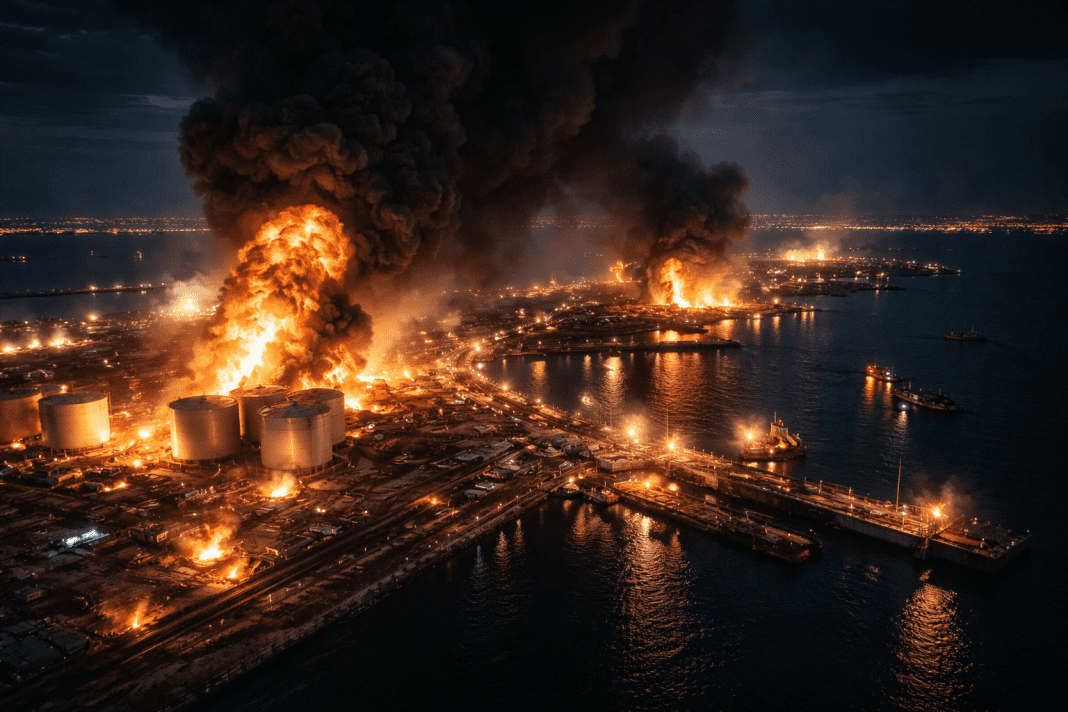

Iran’s Kharg Island has been hit by multiple strikes, escalating tensions across the Middle East. The island is a key oil export hub, raising concerns over critical energy infrastructure. The attack comes amid wider strikes and explosions across Iran and rising US–Iran–Israel tensions.
Kharg Island hit by multiple strikes, key oil route affected
Iranian forces hit Kharg Island with multiple strikes on Tuesday, marking a major escalation against one of the country’s key oil export hubs. The island is a vital part of Iran’s energy system and plays a central role in the national economy.
Located in the Persian Gulf near major shipping lanes, Kharg Island is close to US military bases in Kuwait and Saudi Arabia. Reports indicate that nearly 90% of Iran’s oil exports pass through this site, making it critical for global energy flows as well.
Local reports say several areas of the island were targeted, though the extent of damage is still unclear. The strikes have raised concerns over the safety of key oil infrastructure and possible disruptions to exports. The incident comes amid already high regional tensions, increasing fears of further escalation.
Wider escalation across Iran and surrounding region
The attack on Kharg Island is not an isolated incident, as authorities have reported multiple explosions and strikes across Iran and nearby regions. In recent developments, people reported blasts in parts of Alborz province and other sensitive areas, suggesting a wider pattern of attacks on both industrial and strategic locations.
Along with Kharg Island, attackers have targeted several energy-related and industrial sites. Israel has claimed responsibility for striking a petrochemical facility in Shiraz, one of Iran’s key industrial cities. These actions form part of a broader series of military strikes that affect multiple regions inside the country.
Officials have also reported disruptions in transport systems. Authorities halted railway movement in the city of Mashhad after issuing warnings that advised people to avoid using train networks for a specified period. The military issued the warning through official channels and urged civilians to stay away from railway lines due to safety concerns.
At the same time, witnesses reported explosions in Tehran and nearby Karaj. In northern Iraq’s Kurdistan region, people also heard two blasts near Erbil airport, raising fears that the unrest may spread beyond Iran’s borders.
Israel stated that it carried out a new wave of airstrikes on Iran and said its air defence systems responded after Iran fired missiles. The exchange of strikes and counterstrikes has created a rapidly changing and highly unstable security situation across the region.
Tehran’s warning, Trump’s deadline, and rising global pressure
Following the strikes on Kharg Island and other reported attacks, Iran’s leadership has issued a strong response, saying its approach has now changed and that “restraint is over.” The statement signals a sharper shift in tone, with Iranian military officials suggesting they may respond more aggressively if attacks continue.
Iran’s army central command, Khatam Al-Anbiya, reportedly said that operations against US and Israeli forces will continue. It described these actions as “crushing operations” and stressed that Iran will not back down under ongoing military pressure. Officials used strong language, calling opposing forces “enemies” and saying the operations will not stop.
At the same time, tensions have increased due to pressure from the United States. US President Donald Trump has set a self-imposed deadline for Iran to agree to reopen the Strait of Hormuz, an important global oil route. The deadline is reported to end at 8 pm ET on Tuesday, which is early morning in India on Wednesday.
US urges Israel to pause strikes on Iran oil infrastructure citing risks to global energy supply
Trump has warned of serious consequences if Iran does not comply, including possible strikes on major infrastructure such as bridges and power plants. These comments have raised global concern about further escalation.
Iran has rejected these warnings, calling them “arrogant rhetoric and baseless threats,” and said such pressure will not change its actions. Meanwhile, reports suggest that Pakistan, Egypt, and Turkey are working on a possible 45-day ceasefire proposal. Financial markets have reacted, with oil prices rising and US stock futures dipping amid growing uncertainty.