
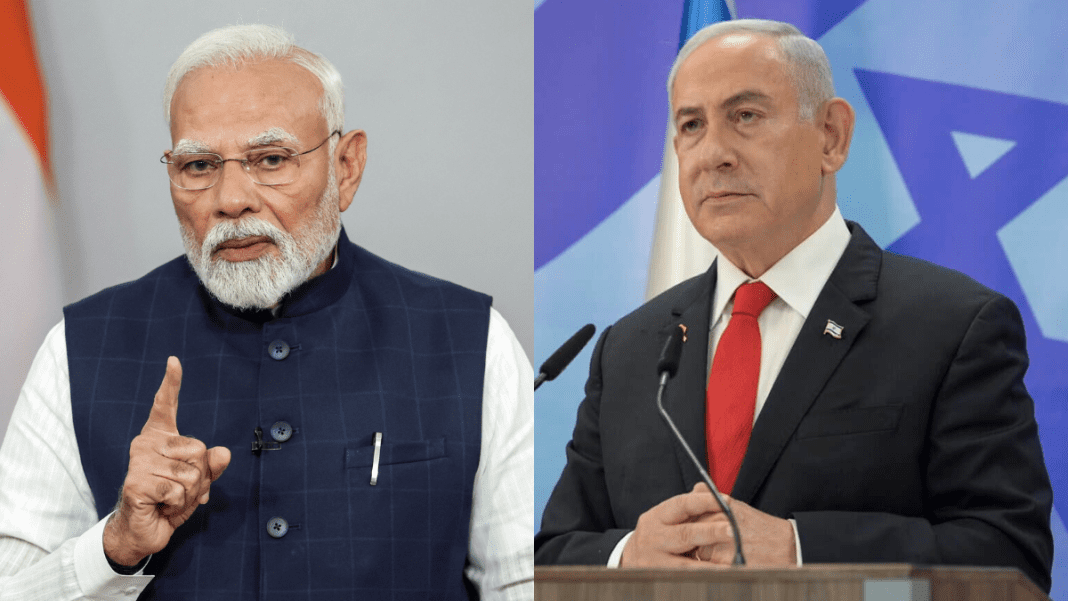

Israeli Prime Minister Benjamin Netanyahu has presented a broad diplomatic proposal ahead of Indian Prime Minister Narendra Modi’s visit to Israel, placing India at the center of a proposed six-nation strategic framework. The two-day visit, beginning February 25, is expected to highlight expanding cooperation in technology, security, and regional partnerships.
Speaking at the weekly cabinet meeting, Netanyahu described India as a “global power” and emphasized the strong personal and political understanding between the two countries. He said Modi’s visit would showcase the depth of the relationship and help widen cooperation across several key sectors.
Netanyahu Hexagon Alliance Plan Takes Shape
At the heart of Netanyahu’s remarks was the idea of a “hexagon” alliance. He described it as a grouping that would include India, Israel, Arab countries, African nations, Mediterranean partners such as Greece and Cyprus, and other Asian states.
According to Netanyahu, the countries in this proposed framework share similar views on regional stability and security. He said cooperation among these nations could create a powerful strategic axis stretching across Asia, the Middle East, Africa, and parts of Europe.
India eyes deeper Israel missile defence cooperation as Modi heads to Tel Aviv
While no formal structure or timeline was announced, the idea reflects ongoing efforts to reshape regional partnerships. The concept resembles broader connectivity initiatives linking India with the Middle East and Europe, but Netanyahu framed it more as a geopolitical and security partnership rather than just an economic project.
He stated that the alliance would unite countries that hold similar concerns about extremist threats in the region. In his view, closer coordination between these partners would strengthen resilience and expand strategic influence across multiple regions.
Focus on Technology and Innovation
New India–Russia nuclear submarine pact sends shockwaves through U.S. and China as Putin visits Modi
The visit marks Modi’s second trip to Israel. His first visit in 2017 was historic, as he became the first Indian Prime Minister to travel to the country. That trip was widely viewed as a milestone in bilateral ties. Since then, engagement between the two nations has expanded steadily across defense, agriculture, cybersecurity, water management, and trade.
Visit Amid Wider Regional Attention
The India–Israel meeting takes place at a time when developments in the West Bank are drawing international attention. Settlement growth and related actions have raised concerns among several countries about the future of the two-state solution.
India has traditionally supported a two-state solution while maintaining strong and growing ties with Israel. This dual approach has allowed New Delhi to deepen cooperation with Israel without stepping away from its longstanding diplomatic positions.
After months of uncertainty, Trump and Modi move to end trade war with lower tariffs
Netanyahu’s comments ahead of the visit placed emphasis on both personal rapport and strategic alignment. He noted that the relationship between the two nations has strengthened over the years, supported by frequent communication and high-level exchanges.
The upcoming meetings are expected to underline how India and Israel see each other as important partners in technology, security, and regional cooperation. With discussions set to span advanced innovation, diplomacy, and the proposed “hexagon” framework, the visit highlights the expanding scope of engagement between the two countries across multiple regions.