
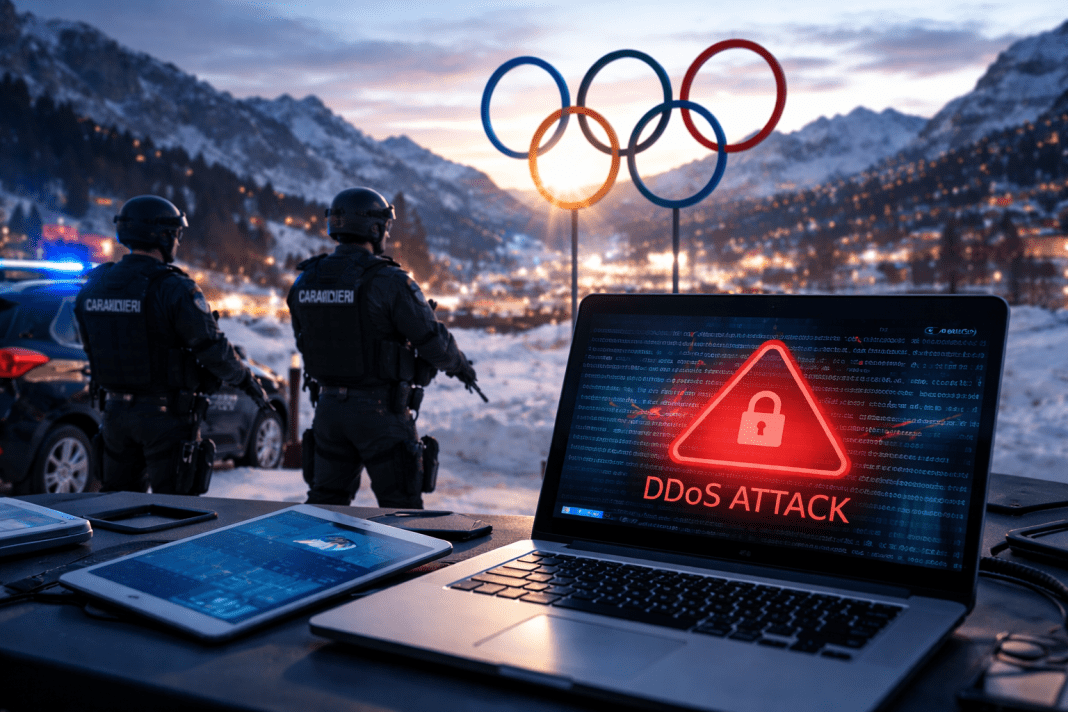

Italy announced on Wednesday that it had successfully stopped a wave of cyberattacks aimed at disrupting the 2026 Winter Olympics. The attacks struck just hours before the opening ceremony in Milan. They highlighted the growing threat of cyber incidents at major international sporting events. Authorities said the attacks targeted both government offices and Olympic-related websites. Swift security measures effectively neutralized the threat. Officials confirmed that the attacks did not cause serious disruptions.
Cyberattacks Hit Olympics Sites and Government Offices
The cyberattacks affected more than 120 websites. These included sites connected to the Italian Foreign Ministry and several hotels in Cortina d’Ampezzo, one of the Winter Olympics host towns. Officials said that despite the scale of the attacks, most sites were quickly restored. They added that no significant damage occurred.
A pro-Russian hacker group claimed responsibility for the attacks. The group said the operation was retaliation for Italy’s support of Ukraine. In a statement, they warned that countries backing Ukraine could face distributed denial-of-service (DDoS) attacks. These attacks overload websites with traffic to make them temporarily unavailable. Cybersecurity analysts said the group’s tactics and timing were similar to previous attacks linked to Russian-affiliated hackers.
At least one hotel website in Cortina remained offline on Wednesday afternoon. This showed that some effects of the attacks were still being felt. However, officials stressed that essential Olympic services and government operations continued to function without disruption. The Italian authorities said the attacks were largely aimed at creating fear and disturbance rather than causing lasting harm.
Major Security Measures Deployed Across Olympic Venues
In response to these threats, Italy has significantly increased security across all Olympic venues. Around 6,000 police officers and nearly 2,000 soldiers have been deployed to ensure the safety of athletes, visitors, and officials. Security efforts extend from Milan, which hosts the opening ceremony, to the Dolomites, where various Olympic events are taking place.
NATO unleashes toughest stance since Ukraine war — member states can now act without waiting
Security in Milan is particularly tight, as foreign leaders are expected to attend the opening ceremony. Authorities said that the presence of international officials has added urgency to the protection measures, with both digital and physical threats being carefully monitored.
Officials highlighted that the attacks were “effectively neutralized” due to close coordination between cybersecurity teams and law enforcement agencies. While the cyberattacks were sophisticated, authorities said that the coordinated response prevented any major disruption to Olympic operations or government functions.
Hacker Group Claims Responsibility, Cites Ukraine Support
The hacker group behind the attacks, calling itself Noname057, posted messages on a Russia-linked messaging platform claiming responsibility. The group warned that nations supporting Ukraine could face similar cyberattacks. Although the account could not be independently verified, cybersecurity experts noted that the methods and timing of the attacks aligned with prior operations linked to Russian hackers.
Officials said that the attacks primarily targeted hotels and online services associated with the Olympics. The group’s statement suggested a political motive aimed at punishing Italy for its stance on Ukraine. Despite these warnings, authorities emphasized that the attacks posed no threat to the safety of athletes or visitors.
NATO cooperates with Estonia after mystery drone sighted near military base close to Russia
Italian authorities confirmed that all critical systems, including Olympic and government networks, remained operational. Cybersecurity teams continue to monitor all systems around the clock, ensuring that any additional threats can be identified and mitigated quickly. Olympic organizers also confirmed that preparations for the games are proceeding without interruption, despite the cyber incidents.
The Italian government’s swift response to the attacks demonstrates a high level of preparedness against digital threats. Officials continue to stress vigilance as a key part of Olympic security, with both physical and digital measures working together to ensure a safe and successful event.