
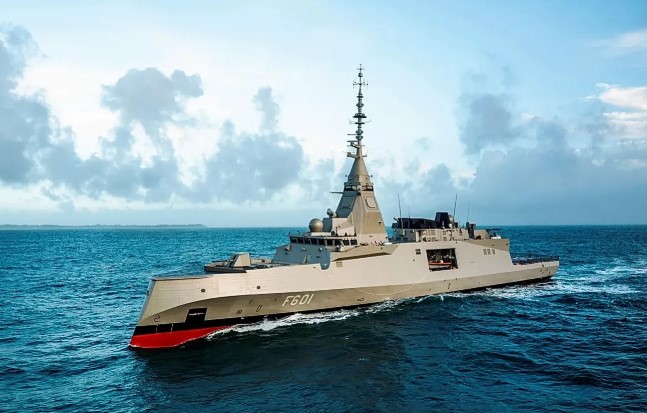

Greece has received its first advanced frigate, Kimon, from France, marking a key step in the country’s €25 billion military modernisation programme. Handed over at a shipyard in western France, the vessel now sails under the Greek flag, symbolising closer defence ties with France and a major upgrade to the Greek navy after years of limited defence spending.
Kimon Frigate Strengthens the Greek Navy With Modern Combat Capabilities
The Kimon is a modern frigate built under the FDI programme, a new generation of naval vessels designed for advanced sea operations. The ship can handle multiple tasks, including defending against air threats, surface attacks, and underwater dangers. Compared to older warships, the Kimon uses advanced radar systems, digital controls, and modern weapons, allowing it to react faster and more accurately during missions.
After receiving the ship, Greece will send it to another French naval base to install its main weapons systems. These systems include anti-ship missiles that can target enemy vessels at long distances and air-defence missiles that can intercept aircraft and missiles. Once the installation is complete, the Greek navy will sail the Kimon to the naval base near Athens.
Greece warns of intensifying East–West cyber conflict as espionage attempts quietly spike
Officials plan to make the frigate fully operational in the Aegean Sea and the eastern Mediterranean region in 2026. These waters hold high importance for Greece due to trade routes, energy interests, and long-standing regional tensions. By adding the Kimon, the Greek navy expects to significantly improve its ability to monitor and protect these areas.
Growing Defence Cooperation as France Delivers the Kimon Warship to Greece
Greece and France signed a defence agreement several years ago that includes the delivery of the Kimon. Under this deal, Greece agreed to purchase three advanced frigates as part of a defence package valued at around €3 billion. The agreement also gives Greece the option to acquire a fourth ship, which the Greek parliament has already approved and the French government has formally confirmed.
This naval cooperation forms only one part of a broader defence relationship between the two countries. In recent years, Greece has made several major military purchases from France, demonstrating a clear effort to upgrade its armed forces with modern technology. These deals highlight close political and military cooperation and a shared interest in regional security.
Securing the Seas: Greece’s Naval Measures Against Illicit Russian Oil Transfers
Greece has also signed agreements to acquire advanced anti-ship missiles from France to strengthen coastal and naval defence capabilities. While officials have not publicly shared the exact cost of these missile deals, they contribute to a steady flow of defence purchases aimed at improving Greece’s military readiness.
The defence partnership includes air and land equipment as well. Greece has already received fighter jets and military helicopters from France, adding to its overall military strength. These acquisitions underline a long-term commitment to modernisation rather than a single, isolated purchase.
€25 Billion Modernisation After Years of Cuts
Greece’s defence programme marks a clear break from the past, following years of reduced military spending during the 2010–2018 financial crisis. As the economy stabilised, the country began rebuilding its armed forces to meet operational needs and address regional challenges. The €25 billion modernisation plan now covers the navy, air force, and army, with a strong focus on replacing outdated equipment.
For the navy, this includes phasing out older frigates that are no longer effective against modern threats and introducing advanced vessels such as the Kimon. These new ships are designed to operate with modern weapons and digital systems, strengthening Greece’s ability to protect key maritime areas.
High-Voltage Warfare! Greece Secures Lockheed Martin Support for F-35 Program in New $17M Agreement
The programme also aims to improve coordination across the military. New technologies allow naval, air, and ground forces to share information more quickly, reflecting the growing importance of speed and communication in modern defence operations.
Officials say the strategy is defensive in nature, driven by long-standing disputes over maritime boundaries in nearby seas. The arrival of the Kimon highlights the progress of this modernisation effort, showing how plans have moved into real deliveries. Overall, increased defence spending has become central to Greece’s strategy to strengthen security and update its military after years of economic difficulty.