
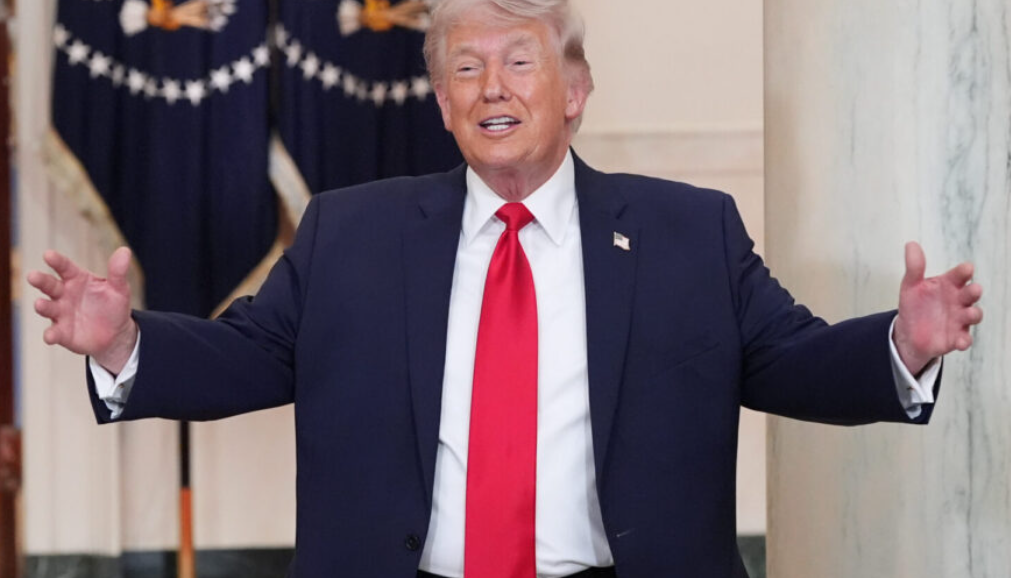

Rising tensions in the Middle East have sparked concern that Donald Trump may end the Iran war without a formal agreement. Analysts warn this could strengthen Iran’s position while leaving Gulf nations exposed to economic and security risks linked to the ongoing Iran war.
Rising Concerns Over a Quick End to the Iran War
Recent analyses suggest that Trump could create a risky situation if he ends the Iran war without securing a formal agreement. Experts warn that such a move may unintentionally strengthen Iran’s position while leaving Gulf nations exposed to instability and economic uncertainty.
Iran has already demonstrated resilience by withstanding sustained military pressure from the United States and Israel during the Iran war. Instead of weakening, its leadership appears more confident and unified. Analysts believe this growing confidence could shift the regional balance of power, allowing Iran to expand its influence and assert itself more strongly.
The 14-day ultimatum: What Donald Trump’s latest speech means for the Iran conflict
A key concern is the Strait of Hormuz, a crucial route for global oil supplies. Iran’s ability to disrupt this passage has already impacted oil prices worldwide. Experts warn that without clear guarantees, tensions from the Iran war could continue to affect energy markets and increase pressure on global economies.
Gulf States Fear Strategic Imbalance
Experts warn that Gulf countries could face serious consequences if the Iran war ends without clear guarantees or a structured agreement. Many of these nations rely heavily on stable oil and gas exports to support their economies. A sudden end to the conflict could leave them dealing with uncertainty and disruptions caused by a war they neither started nor controlled.
Mohammad Bahron highlighted that stopping the war does not necessarily mean Iran will halt its actions. This creates a dangerous imbalance, where one side may pause military operations while the other continues to exert pressure. Such a situation could leave Gulf states vulnerable to ongoing threats without adequate protection.
Damaged radar systems impact Israel’s defense as Iran missile strikes bypass sensors
Analysts say this imbalance is central to the concerns of Gulf nations. Iran could emerge from the conflict with increased influence, giving it greater ability to threaten key shipping routes and global energy supplies. Meanwhile, Gulf countries would bear the economic and security risks of an unresolved conflict, including instability in trade and rising costs.
Freedom of navigation remains a major concern, particularly in the Strait of Hormuz. Experts believe Iran could assert more control over this critical route, disrupting global trade flows. Its ability to influence oil markets and energy infrastructure allows it to create economic pressure without engaging in direct large-scale warfare.
Miscalculations and Iran’s Strengthened Position
Political analysts say the United States and Israel may have made a serious miscalculation in expecting Iran to weaken after recent military strikes. Instead, these actions appear to have strengthened unity within the country during the Iran war. Experts explain that external pressure often brings Iran’s political and military institutions closer together, making the system more resilient rather than fragile.
A major turning point came with the assassination of Ali Khamenei. The move was intended to destabilize Iran’s leadership structure, but the outcome was very different. His son, Mojtaba Khamenei, quickly assumed a leading role, and the incident fueled a strong sense of resistance. Rather than causing disorder, it reinforced national solidarity and strengthened the leadership’s position.
President Trump signals he is ready to bring troops home as Americans lose patience with the war
Fawaz Gerges noted that this event changed the nature of the conflict. What began as a geopolitical struggle turned into a more emotional and ideological confrontation. Khamenei’s death elevated him as a symbol of resistance, which deepened public support and made the leadership more determined to stand firm.
Magnus Ranstorp highlighted that Iran relies on asymmetric strategies instead of direct warfare. By targeting energy routes and global trade, Iran can create economic pressure on its opponents. Analysts also warn that Iran has wider networks that could be activated, increasing risks not just in the Middle East but globally.