

On the night of Saturday, March 28, the Ukraine Defense Forces carried out a long-range strike. It targeted multiple facilities inside Russia. One of the key targets was a major explosives manufacturing plant. The plant is located in Chapayevsk. This marked another significant development in the ongoing conflict.
Strike Targets Key Explosives Facility in Chapayevsk
The attack focused on the industrial site operated by Promsintez JSC, one of the largest producers of explosives in Russia. The facility is located in Chapayevsk, within the Saratov Region. This location lies more than 850 kilometers away from the Ukrainian border, making the strike notable for its deep reach into Russian territory.
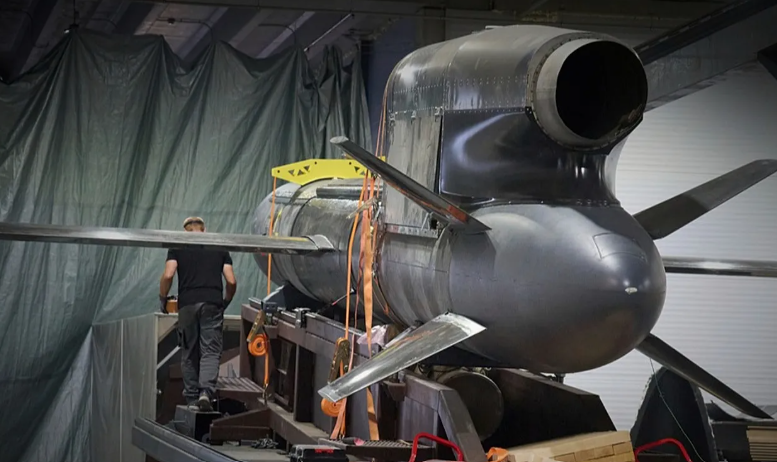
According to reports circulating online, the Ukrainian forces used a long-range cruise missile identified as the FP-5 Flamingo. Footage shared on various platforms appears to show the moment of impact, followed by a powerful explosion in what is believed to be the plant’s production area.
The strike highlights the ability of Ukraine to hit strategic industrial targets far from the front lines. The distance involved suggests advanced targeting capabilities and careful planning. The Promsintez plant is considered a critical part of Russia’s military-industrial base due to its large-scale production of explosives.
Online Footage and OSINT Analysis Spread Rapidly
Soon after the strike, videos and images began spreading across social media. These clips reportedly show a missile hitting the facility, followed by flames and smoke rising from the site. The authenticity of these visuals has been supported by open-source intelligence (OSINT) groups, including KyberBoroshno.
OSINT analysts used geolocation techniques to confirm that the footage matches the layout and surroundings of the Promsintez plant in Chapayevsk. By comparing buildings, roads, and industrial structures visible in the videos with satellite imagery, they concluded that the strike indeed took place at the targeted facility.
Ukraine’s long-range Liutyi drones hit vital unit at Russia’s Metafrax chemical plant
Experts note that satellite images taken after the attack will provide clearer evidence of the damage. These images can reveal structural destruction, fire impact, and the exact areas affected within the industrial complex. Such analysis often takes time, as high-resolution satellite data must be collected and reviewed.
The rapid spread of visual evidence highlights how modern conflicts are closely followed online. Real-time footage and independent verification by OSINT communities play an important role in shaping public understanding of events.
Previous Attacks and Strategic Importance of the Plant
This was not the first time the Promsintez JSC facility has been targeted. In April 2025, the same plant was reportedly struck by long-range drones that traveled nearly 1,500 kilometers to reach their destination. The distance itself drew attention, as it highlighted the growing ability of Ukraine to carry out strikes far beyond the immediate conflict zone.
Those earlier drone operations were described as highly complex and carefully planned. Reports suggested that the drones did not follow a straight path. Instead, they changed direction mid-flight to avoid detection by Russia’s air defense systems. This tactic made it more difficult for radar systems to track them and reduced the chances of interception before they reached the target.
Satellite images taken after the April 2025 strike showed visible signs of damage at the facility. One of the workshops had a noticeable breach in its roof, which strongly indicated a direct hit. Although detailed reports on the full extent of the destruction were not made public, the images confirmed that the plant had already been successfully targeted once before.
The Promsintez plant itself is a large industrial complex, reportedly consisting of around 40 workshops. It has the capacity to produce more than 30,000 tons of explosives annually, used in both civilian industries and military operations. Its repeated targeting underlines its strategic importance in the ongoing conflict.