
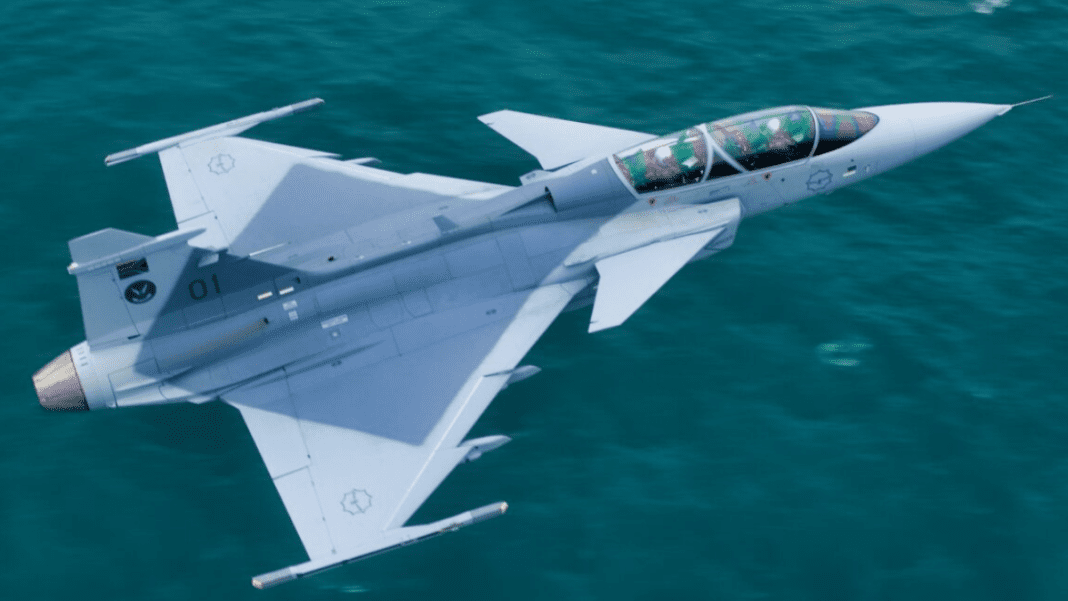

Canada is reconsidering its plan to buy 88 F-35 stealth fighter jets from the United States, and a new contender is gaining attention: the Swedish-made JAS 39 Gripen. This comes as officials search for the best way to defend Canadian airspace without overspending or relying too heavily on Washington for support. The debate has sparked interest because it is not just about military strength—it also involves cost, sovereignty, and the country’s industrial future.
JAS 39 Gripen Offers Practical Power for Canada’s Missions
The JAS 39 Gripen is a multirole fighter developed by Sweden. It is a 4.5-generation jet, which means it is highly advanced but not as sophisticated as the fifth-generation F-35. Despite not having the latest stealth features, the Gripen comes equipped with modern sensors, electronic warfare systems, and long-range weapons that allow it to perform a wide variety of missions.
One of the Gripen’s biggest advantages is its cost. It is cheaper to purchase and maintain than the F-35, and each flight hour costs significantly less. The Gripen is also designed to be easy to repair, with simpler maintenance requirements compared with the F-35. This is particularly important for Canada, which has vast territories to cover, including remote and difficult-to-access areas in the Arctic.
Canada releases fighter evaluation showing F-35 scores higher than Gripen in key categories
The Gripen is capable of handling Canada’s key defense needs. It can intercept unknown aircraft, patrol national skies, protect coastal regions, and maintain Arctic air sovereignty. Experts supporting the Gripen say that Canada does not need the F-35’s extra stealth and high-tech systems to perform these missions effectively.
Another important point is independence. The F-35 relies heavily on U.S. support for upgrades, maintenance, and software updates. The Gripen allows Canada to have more control. The country could establish its own maintenance and manufacturing operations for the Gripen, potentially creating thousands of jobs while ensuring that upgrades and repairs are managed domestically. This reduces reliance on foreign suppliers and gives Canada more flexibility in planning its defense strategy.
Mixed Fleet Challenges and NORAD Questions
If Canada decides to reduce the number of F-35s it purchases and instead buy Gripens, it would need to operate a mixed fleet. This means some jets would be F-35s, and some would be Gripens. Operating two different types of fighter jets can create challenges. Maintenance procedures differ, pilots may need separate training programs, and logistics become more complicated. Despite these hurdles, the cost savings and greater operational independence may outweigh the challenges.
U.S. warns of alliance fallout as Canada weighs F-35 fighter jet deal
Canada’s role in NORAD—the North American Aerospace Defense Command—is also a key factor in the decision. NORAD monitors and protects the skies over both Canada and the United States. Some U.S. officials have warned that reducing F-35 purchases could affect NORAD missions, even suggesting that U.S. jets might need to fill potential gaps.
However, Gripen advocates argue that the jet can perform NORAD missions effectively. It is fully compatible with NATO-standard communications and can handle patrols, intercepts, and air defense tasks. According to supporters, the advanced stealth and extra capabilities of the F-35 are not necessary for Canada’s specific needs.
Why Canada Is Thinking Differently
The debate over fighter jets in Canada is not just about military power—it also involves politics and finances. Geopolitical tensions, trade disputes, and a desire to reduce dependence on the United States are influencing the discussion.
The F-35 has faced criticism worldwide for its high costs and maintenance challenges. Running a full fleet would be expensive and complicated. The Gripen, on the other hand, is known for its high readiness rates, lower operating costs, and ease of upkeep, making it appealing for countries that want strong defense capabilities without excessive spending.
Ultimately, the choice comes down to priorities. Canada must decide whether it wants the maximum technological advantage offered by the F-35, or whether it prefers a balance of capability, cost efficiency, and independence with the Gripen. The argument for the Gripen is simple: it provides the exact level of capability Canada needs, at a lower cost, while allowing the country to maintain greater control over its fighter jets and defense operations.
For now, Canadian officials are reviewing the plan carefully. The debate highlights the tension between high-end stealth technology and practical, cost-effective solutions that can meet the country’s air defense requirements effectively.