
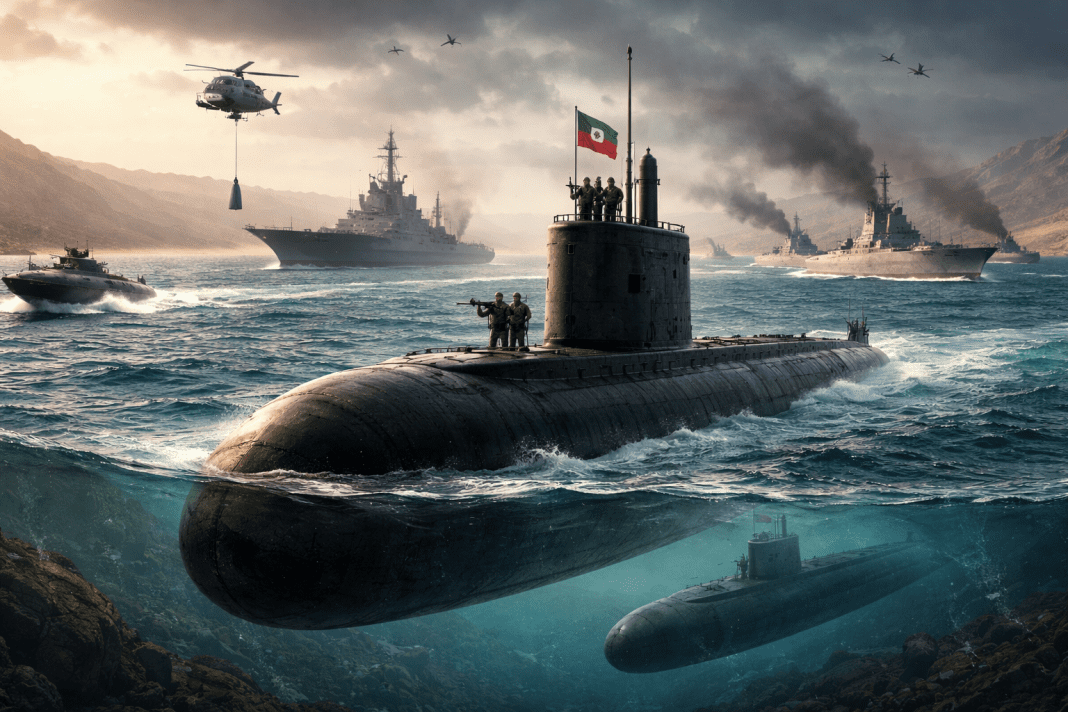

Tensions are rising in the Strait of Hormuz, one of the world’s busiest sea routes. U.S. carrier strike groups now operate in these waters. Iran relies on its quiet “Black Hole” Kilo-class submarines. These subs make the area highly dangerous for any naval force.
This has led to a simple but serious question: could these hidden submarines really threaten, or even sink, a U.S. Navy aircraft carrier?
Why the Strait of Hormuz Is So Important
The Strait of Hormuz is a narrow sea passage connecting the Persian Gulf to the open ocean. While the strait is wider in some areas, the safe shipping lanes are very narrow, giving ships only a few miles to move in each direction. This makes traffic crowded and predictable, which is important for any force planning an ambush.
The constant movement of cargo ships, oil tankers, and naval vessels creates a noisy underwater environment. Engine sounds, waves, and echoes make it harder to detect submarines, giving small and quiet boats, including Iran’s stealthy “Black Hole” Kilo-class submarines, an advantage to hide.
Did Trump’s B-2 Bombing Pushed Iran to Block Hormuz and Paralyze Europe?
Iran does not aim to control the sea like a large navy. Instead, it follows a “sea denial” strategy—making the waters dangerous enough to deter enemy ships. It uses a mix of tools, including sea mines, coastal missiles, fast attack boats, and submarines.
Iran’s two naval forces work together, combining larger ships and subs with smaller boats and coastal defense. The narrow shipping lanes help Iran predict enemy movements and plan ambushes effectively.
Iran’s Submarine Force and the “Black Hole” Boats
Iran’s submarine fleet in the Persian Gulf consists of two main types that could threaten naval forces. The first type is a group of small submarines, with around 20 or more in service. These boats are much smaller than standard attack submarines and are designed to operate in shallow coastal waters.
These small submarines run on diesel engines and batteries, making them extremely quiet when submerged. They can carry torpedoes and lay naval mines. Their small size and stealth allow them to hide effectively among rocks, seabeds, and complex water conditions, making detection difficult.
Middle East on edge as UAE draws red line and US warships move closer to Iran
However, these small submarines have limitations. They cannot stay at sea for long periods, and if discovered, they are vulnerable to modern warships and helicopters. Their defense and endurance are limited compared to larger submarines.
The second type is Iran’s three larger Kilo-class submarines, nicknamed “Black Hole” subs for their low acoustic signature. They can operate in deeper waters, carry heavy torpedoes, and lay mines. Maintenance and age issues mean not all are always operational, but when active, these quiet and powerful subs pose a serious undersea threat in the region.
What a U.S. Carrier Group Faces and How It Is Defended
A U.S. aircraft carrier never sails alone. It is always protected by a group of escort warships, including destroyers and cruisers equipped with advanced radars, missiles, and sonar systems. Support ships also travel with the group, carrying fuel, supplies, and food. One of the primary jobs of these escorts is to defend the carrier from submarines. The U.S. Navy uses a layered defense system, meaning threats are detected and addressed at multiple distances.
Helicopters launched from the ships can deploy sonobuoys—special listening devices that detect submarines—and can carry lightweight torpedoes to attack them. Long-range patrol aircraft also monitor large areas of ocean, tracking submarines over time. Combined, ships, helicopters, and aircraft create a wide network of sensors and weapons, making a U.S. carrier extremely hard to hit.
Hormuz in Flames? US Demands China to Stop Blockade Shock!
While the carrier itself is well-defended, escort ships and support vessels are more likely targets for submarines. Even a single successful attack could disrupt operations, slow down missions, or force the group to adjust its plans.
The narrow and noisy waters of the Strait of Hormuz make submarine detection challenging, helping small and quiet submarines hide. At the same time, the area is heavily monitored, highlighting both the strategic importance of the region and why stealthy “Black Hole” submarines remain a key part of modern naval strategy.