
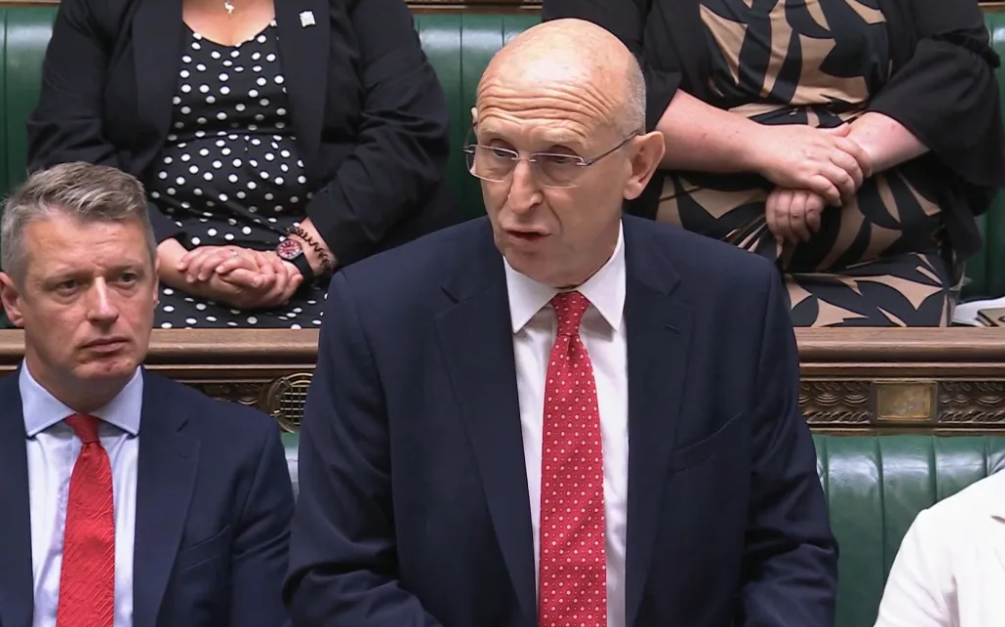

NATO defence ministers are likely to discuss plans to strengthen security in the Arctic next week. Greenland is expected to be central to the talks. Britain’s Defence Secretary John Healey said the issue is gaining attention. This follows tensions within the alliance caused by comments from U.S. President Donald Trump. The Arctic’s strategic location, combined with rising global competition, has made the region an increasing priority for NATO.
Why Greenland and Arctic Security Are Now a Major NATO Issue
Greenland’s strategic importance came back into focus after U.S. President Donald Trump said he wanted the island, arguing that European allies had not secured it properly. His comments triggered strong reactions from Denmark, which governs Greenland, and briefly strained unity within NATO.
The Arctic is becoming more accessible as climate change melts sea ice, opening new shipping routes and attracting interest from major global powers. This has raised the region’s strategic value, with Greenland playing a key role due to its position between North America and Europe.
Trump says U.S. gets ‘total access’ to Greenland — Denmark and Greenland say otherwise
Britain’s Defence Secretary John Healey said NATO allies now recognise Arctic security as a serious challenge. He noted that members are working together on collective measures to protect Greenland and the wider Arctic region.
NATO’s Arctic Sentry Mission and What It Means
The proposed “Arctic Sentry” mission is expected to be discussed at the upcoming NATO defence ministers’ meeting in Brussels. According to NATO, the plan is described as an “enhanced vigilance” effort. It is designed to strengthen security, monitoring, and awareness across the Arctic region. In recent years, the Arctic has become increasingly important for global defence.
As part of NATO’s broader military planning, Arctic Sentry focuses on tracking activity in the far north. While full operational details have not been made public, the mission is expected to involve closer cooperation among NATO member states. In addition, it may include improved intelligence sharing. Better coordination between national forces is also expected.
France asks NATO to hold military exercise in Greenland to support allies amid US tensions
If required, the plan could involve a stronger military presence. This would allow NATO to respond more quickly to unusual movements or emerging security threats. As a result, readiness and situational awareness in the region would be improved.
Speaking on the issue, Britain’s Defence Secretary John Healey said the mission shows NATO allies are taking Greenland and Arctic security seriously. He added that it reflects the alliance’s growing focus on the far north.
Britain’s Role, Defence Spending, and Private Investment Push
Britain has played an active role in shaping NATO discussions on Arctic security and broader defence planning. In recent years, the United Kingdom has increased its defence spending, responding both to the war in Ukraine and to pressure from the United States for NATO allies to contribute more to shared defence costs.
At the same time, President Donald Trump has repeatedly called on NATO members to spend more on defence, arguing that the financial burden should be more evenly shared. In response, Britain has boosted its military budget and supported efforts to strengthen NATO’s overall capabilities.
According to Defence Secretary John Healey, Britain is also looking beyond public spending to fund defence-related projects. Speaking at a recent event, where smaller technology companies presented their ideas to investors, he stressed the importance of attracting private capital that has not traditionally been involved in defence. He noted that rising public defence investment should be matched by private funding to support innovation and long-term growth.
Greenland may not be for sale, but Bill Gates is already betting on its rare-earth wealth
More broadly, this approach fits into a wider NATO effort to modernise military forces and invest in advanced technologies. In particular, improvements in surveillance, communication, and defence systems are seen as crucial for operating in challenging environments such as the Arctic.
Looking ahead to the meeting, these priorities are expected to shape discussions at the upcoming NATO gathering in Brussels. There, defence ministers will review spending levels, cooperation, and shared security commitments across the alliance.