
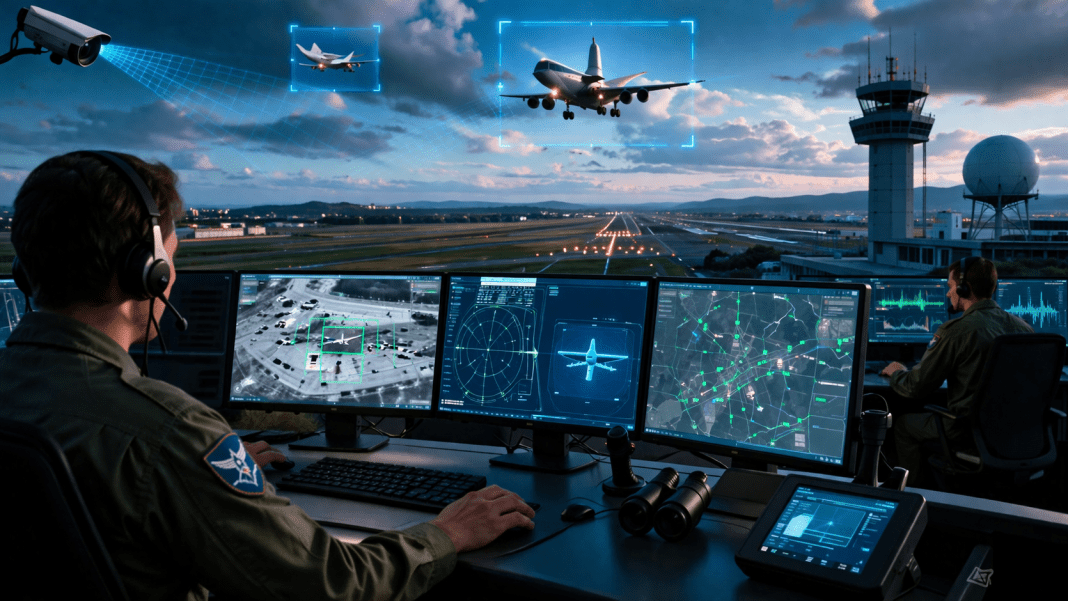

The Air Force has clarified that its new AI monitoring system is designed to support flight safety, not replace existing procedures. The system uses advanced technology to assist operations while ensuring that pilots and air traffic controllers remain in full control. The statement comes amid concerns about its effectiveness and highlights its role as a supportive tool.
AI Monitoring System Explained in Simple Terms
The Air Force Command Headquarters has clarified that its newly introduced AI-based monitoring system is designed to enhance flight safety, not replace existing air traffic control procedures. The statement comes after reports questioned the usefulness of the AI monitoring system and raised concerns about its impact on operations. Officials emphasized that all standard safety protocols remain fully active and continue to be managed by trained personnel.
According to the Air Force, the AI monitoring system works as a support tool rather than a replacement. It acts like an extra set of eyes, helping detect potential issues early while pilots and air traffic controllers continue to handle all critical decisions.
U.S. Air Force orders second batch of JSM missiles to expand precision strike options for F-35
Installed last year, the system uses advanced image analysis to compare ground-captured visuals with expected flight patterns. It identifies unusual movements and sends alerts for review, helping reduce risks and improve overall operational safety.
Addressing Concerns and Early Testing Challenges
Some reports described the system as “virtually useless,” raising doubts about its performance. In response, the Air Force explained that this is the first time such technology has been deployed within its operations. As with any new system, there were initial challenges during the testing phase.
During early trials, the system’s settings, also known as parameters, were still being fine-tuned. This process involved adjusting how the AI interprets data and improving its ability to recognize correct and incorrect flight patterns. At the same time, the database used by the system was being expanded. A larger database allows the AI to learn better and make more accurate judgments.
The bold Air Force experiment that backfired — why the A-10 Warthog survived against all odds
The Air Force stated that these early issues were expected and part of the development process. Over time, engineers and operators worked to correct the deficiencies. Adjustments were made step by step to improve performance and reliability.
After these improvements, the system underwent inspections to ensure it met required standards. According to the Air Force, it has now successfully passed these checks. This indicates that the system is functioning as intended and can be safely used as part of ongoing operations.
The clarification aims to reassure the public and stakeholders that the system is not flawed but rather evolving, as many new technologies do during their early stages.
Continuous Improvements and Data-Driven Training
The Air Force also highlighted that the AI monitoring system will continue to improve over time. One of the key strengths of AI technology is its ability to learn from data. The more information it receives, the better it becomes at identifying patterns and detecting problems.
To support this process, the Air Force is actively collecting more image data. This data helps train the AI model, making it smarter and more accurate. As the system processes more real-world scenarios, it becomes better at distinguishing between normal and unusual flight behavior.
In addition, feedback from user units plays an important role. Personnel who work directly with the system can report their experiences, including any issues or suggestions. This feedback is then used to make further improvements.
The Air Force is also working closely with contractors responsible for developing and maintaining the system. These contractors are being supervised to ensure that all upgrades and changes meet contractual and safety requirements. This ensures that the system continues to evolve in a controlled and reliable manner.
Air Force monitors second B-21 Raider as it completes initial flight at Edwards AFB
The focus remains on enhancing the system’s performance without interfering with existing safety procedures. By combining human expertise with AI support, the Air Force aims to strengthen its overall monitoring capabilities while maintaining strict safety standards.
The statement reinforces that the AI system is not a replacement but a supportive tool. Its role is to assist, warn, and enhance awareness, helping ensure that every flight operation remains as safe as possible.