
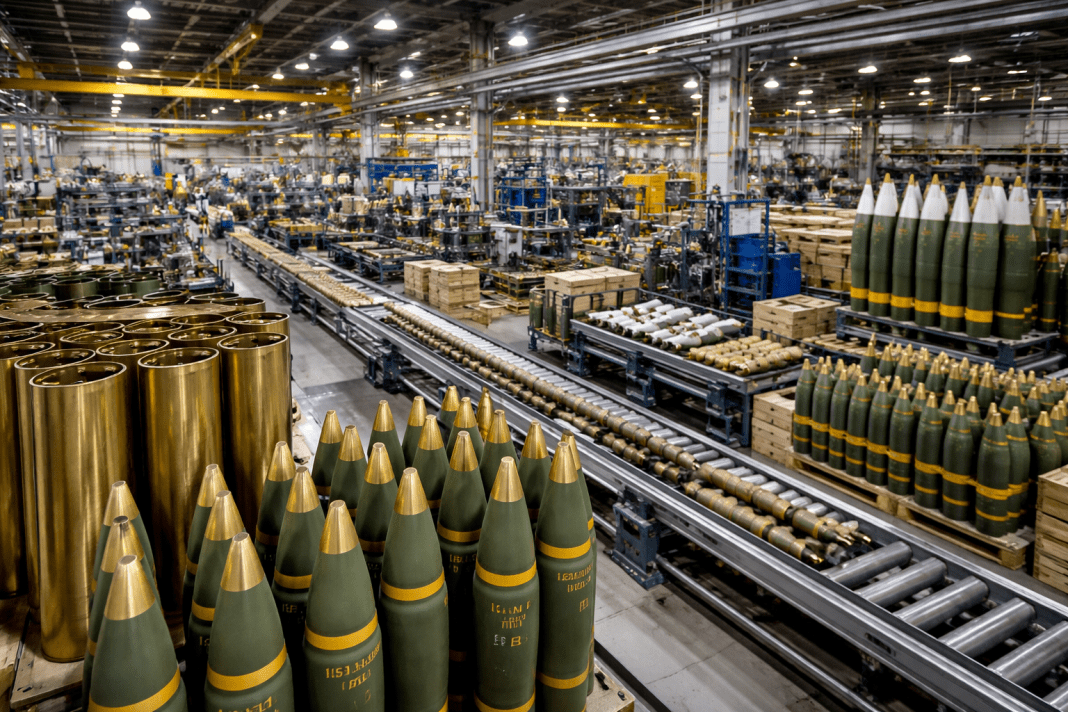

The United States is under growing pressure to strengthen its ammunition supply chain as global conflicts test military readiness. While weapons production continues, concerns remain about whether output can be sustained in a long war. Aging facilities and fragile supply networks make it difficult to quickly rebuild depleted stockpiles, exposing key weaknesses in the system.
Growing Pressure on America’s Ammunition Supply Chain
The United States can produce the weapons and ammunition needed for national defense. However, the key concern is whether this production can be sustained during a long and intense war. In normal conditions, supply levels remain stable. But prolonged conflict places heavy pressure on manufacturing systems. It also strains the logistics networks that support the military.
Recent global conflicts have revealed how quickly ammunition stockpiles can be depleted. Once these reserves are reduced, rebuilding them is a slow process that requires time, raw materials, and coordinated industrial output. This creates strain not only on weapon production but also on the entire supply chain that supports it.
Iran claims a second US F-35 stealth jet was shot down over its central region
A crucial part of this system includes energetic materials such as explosives, propellants, and ignition compounds used in missiles, artillery shells, and other defense equipment. Since 2022, efforts have focused on increasing production capacity and restoring stockpiles. The war in Ukraine has further highlighted how rapid ammunition consumption can expose weaknesses in supply readiness.
Old Infrastructure and Limited Production Capacity Slow Output
Much of the United States’ ammunition production system relies on aging infrastructure, with several key facilities originally built during World War II. Although these plants have been upgraded over time, many still operate on processes and designs developed decades ago. This creates limits in how quickly and efficiently production can scale during periods of high demand.
One major explosives production site still in use today dates back to the World War II era and remains central to supplying high explosives used in a wide range of ammunition. While modernization efforts are ongoing, the system continues to depend heavily on these legacy facilities.
United States reviews missile defense after Iran reportedly destroys THAAD radar in Jordan
Updating or changing production methods is also slow and complex. In military manufacturing, even small adjustments must pass strict testing and approval processes that can take up to two years. As a result, agencies often avoid making incremental improvements, even when they could increase efficiency or output.
This creates a significant bottleneck, making it difficult to rapidly boost production when urgent needs arise. At the same time, production is concentrated in a limited number of sites, meaning disruption at one facility can affect the entire supply chain.
Compared with World War II, when output was extremely high, current production levels are significantly lower, despite modern security demands and the need for sustained readiness during crises.
Energetics Bottlenecks and Fragile Supply Networks Expose Weak Points
A major hidden challenge in the United States defense supply chain is “energetics,” the chemical materials that power weapons. These include explosives like RDX and TNT, along with propellants and detonators that make missiles and artillery shells work.
The supply chain for these materials is fragile and concentrated. In some areas, production depends on only a few suppliers, and there is even reliance on a single foreign source for a key explosive material, creating supply risks.
US pulls key missile defenses from South Korea as interceptor stockpiles face growing pressure
Although the country has access to many raw chemical ingredients, the difficult step is converting them into usable energetic compounds. This processing is limited to a small number of specialized facilities, slowing overall output.
Because of this structure, the system has multiple “single points of failure,” where disruption in one part can affect the entire chain. Defense reviews and stockpile rebuilding efforts have exposed these weaknesses, while newer modular and automated methods are being explored alongside older infrastructure.