
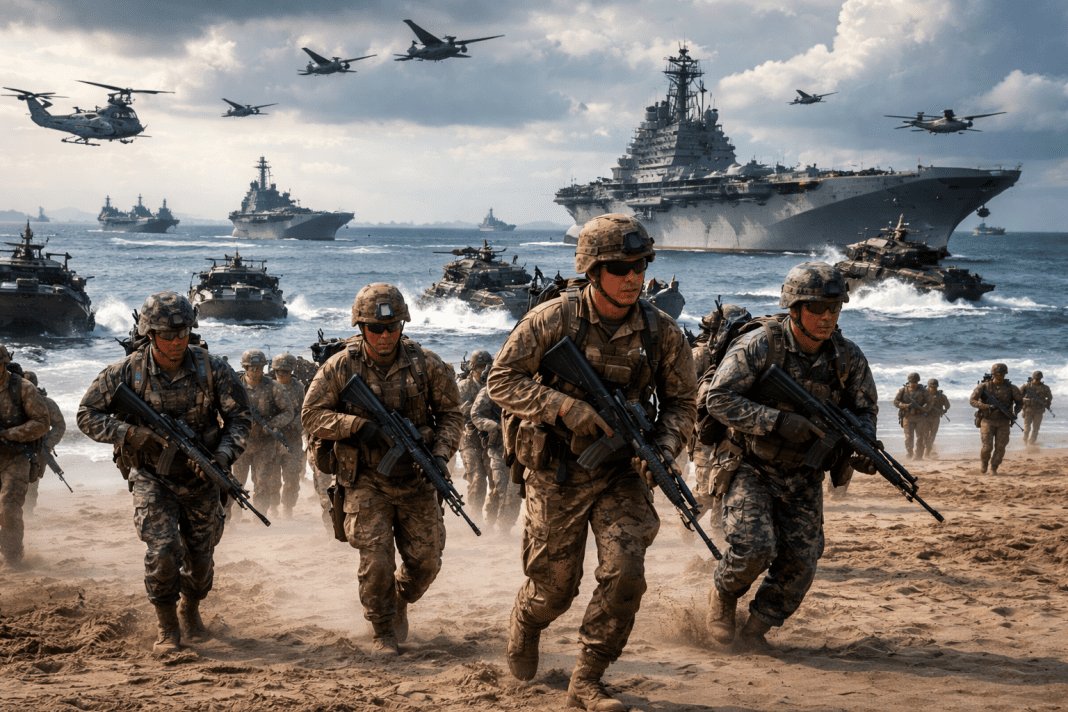

Amid rising global tensions, the United States and the Philippines are leading the Balikatan exercises. Over 17,000 troops are taking part. The drills come as disputes in the South China Sea continue. Conflicts in other regions are also pushing nations to strengthen military readiness.
Massive War Drills Send a Powerful Signal
A major military exercise is underway as the United States and the Philippines bring together more than 17,000 troops for their biggest joint war drills ever. The exercises, known as Balikatan exercises, will take place from April 20 to May 8 and involve forces from multiple allied nations.
The word “Balikatan” means “shoulder-to-shoulder” in Tagalog, reflecting how different countries are working closely together. This year’s drills are larger than ever before, surpassing the previous record of 16,000 personnel set in 2024.
Along with the US and the Philippines, troops from Australia, Japan, Canada, France, and New Zealand are also participating. In addition, 17 more countries are observing the drills, making it one of the most widely watched military exercises in the region.
The training includes activities on land, at sea, in the air, and even in cyberspace. Soldiers will practice real combat situations, including firing weapons, defending coastlines, and coordinating attacks using modern military systems. These drills are designed to improve teamwork and readiness among allied forces.
South China Sea Disputes Drive Urgency
The exercises are taking place near the South China Sea, a region that has become a major source of tension in recent years. This sea is highly important because it is rich in natural resources such as oil and gas, and it also serves as one of the busiest global trade routes, connecting major economies across Asia and beyond.
China claims large portions of this sea, including areas that the Philippines says fall within its exclusive economic zone. This overlapping of claims has led to frequent stand-offs and confrontations between Chinese and Philippine forces, increasing uncertainty and concern in the region.
Recently, Philippine officials stated that Chinese forces fired flares at one of their coast guard aircraft during a routine patrol over Mischief Reef and Subi Reef. These areas are part of disputed islands where China has developed artificial land and built military infrastructure, including airstrips and radar systems.
In another incident, Philippine authorities claimed that Chinese boats dumped harmful substances near Second Thomas Shoal, raising concerns about damage to military outposts stationed there. China rejected these claims. Amid these rising tensions, the Philippines is strengthening its external defense, with drills focusing on maritime security, coastal defense, anti-submarine warfare, and search-and-rescue operations.
Global Conflicts Add to Growing Military Pressure
The large-scale drills are not only focused on regional tensions but are also taking place at a time when conflicts are increasing across the world. Many countries are becoming more alert and are strengthening their military readiness as global uncertainty continues to rise.
The ongoing tensions between the United States and Iran have added to these concerns. The US has launched a naval blockade in the Strait of Hormuz, which is one of the most important routes for global oil transportation. This action is meant to pressure Iran, but it has also raised fears about possible disruptions to energy supplies worldwide.
China warns Philippines after rumored Taiwan minister visit sparks uproar
At the same time, the conflict in Ukraine and the growing military activities of China are pushing countries to improve their defense capabilities. These developments are increasing the importance of joint military drills like the Balikatan exercises, where multiple nations train together to respond to different types of threats.
This year’s exercises also mark a significant moment as Japan joins combat drills for the first time under a new agreement with the Philippines. The training focuses on coordination, intelligence sharing, and quick response. The large number of troops and participating countries highlights the growing importance of such joint military efforts.