
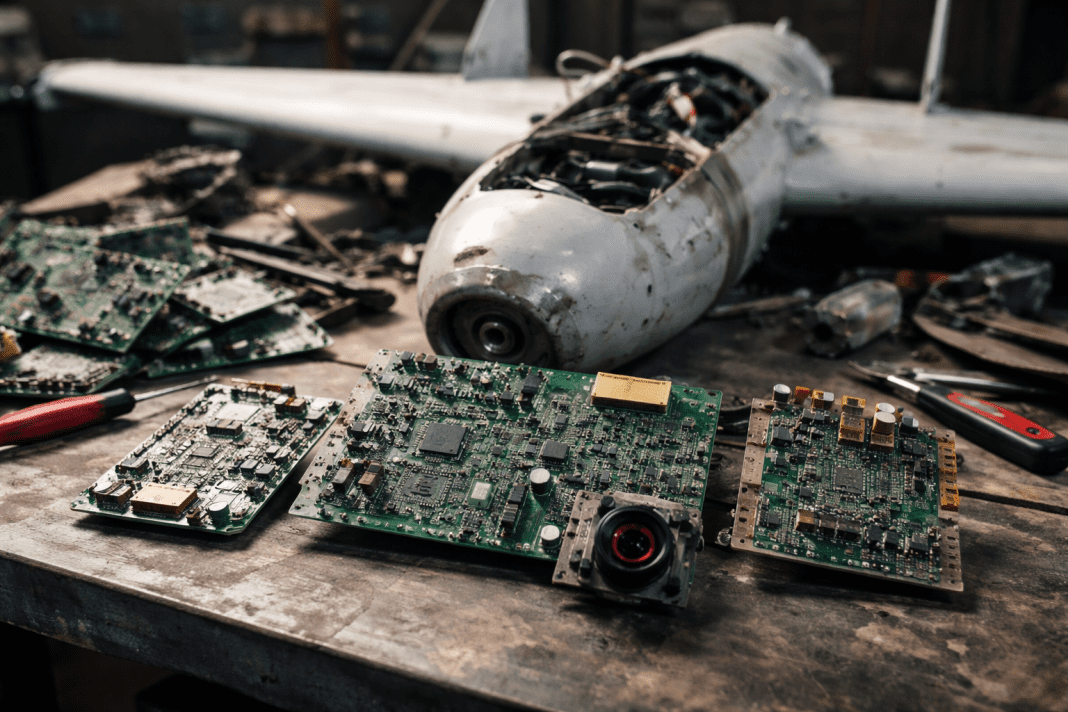

Recent analysis of recovered weapons shows changes in Shahed drone electronics and related missile systems. Earlier Dutch-made components used for navigation and targeting now appear largely replaced by parts believed to come from China and Taiwan. There are also reports of possible performance and reliability issues, reflecting shifts in supply chains and technology.
Major Changes Found in Shahed Drone Electronics Supply Chain with Dutch Components
Recent findings show a shift in the electronic components used in Shahed-type drones involved in the ongoing conflict. Earlier versions contained high-quality Dutch-made parts. These included processors, microchips, power transistors, inverters, and inertial measurement units. These parts are important for flight control and targeting accuracy.
New examinations of recovered drones suggest that these Dutch-made components have largely disappeared. They now appear to be replaced by parts believed to originate from China and Taiwan. These newer components are described as lower-quality or “questionable” compared to earlier European electronics.
Ukrainian forces strike Shahed drone preparation hubs inside Russia during a coordinated night raid
The change was identified through analysis of drone wreckage from recent operations. The focus was on key systems such as navigation units, power modules, and printed circuit boards. Earlier assessments had found around a dozen Dutch-origin components in Shahed systems. This shows a previously stronger reliance on Western European technology.
Shift Toward Chinese and Taiwanese Components in Drone Manufacturing
Recent technical findings suggest a major shift in the supply chain used for Shahed-type drones. Earlier models contained a noticeable number of Dutch-made electronic components, but newer recovered units show these parts have largely been replaced by components believed to originate from China and Taiwan. These newer parts are now used in key internal systems, including printed circuit boards.
Detailed examinations of drone wreckage indicate that many circuit boards in recent recoveries are of foreign origin and are most likely manufactured in China. Some components also carry production dates as recent as March 2026, suggesting the supply chain is still actively changing and evolving.
China highlights major gas pipeline work with Russia to boost energy supply amid Iran tensions
Despite this shift, Western-made electronics have not fully disappeared. Investigators have still found components produced in the United States and Europe in drones built in 2025. This indicates the supply chain remains mixed, relying on multiple international sources rather than a single supplier.
Overall, the system appears complex, combining older stocked parts with newly sourced components from different regions. It includes both high-end Western electronics and newer Asian-made parts. Printed circuit boards play a central role as control units, linking navigation, sensors, and flight systems. Even small changes in their quality or design can affect overall drone performance and accuracy.
Reports Indicate Possible Drop in Missile Accuracy and Technical Stability
Alongside changes in drone components, there are also reports suggesting performance issues in other weapon systems, including ballistic missiles. Some observations indicate a possible decline in accuracy in systems similar to Iskander-type missiles, which are designed for precision targeting.
Technical assessments suggest these issues may be linked to changes in electronic components and challenges in maintaining strict supply chain control. When high-quality parts are replaced with lower-grade alternatives, even small differences can impact navigation systems and reduce targeting accuracy.
There are also references to internal discussions within military-related channels expressing concerns about reliability. In some cases, it has been suggested that multiple missile launches may be required to ensure a single successful strike. This points to possible inconsistencies in guidance systems or reduced precision in flight control technology.
Central Asia Faces Turmoil as US Europe and China Russia Compete for Power
The use of mixed-origin components can also create compatibility issues in complex electronic systems. Modern drones and missiles rely on precise coordination between sensors, processors, and guidance units. If even one component fails to meet required standards, the overall performance and accuracy of the system can be affected.
These observations come alongside ongoing findings from inspections of recovered equipment and battlefield debris, which continue to show changes in the sourcing and internal design of electronic systems used in these platforms.