
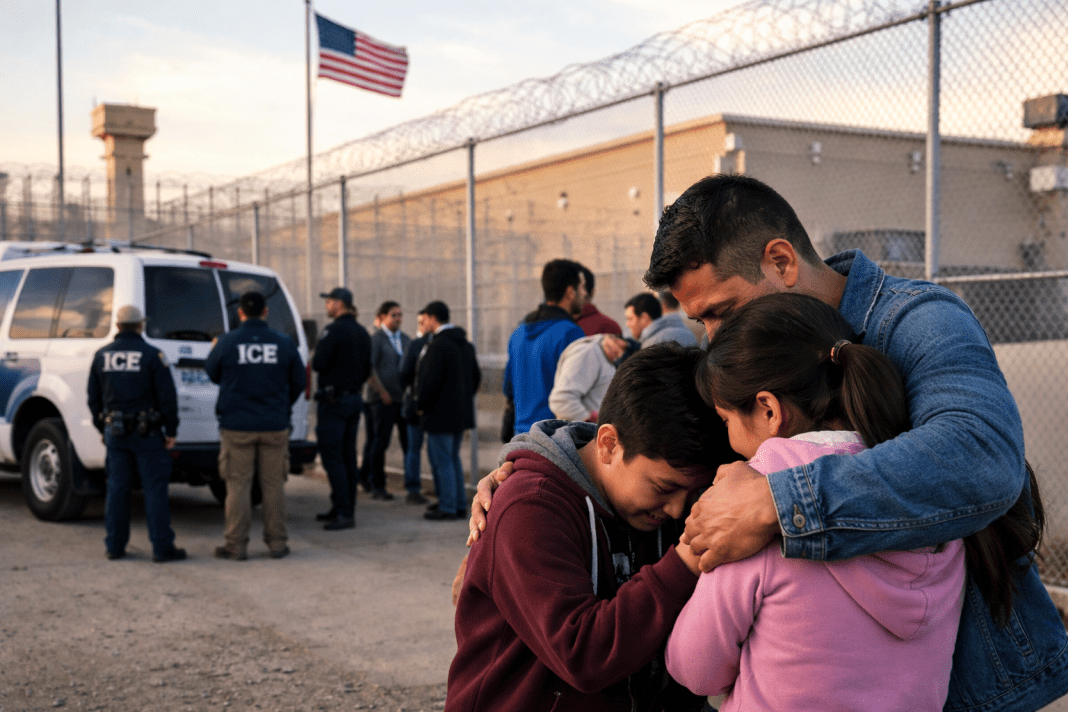

A major legal decision in Nevada has challenged a strict immigration policy introduced during the administration of Donald Trump. The ruling could change how immigration detention works in the state and may impact thousands of people currently facing deportation.
A federal court in Nevada has said that immigration authorities cannot automatically detain every person facing deportation without giving them a chance to ask for release. The decision directly affects how Immigration and Customs Enforcement (ICE) operates in the state and could allow many detainees to reunite with their families while their cases are ongoing.
Nevada Court Says Mandatory Detention Violates Rights
A federal court in Nevada has ruled against a strict immigration rule that required authorities to detain nearly all people facing deportation. The administration of Donald Trump introduced this policy as part of a broader effort to tighten immigration enforcement across the United States.
Judge Richard Boulware II found that the rule violated federal law because it denied individuals a fair chance to challenge their detention. He also noted that holding people without giving them access to bond hearings could cause serious and lasting harm.
The ruling is important because it stops immigration officials from automatically detaining people without reviewing their individual situations. It also marks a rare moment where a class-action lawsuit successfully overturned a policy from the Department of Homeland Security in Nevada.
How the Policy Worked and Why It Was Challenged
The “mandatory detention” policy required Immigration and Customs Enforcement to hold most people facing deportation in custody, no matter how long they had lived in the country or whether they had committed any crimes. This meant that even individuals with clean records could be locked up.
Under this rule, detainees were not allowed to ask an immigration judge for release on bond. In the past, such hearings gave people a chance to return home while waiting for their cases to move forward. The removal of this option made detention automatic and often prolonged.
Legal groups, including the American Civil Liberties Union of Nevada, challenged the policy by arguing that it treated all immigrants the same, without considering whether they posed any risk. They said this approach ignored basic legal protections and fairness.
Across the country, more than 100 judges have raised similar concerns. While the 9th U.S. Circuit Court of Appeals recently supported the administration in a separate case affecting parts of California, the Nevada ruling stands on its own and applies within the state.
Immediate Impact on Detainees and Legal Cases
The court’s decision is already beginning to reshape how officials handle immigration cases across Nevada. Lawyers working with detainees say judges are now granting bond hearings in situations where authorities previously denied them without consideration. This change allows some individuals who authorities held for long periods to ask a judge to review their case and possibly return home while they wait for further legal proceedings. For many families, this creates an immediate and meaningful difference.
Legal experts estimate that the ruling could allow around 60 people each week to request release on bond. Over time, it may affect thousands of detainees across the state, especially those who do not have violent criminal records. Under earlier rules, authorities held many of these individuals without considering personal circumstances such as family ties or how long they had lived in the United States.
Financial spy tool yanked from ICE after agents used it to hunt immigrants
Advocates, including a legal clinic at the University of Nevada, Las Vegas, along with the American Civil Liberties Union of Nevada, filed the case. It centered on two men who entered the country as minors and were denied bond despite clean records.
Under the ruling, detention centers must now clearly inform detainees of their rights and provide legal forms to challenge their detention. Meanwhile, the Department of Homeland Security has not confirmed whether it will appeal.