
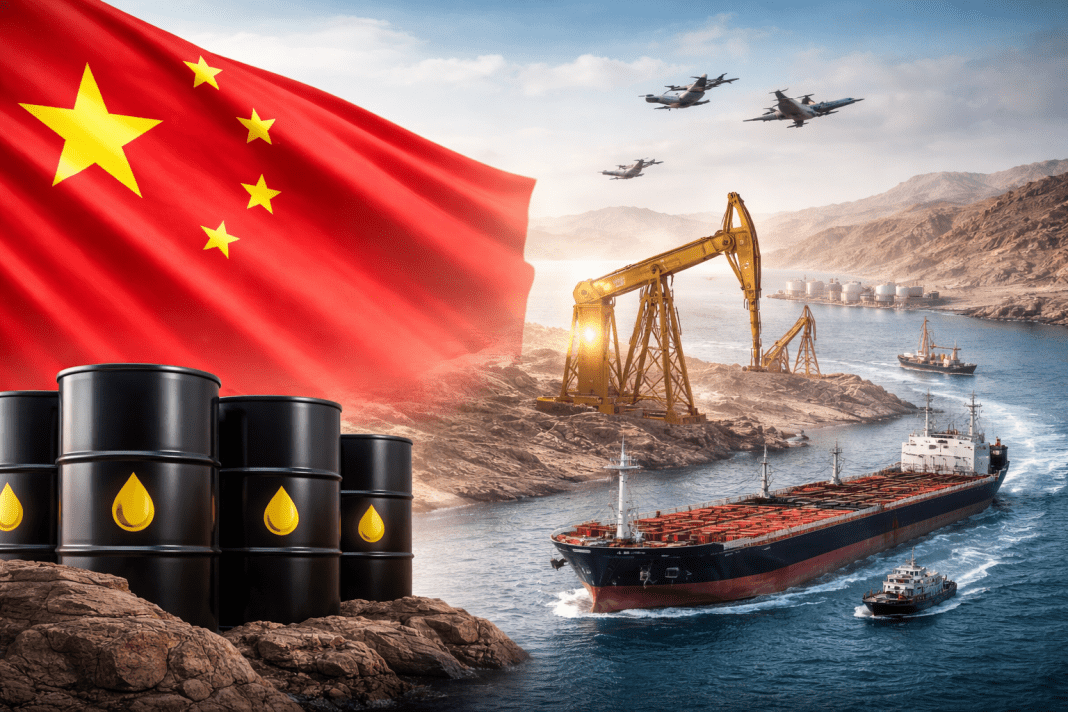

China has recently stepped into the tense United States–Israel–Iran conflict as a mediator, working alongside Pakistan at a time when global energy supply chains and trade routes are under pressure. While the United States continues its military approach, Beijing is presenting itself as a peaceful negotiator.
However, reports from international media suggest that China’s involvement is not only about peacebuilding. It also reflects deeper economic needs and strategic interests.
China Faces Energy Security Pressure in the Fight to Keep Oil Flowing
One of the main reasons behind China’s involvement is energy security. China is the world’s largest importer of crude oil, so it depends heavily on foreign countries to keep its industries, transport systems, and factories running smoothly. Iran is an important part of this supply chain, making its relationship with Beijing strategically important during global uncertainty.
In 2025, around 12 percent of China’s oil imports came from Iran. This is a major share, especially at a time when global energy markets are already under pressure. Any disruption in Iranian oil exports can directly affect China’s long-term energy planning, which is why Beijing continues trade even during conflict and sanctions.
Seven Russian oil tankers originally bound for China make sudden U-turn toward India
A key risk is the Strait of Hormuz, through which nearly 20 percent of global oil passes. Rising tensions in this region can disrupt shipping and raise oil prices. China has reportedly urged restraint to protect global energy flows.
Diplomatic Strategy and Strong Alignment with Pakistan
Another key reason behind China’s mediation push is its close partnership with Pakistan. Pakistan acts as an important communication bridge because it shares a long border with Iran and maintains diplomatic channels with several major powers, including the United States. This positioning allows Islamabad to connect different sides that are otherwise politically distant.
China and Pakistan jointly presented a five-point peace proposal in Beijing. The plan calls for an immediate halt to fighting, early dialogue between involved parties, protection of civilians and critical infrastructure such as energy and nuclear sites, reopening of maritime routes including the Strait of Hormuz, and the creation of a long-term peace framework based on the United Nations Charter.
India emerges as a more reliable mediator for Middle East peace over Pakistan
Pakistan’s role is mainly focused on facilitating communication and easing tensions between conflicting sides, while China provides diplomatic weight and international influence. This combination allows both countries to present a coordinated approach to conflict resolution, rather than acting individually on separate agendas.
Reports suggest Pakistan has also been actively encouraging dialogue between key stakeholders during the crisis. China is using this partnership to strengthen its position as a global mediator. By working closely with Pakistan, Beijing is able to extend its diplomatic reach into sensitive regions where direct involvement may be limited or complicated.
Geopolitical Positioning and Competition with the United States
A third major reason behind China’s mediation push is its growing competition with the United States. The conflict is not only about regional stability but also reflects broader global power rivalry. While the United States continues to rely on military pressure, China is presenting itself as a diplomatic alternative that focuses on negotiation and stability.
Beijing has consistently supported Iran’s sovereignty and opposed any attempts at forced regime change. It has also condemned actions it views as violations of international law. At the same time, China has avoided direct criticism of US leadership, carefully balancing its statements to prevent escalation and keep diplomatic channels open during sensitive global trade discussions.
US urges Israel to pause strikes on Iran oil infrastructure citing risks to global energy supply
China’s approach is also linked to its global image-building strategy. By acting as a mediator, Beijing aims to position itself as a responsible global power capable of managing crises. This allows China to gain influence in international affairs without directly engaging in military operations, strengthening its role in global diplomacy.
Despite its diplomatic stance, China continues to maintain strong economic ties with Iran. It remains one of Iran’s largest oil buyers and continues trade even under sanctions pressure. Reports also mention limited indirect assistance in industrial areas, although China has officially denied providing any weapons or direct military support during the conflict.