
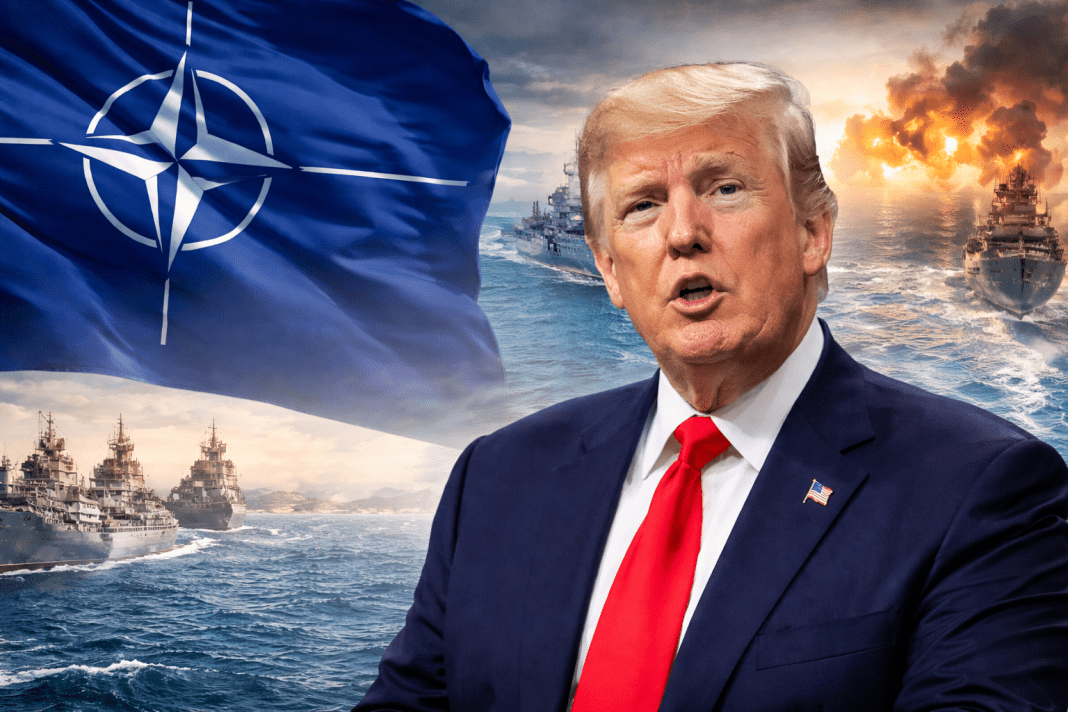

US President Donald Trump has triggered global debate after making strong remarks about the future of NATO amid rising tensions involving the United States, Israel, and Iran. He called North Atlantic Treaty Organization a “paper tiger” and suggested the US may reconsider its membership. His comments come during disputes over military cooperation, allied support, and security of key global routes like the Strait of Hormuz.
Trump’s Strong Remarks on NATO and the “Paper Tiger” Claim
US President Donald Trump has said he is “strongly considering” withdrawing the United States from NATO after rising tensions linked to global conflicts involving the US and its allies. In comments to The Telegraph, he called North Atlantic Treaty Organization a “paper tiger,” saying it appears strong but is actually weak.
Trump said he has long doubted NATO’s strength and claimed that even global leaders like Russian President Vladimir Putin see its weaknesses. He suggested the issue of US membership was “beyond reconsideration,” signaling a serious shift in stance.
Germany rejects Trump’s call for NATO to secure the Strait of Hormuz
He expressed frustration over what he described as a lack of automatic support from NATO members during US military-related situations. Trump argued that the US has often supported allies, including during the Ukraine conflict, while expecting similar backing in return.
Context: US-Israel-Iran Conflict and Strait of Hormuz Dispute
The remarks came during rising tensions linked to the ongoing conflict involving the United States, Israel, and Iran. According to Trump, NATO allies did not support a US request to send warships to help reopen the Strait of Hormuz, a key global shipping route.
The Strait of Hormuz is one of the world’s most important oil transport passages, with a large share of global oil passing through it daily. Reports say the route was disrupted after Iran closed it following US-Israeli strikes on Iranian targets on February 28. This disruption caused oil prices to surge and raised concerns about a possible global economic slowdown.
Trump said the refusal of NATO members to assist in securing the route showed a lack of commitment. He said he expected automatic support from allies in such a serious crisis.
Trump signals that ending military operations depends on stopping Iran’s nuclear program
He also criticized some European countries for not taking direct part in military responses. Trump specifically referred to UK Prime Minister Keir Starmer, questioning Britain’s military readiness and naval strength.
Trump argued that certain allies were not contributing as expected during what he called a high-risk global security situation, raising doubts about NATO’s unity under pressure.
He added that the United States should not automatically take responsibility for protecting critical waterways like the Strait of Hormuz, saying countries that depend on these routes should take a larger role in securing them.
Reactions from US Officials and Allied Leaders
Following Trump’s remarks, US Secretary of State Marco Rubio said the United States may reassess its role in the North Atlantic Treaty Organization after the conflict involving Iran comes to an end.
He warned that if NATO restricts US access to military bases or limits its ability to respond quickly to global threats, the alliance could become what he described as a “one-way street,” where the US carries more responsibility than other members.
Trump praises Middle East partners while accusing NATO of offering “only words”
Rubio also called for a broader review of NATO’s structure and purpose. He suggested comparing what the alliance contributes to US national security with what the United States provides in return, highlighting concerns about fairness and burden-sharing. He made these remarks during an interview with Fox News.
Trump later welcomed Rubio’s comments, saying they reflected his own concerns. He also repeated that the United States should not take sole responsibility for securing the Strait of Hormuz, arguing that countries dependent on the key oil route must play a larger role in protecting it.