
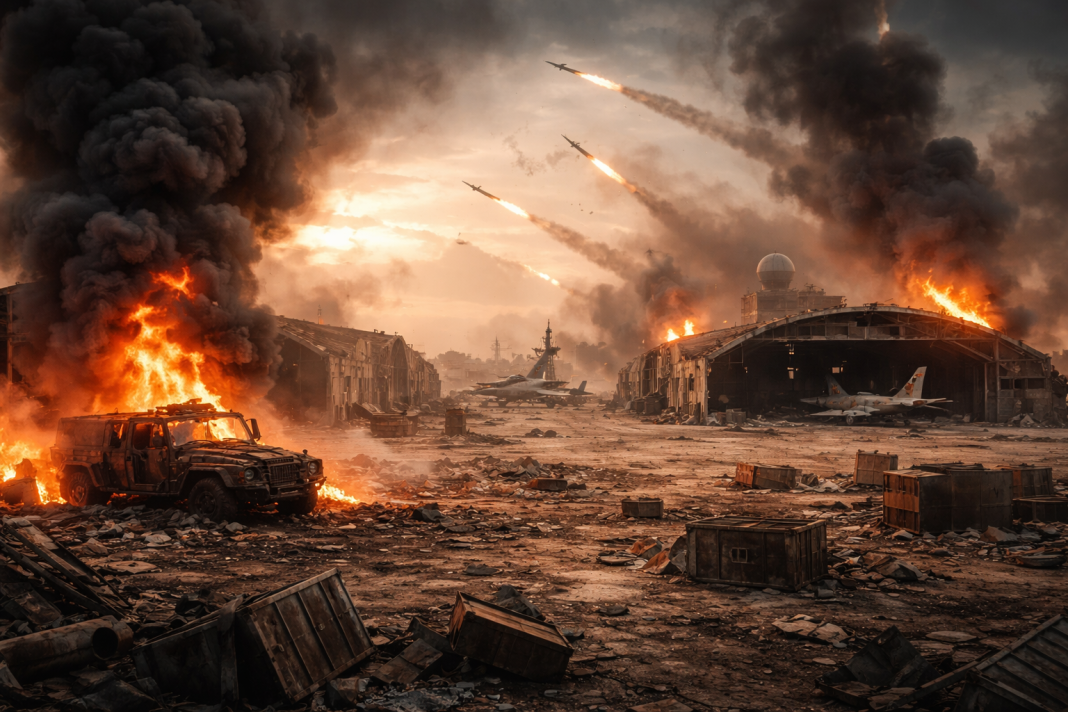

Iran’s missile and drone attacks across the Middle East have disrupted U.S. military operations. Several bases have been badly damaged. Many are now barely functional. Soldiers have left these installations. They are now working from temporary locations. These include hotels and office spaces. Daily operations have changed quickly. Security concerns are rising. Key infrastructure continues to face attacks.
Widespread Damage Hits Key Military Installations
Iran’s relentless missile and drone attacks across the Middle East have caused severe damage to at least 13 U.S. military bases, making them largely uninhabitable. Soldiers have been forced to leave traditional military facilities and operate from temporary locations such as hotels, office buildings, and other makeshift sites.
This shift marks a dramatic change in how the U.S. conducts operations in the region. While air missions continue from the bases that are still functional, ground personnel now face the challenge of working from scattered and improvised locations.
Did a missile fly over Incirlik Air Base? Viral footage fuels speculation about Iranian strike
Some of the most heavily damaged bases are located in Kuwait, including Port Shuaiba, Ali Al Salem Air Base, and Camp Buehring. These facilities suffered hits that damaged critical infrastructure, including aircraft hangars, fuel storage systems, and operational command centers. Officials warn that the destruction has disrupted logistics and raised serious concerns about the safety of troops on the ground.
In Qatar, a strike hit Al Udeid Air Base, which houses a key U.S. command center, damaging important radar and early-warning systems. In Bahrain, drones targeted communications infrastructure at the naval headquarters, while Saudi Arabia’s Prince Sultan Air Base saw attacks on refueling and communication systems. These coordinated attacks show a clear capability to strike deep into American installations, even those previously considered secure.
Troops Are Operating From Makeshift Locations After Damage to Military Bases
The dispersal of U.S. troops into temporary facilities has effectively pushed parts of the military into a form of “remote warfare.” Soldiers working from hotels, office buildings, and other ad hoc sites face limitations. Coordination becomes slower, response times to threats are delayed, and access to specialized military equipment is restricted.
Military experts say operating from non-traditional locations reduces overall efficiency. Makeshift setups cannot fully replicate the capabilities of established bases, limiting operational effectiveness in a high-stakes environment.
Iran’s attacks are widely understood as retaliation against ongoing U.S. and allied military actions in the region. Targets have included bases, embassies, and energy infrastructure, with drones and missiles striking multiple countries, including Qatar, Bahrain, Saudi Arabia, and Kuwait. These strikes have put added pressure on American personnel and forced the military to rethink how it maintains operations in an increasingly hostile environment.
Officials note that Iran has also attempted to use civilian populations as part of its strategy, asking people to report suspected U.S. troop locations. This tactic highlights the risks associated with troops operating outside secure military compounds.
Reinforcements and Operational Adjustments
Despite these setbacks, the U.S. military continues to maintain a presence in the region. The military has deployed additional fighter squadrons, air defense systems, and thousands of troops to reinforce existing forces. It has also positioned rapid-response units, including airborne and marine forces, closer to conflict zones to provide immediate support if needed.
Commanders have relocated some troops to other countries, including parts of Europe, to reduce vulnerability and maintain operational readiness. This broader dispersal strategy reduces the impact of ongoing Iranian strikes while it continues air and ground operations.
Iraq resistance group claims coordinated 24-hour barrage of drone and missile strikes on US bases
These attacks expose a key vulnerability in U.S. military infrastructure. Military planners originally built many bases in the region during earlier conflicts, when adversaries did not possess advanced missile capabilities. Today, these same installations are under direct threat, showing that modern warfare can render long-standing military facilities highly exposed.
While air operations continue from functional bases, the dispersed and ad hoc positioning of ground troops demonstrates the strain on U.S. military operations. Even in heavily fortified countries, Iran’s sustained strikes have shown that no installation is completely safe, pushing American forces into a new and complex operational reality.