
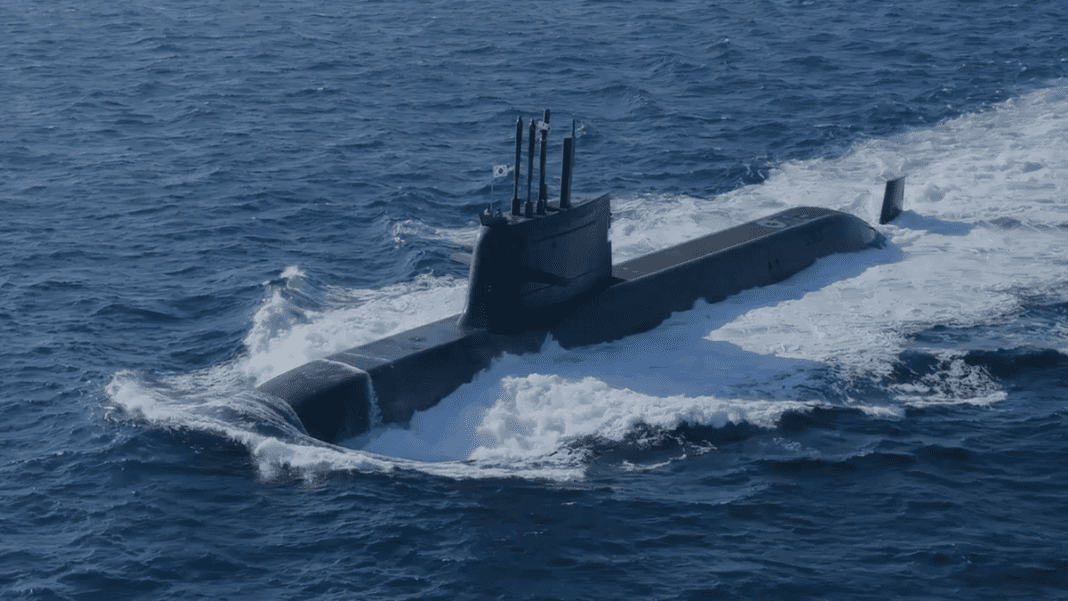

Canada is reviewing a plan to split its order of 12 next-generation submarines. The move is part of a major submarine deal. The submarines may be sourced from South Korea’s Hanwha Ocean and Germany’s ThyssenKrupp Marine Systems (TKMS).
The project is valued at up to 60 trillion won. It is one of the largest defense purchases in Canadian history. The government is expected to announce its decision on the submarine deal as early as next month.
Two Advanced Submarine Designs Under Review as Part of Canada Submarine Deal
Under the reported plan linked to the submarine deal, Canada would station six German-built submarines on the Atlantic coast and six South Korean-built submarines on the Pacific coast. Germany has offered the 212CD-class submarine developed by TKMS, known for its stealth and quiet underwater operations. South Korea has proposed the KSS-III Batch-II submarine built by Hanwha Ocean, equipped with advanced combat and propulsion systems as part of the submarine deal competition.
South Korea targets Canada’s $60 trillion submarine deal with sweeping industrial and energy offer
If approved under the submarine deal framework, Canada would operate two different submarine types. Supporters say this could strengthen ties with both Europe and Asia. They also believe it may help reduce reliance on the United States for defense cooperation.
However, managing a mixed fleet under the submarine deal could bring challenges. Separate supply chains, spare parts systems, and crew training programs may increase complexity and costs. Despite these concerns, the submarine deal structure is being reviewed as a strategic compromise.
Economic and Strategic Considerations
The submarine deal goes beyond defense and includes economic cooperation and industrial investment. Earlier, attention focused on the possible construction of an automobile production plant in Canada as part of the broader submarine deal. The government had encouraged both South Korea and Germany to consider building finished vehicle plants locally. Such a project was expected to create jobs and support the manufacturing sector alongside the submarine deal.
However, recent reports say neither Hanwha Ocean nor ThyssenKrupp Marine Systems included plans for new automobile plants in their final submarine deal proposals. Instead, both countries presented alternative investment ideas linked directly to the submarine deal.
F-35 deal under scrutiny as Canada eyes Gripen for Arctic and NORAD missions
Hanwha Ocean reportedly proposed building a hydrogen fuel infrastructure hub in Canada to support clean energy development under the submarine deal partnership. The company also suggested setting up local production facilities for torpedoes to be used on the submarines. Germany, through TKMS, reportedly offered investment in Canada’s steel industry to strengthen domestic production of key materials connected to the submarine deal supply chain.
The government is reviewing these proposals based on technical capability, maintenance plans, financial stability, and strategic economic partnership, all key factors in finalizing the submarine deal as part of a broader effort to expand trade ties with Europe and Asia.
Mixed Fleet Debate Gains Attention
The idea of operating a mixed fleet of submarines under the submarine deal has sparked discussion within Canada.
Some officials have raised concerns about economic efficiency in managing the submarine deal. Running a single type of submarine can simplify training, maintenance, and supply management. It can also reduce long-term operating costs.
A mixed fleet, on the other hand, requires separate technical systems and spare parts inventories within the submarine deal structure. It may also require additional training programs for naval crews.
Despite these concerns, analysts say that splitting the submarine deal could help Canada strengthen diplomatic and economic ties with multiple regions. It may also help attract investment at a time when global trade policies are shifting.
Canada moves to finalize submarine deal as Germany and South Korea compete for navy contract
The Canadian government has received the final proposals and is now reviewing them carefully as part of the submarine deal process. The project remains one of the most significant defense decisions currently under consideration.
An official announcement on the submarine deal competition could come as early as April. Until then, Canada continues to examine the technical details, financial structures, and strategic partnerships offered by both South Korea’s Hanwha Ocean and Germany’s ThyssenKrupp Marine Systems.
The outcome of the submarine deal will determine how Canada modernizes its submarine fleet and deepens its economic relationships with global partners.