
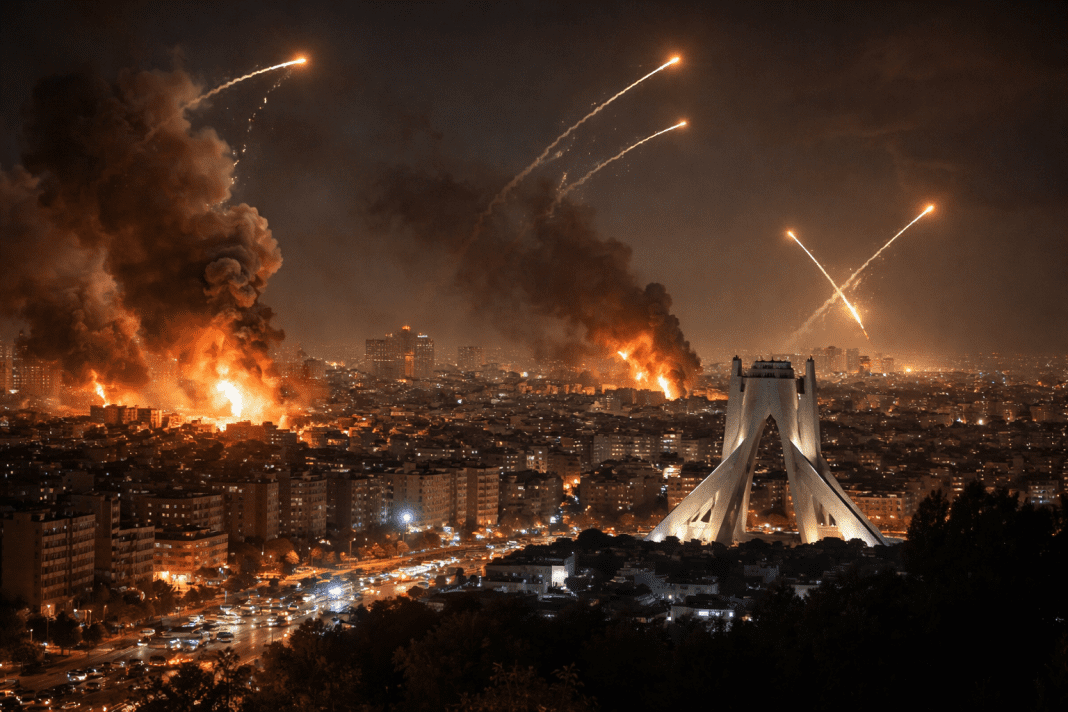

The United States and Israel launched a major strike on Iran on Saturday. The attack hit areas near Supreme Leader Ayatollah Ali Khamenei’s office. Smoke and explosions were seen across Tehran. President Donald Trump confirmed the attacks in a video. He accused Iran of developing nuclear weapons and long-range missiles. He warned that U.S. casualties were possible. Trump also urged Iranians to take control of their government.
Strikes Hit Key Targets Across Iran — Including Khamenei’s Office
The initial attack reportedly focused on areas surrounding Khamenei’s offices in Tehran. Authorities had closed roads near Khamenei’s compound, while mobile phone services were cut and Iran’s airspace was temporarily shut down. State media confirmed the explosions but did not provide details on casualties.
The strikes are part of a broader campaign reportedly coordinated with Israel, aimed at military and intelligence targets as well as symbols of the Iranian government. An official briefed on the operation said the attack was “to remove threats,” though details were limited.
Iran close to deal with China for supersonic anti-ship missiles that could threaten US Navy
Hours after the attacks on Iran, northern Israel experienced explosions as the Israeli military activated air defense systems to intercept Iranian missiles. Sirens were reported in Jordan, and hospitals in Israel activated emergency protocols, moving patients and surgeries to underground facilities.
Satellite images analyzed by the Associated Press show that Iran has continued activities at previously targeted nuclear sites, suggesting it may be assessing damage and recovering materials. Iran has stated it has not enriched uranium since June, but it has restricted international inspectors from visiting several locations in recent months.
Regional Tensions Rise with Missile Exchanges
Iran has warned that any attack would prompt retaliation against U.S. forces and regional allies. Explosions were reported in Tehran while Israeli officials confirmed the interception of incoming Iranian missiles. Khamenei has repeatedly warned that foreign attacks on Iran would be met with severe retaliation. The attacks highlight the fragile security situation in the Middle East, with multiple countries monitoring developments closely.
Iran currently limits its ballistic missiles to a 2,000-kilometer range, which covers much of the Middle East and parts of Eastern Europe. There is no public evidence that Iran is developing intercontinental missiles, though the U.S. has expressed concerns that its space program could one day allow it to extend missile capabilities.
Israeli Defense Minister Israel Katz described the operation as targeting threats to the nation but did not provide further details. Meanwhile, neighboring Iraq closed its airspace in response to the military escalation, signaling concern over the regional security impact.
President Trump has expressed a desire to constrain Iran’s nuclear ambitions through diplomacy, but the strike comes as the Iranian government faces growing domestic protests. Khamenei has maintained that Iran has the right to enrich uranium and has refused to negotiate on long-range missiles or support for groups like Hamas and Hezbollah.
Tehran in Chaos as US and Israel Strikes Shake Region
Roads leading to Khamenei’s compound in Tehran were completely blocked as authorities tried to control the situation. Security forces were deployed across the city to manage the chaos caused by the sudden explosions. Residents reported hearing multiple blasts and seeing smoke rising from various parts of the capital.
Iranian media confirmed that the explosions had occurred but did not provide any information about casualties or injuries. The lack of official numbers has left many citizens and observers uncertain about the true impact of the strikes. Emergency services were reportedly on high alert, preparing to respond to any immediate threats.
Iran close to deal with China for supersonic anti-ship missiles that could threaten US Navy
The attacks disrupted everyday life in Tehran and across Iran. Public transportation was affected, businesses temporarily closed, and many people stayed indoors out of fear. Neighboring countries also expressed concern, with regional governments monitoring the situation closely as tensions escalated.
The strikes by the United States and Israel represent a major development in the long-running dispute over Iran’s nuclear program. Khamenei’s influence remains central to Iran’s response. Authorities in both Iran and Israel remain vigilant, readying defenses against further attacks, while civilians continue to face interruptions to their daily routines amid growing uncertainty.