
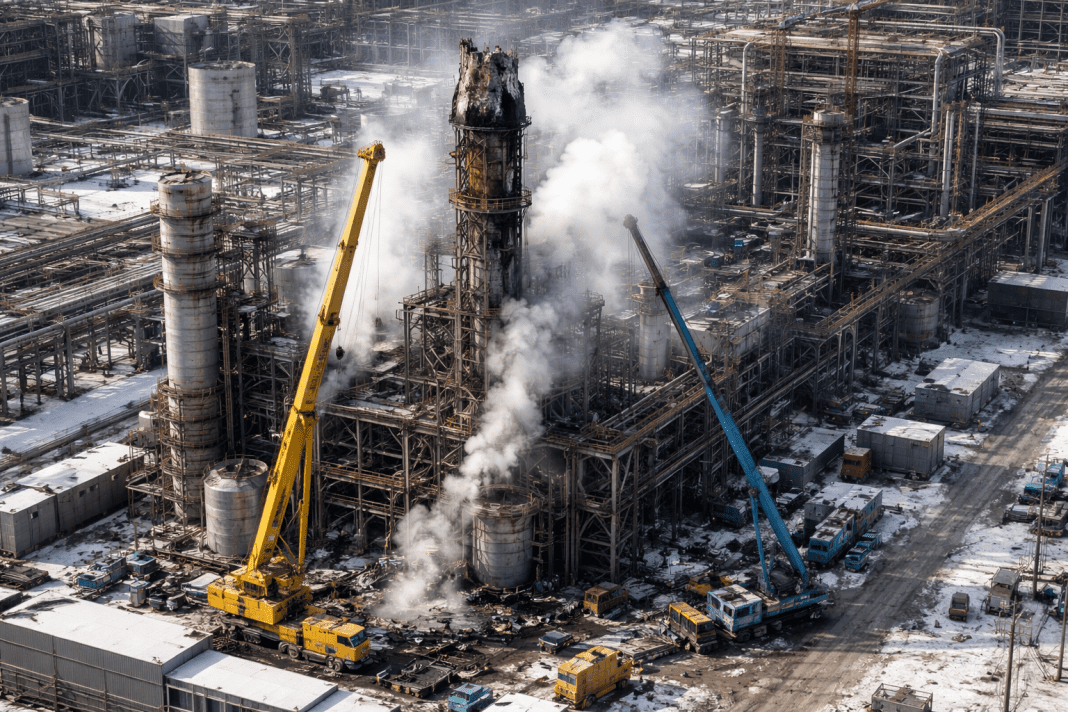

On February 17, Ukraine’s long-range An‑196 “Liutyi” drones struck a key part of Russia’s Metafrax chemical plant in Perm, hitting a vital rectification column used to purify methanol. Satellite images show damage, rising vapor, and workers with heavy machinery repairing the disrupted unit.
What Was Hit and Why It Matters
The rectification column is a tall section of a chemical plant where raw methanol is heated and separated into purer forms. This purification step is necessary for the chemical to be usable in many industrial processes.
In simple terms, imagine you are trying to clean muddy water until it becomes clear drinking water. The rectification column works like a powerful filter, removing unwanted parts so that the final product is clean and usable. If this central part of the plant breaks or shuts down, the entire process comes to a halt.
Images from satellites and on the ground show the column damaged, with workers and heavy cranes at the scene. The presence of steam or vapor from the installation suggests that gas or liquids were being released as part of safety protocols, or as part of the shutdown and repair work.
Because the rectification column operates under high heat and pressure, damage to it forces engineers to stop operations. This means that methanol going through the plant can no longer be processed the way it normally would.
Metafrax Plant’s Role in Industry and Military Supply
Metafrax is one of Russia’s largest chemical plants. The plant produces methanol and other chemicals such as formalin and synthetic resins, which industries use for normal purposes.
However, companies also use methanol and other products from this facility as key ingredients in making explosives and related materials. This strike drew attention because it targets a part of Russia’s chemical production that supports defense and other sectors.
Because of this role, the United Kingdom and Ukraine imposed sanctions on Metafrax. These sanctions are due to the plant’s connections to Russia’s defense supply chains.
The strike on the rectification column does not only cause physical damage. It sends a clear signal that long‑range Ukrainian drones can reach deep into Russian territory and target high‑value industrial infrastructure.
Deadly drone attack hits Russia’s Krasnodar Krai as oil tanks erupt in flames
The Ukrainian forces used Liutyi drones in several operations over recent months. These drones can fly long distances and deliver precise blows to selected targets. On this occasion, two drones successfully struck the rectification column, a part of the production cycle that engineers cannot easily repair or bypass.
After the strike, analysts reviewing satellite imagery saw workers and repair crews bring equipment to the scene. Large cranes lifted parts as teams prepared to fix the damaged plant. Workers released visible vapors from the site, a process that occurs when crews open systems that normally remain closed for safety or repair purposes.
Other Reported Strikes by Ukrainian Forces
Alongside the attack on the Metafrax chemical plant, the Ukrainian Defense Forces reported striking several other strategic targets.
According to the General Staff of the Armed Forces of Ukraine, Ukrainian units hit a Russian missile battalion from the 15th Separate Coastal Missile Brigade in temporarily occupied Crimea. Ukrainian forces also reported attacks on various support facilities used by Russian forces.
These included ammunition depots, a logistics warehouse in the Donetsk region, and a drone command post in the Mykolaiv region. While reports say the strikes hit their targets, officials also noted that the full extent of Russian losses at these locations was still being assessed.
Fire erupts at major chemical plants as drones hit multiple Russian regions overnight
In the days following the damage at the Perm region plant, analysts and open‑source investigators continued to release images and information to show the scale of what happened. The satellite images and on‑site photos made available help clarify the effects of the drone strike and the immediate actions taken afterward.
These materials highlight the damaged rectification column, the heavy machinery brought in for repair, and vapors rising from the affected units — all signs of serious disruption to the plant’s normal operations.