
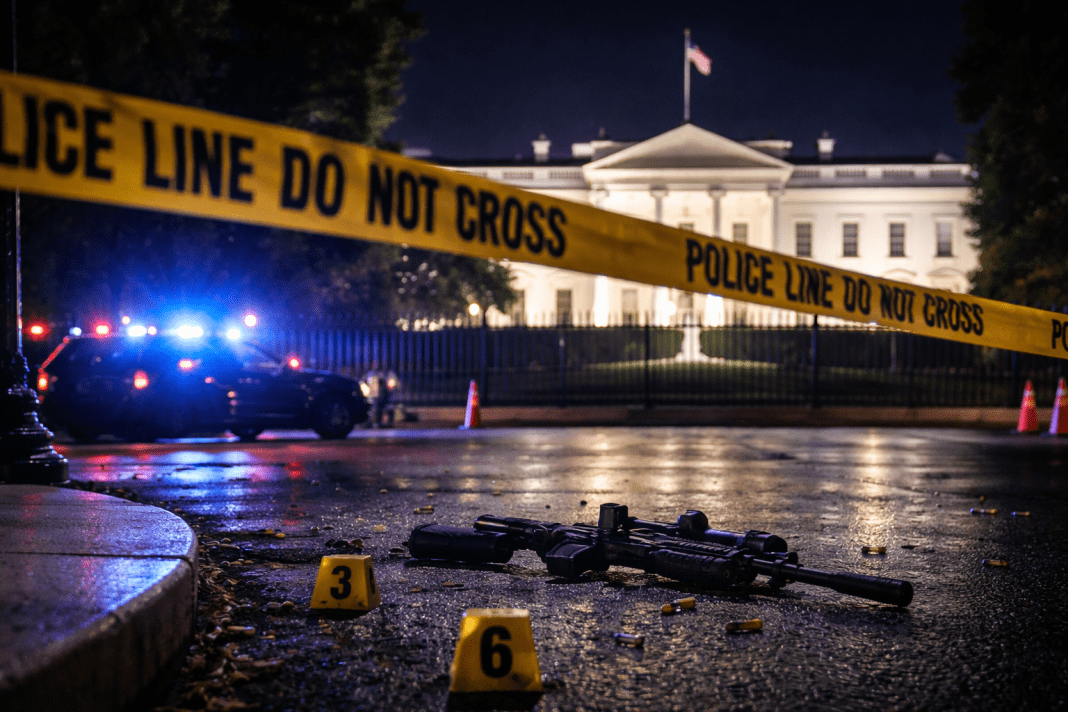

On the eve of Thanksgiving last year, 29-year-old Afghan Rahmanullah Lakanwal drove across the U.S. and opened fire on two National Guard members outside the White House. He killed one guard and critically wounded the other. Lakanwal was injured in the shootout and hospitalized.
He now faces first-degree murder charges, with the death penalty possible. Lakanwal was a former member of Afghanistan’s elite Zero Units, a CIA-backed paramilitary force. Initially seen as a lone-wolf attack, his past revealed he was part of America’s secret Afghan military operations. This case highlights the hidden consequences of the U.S. war in Afghanistan.
From Afghan Commando to American Struggles: The Story of Rahmanullah Lakanwal
Rahmanullah Lakanwal joined Zero 3, the elite Kandahar-based strike unit, at just 16. Over a decade, he took part in night raids, intelligence missions, and counterinsurgency operations across southern Afghanistan. He also helped secure Kabul airport during the chaotic U.S. withdrawal in August 2021. After the Afghan republic collapsed, he and his family fled to the United States.
Life in America was a sharp contrast. Once a respected commando, Lakanwal struggled with menial jobs, learning English, and social isolation. Friends described him as solitary but occasionally joyful, enjoying video games like Call of Duty and FIFA. His case worker reported severe depression, suicidal thoughts, alcohol use, and long, aimless drives—signs of post-traumatic stress common among Afghan commandos.
Veterans like Nasir Andar noted that many comrades faced similar struggles. Gen. Mohammad Shah highlighted suicide as a recurring tragedy. Lakanwal’s attack raised questions about whether it was personal mental collapse or the result of deeper systemic failures from years of war and foreign intervention.
The Shadow System Behind Afghanistan’s Elite Forces
The Zero Units, including Lakanwal’s Zero 3, were part of a parallel security system funded and directed by the CIA. Their roots trace back to the agency’s decades-long involvement in Afghanistan, from Operation Cyclone in the 1980s to post-9/11 counterterrorism operations. These Afghan National Strike Units operated with little oversight, often conducting counterinsurgency missions that crossed ethical and legal lines. Media and human rights groups reported numerous civilian casualties, including children.
By the late 2010s, the Zero Units had become a fault line in Afghanistan, sometimes undermining the government they were supposed to protect. One notable incident occurred in 2019 when four brothers were killed in Jalalabad under suspicion of links to the Islamic State. Then-President Ashraf Ghani demanded accountability, but reform proved difficult.
Taliban signals Afghans could stand with Iran if US launches strike
In Kandahar, Lakanwal’s hometown, the contradictions of America’s Afghan strategy were most visible. General Abdul Raziq, a U.S.-backed warlord, was seen as indispensable by American forces but ruthless by locals. Despite allegations of extrajudicial killings, torture, and smuggling, he remained protected by U.S. support.
Raziq’s assassination in October 2018 by a teenage Taliban infiltrator was a turning point. Publicly, he was hailed as a hero, but officials privately saw an opening for reform. Yet the parallel structures built over decades had hollowed out institutions, leaving Afghanistan fragile and dependent on individual loyalty rather than stable governance.
America’s Choices Reaching Its Shores
Rahmanullah Lakanwal came from a shadowy world where loyalty was rewarded, rules were ignored, and the lines between Afghan and American command were blurred. His attack on National Guard members near the White House was not just an individual act of violence. It reflected the aftershocks of a war fought in secrecy, with little accountability. The security system built in Afghanistan—effective but morally and politically compromised—had now reached Washington, bringing shock and tragedy.
Taliban signals Afghans could stand with Iran if US launches strike
Investigators have not yet determined Lakanwal’s exact motive. However, his upbringing, elite military training, and struggles in America are important pieces of the story. He carried the weight of a collapsed system that the United States had helped create over decades.
The attack serves as a stark reminder that decisions made far from home, in the name of security and war, can have direct and violent consequences. The conflict in Afghanistan, and the secret structures built there, finally arrived on U.S. soil with deadly results.