
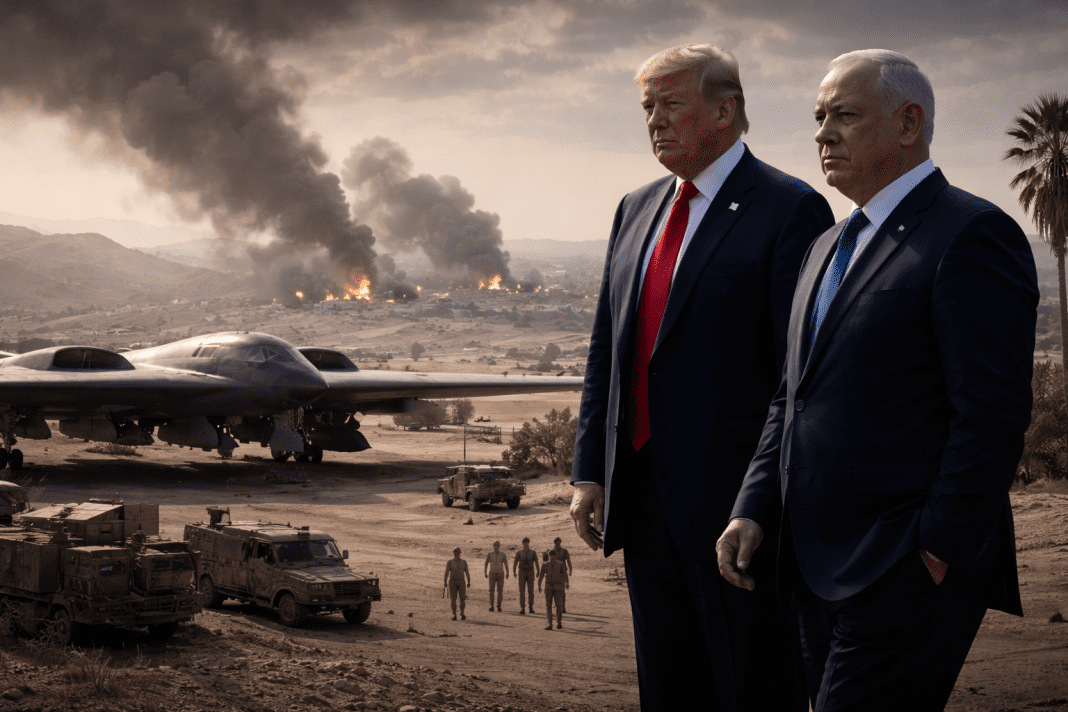

Trump signals willingness to strike Iran again as tensions rise across Middle East
U.S. President Donald Trump has warned that the United States could carry out another major military strike against Iran if Tehran resumes rebuilding its ballistic missile or nuclear programs, underscoring Washington’s readiness to escalate amid fragile regional stability.
Speaking in Florida alongside Israeli Prime Minister Benjamin Netanyahu after talks at his Mar-a-Lago estate, Trump suggested that Iran may already be attempting to restore weapons capabilities damaged during a large-scale U.S. strike earlier this year. While he did not provide specific intelligence details, the president indicated that Washington was closely monitoring Iranian activity.
Trump said the United States would not hesitate to act again if Iran crossed what he described as clear red lines. He added that any renewed strike would not repeat previous targets, implying that Iranian facilities could be dispersed or relocated following earlier attacks.
The comments mark one of Trump’s strongest public warnings to Tehran since the brief but intense conflict involving Israel and Iran in June, which lasted nearly two weeks and drew international concern over the risk of a wider regional war.
B-2 bombers and military pressure
In unusually blunt remarks, Trump referenced the use of B-2 stealth bombers during the earlier strike and suggested that such missions were costly but effective. While he framed his comments with humor, the underlying message was clear: the United States retains both the capability and the willingness to strike again if provoked.
The administration has maintained pressure on Iran through military posture and diplomacy, even as Trump has periodically signaled openness to negotiations over Iran’s nuclear ambitions. That dual approach—threats of force combined with talk of a potential deal—has defined U.S. policy toward Tehran during Trump’s presidency.
Iranian officials have denied seeking nuclear weapons, but recent missile exercises conducted by Iran have fueled concerns among U.S. and Israeli leaders that Tehran is rebuilding military capabilities damaged earlier this year.
Netanyahu, standing beside Trump, did not directly endorse the prospect of another strike but acknowledged ongoing concerns about Iran’s activities. He said Israel remained vigilant and intended to coordinate closely with Washington.
Gaza ceasefire under strain
Trump’s remarks were not limited to Iran. He also issued a stern warning to Hamas, the Palestinian militant group that governs Gaza, accusing it of failing to meet commitments under a ceasefire agreement brokered by the United States last year.
Trump said Hamas’s refusal to disarm and fully comply with the agreement could lead to renewed conflict. He placed responsibility squarely on the group, arguing that Israel had largely upheld its obligations while Hamas continued to assert control in Gaza.
“There will be serious consequences if they do not move forward,” Trump said, echoing earlier warnings he has issued at various points during the conflict.
The ceasefire, which began in October, significantly reduced large-scale fighting but has remained fragile. While hostilities have declined, sporadic violence has continued, and both sides accuse each other of violations.
Israel has indicated it could resume military operations if Hamas does not agree to disarm peacefully. Hamas, for its part, has rejected such demands, calling them unacceptable.
Second phase uncertain
Trump said he would like to advance the ceasefire into a second phase, which would involve broader political arrangements for Gaza and the potential deployment of international security forces. That phase, however, faces major obstacles, including disagreements over governance, security, and the future role of Hamas.
An Israeli official familiar with the talks said Israel wants outstanding issues from the first phase resolved before moving forward, including the return of remaining hostages or their remains. Gaza border crossings and humanitarian access also remain points of contention.
The situation has left diplomatic efforts in a holding pattern, even as regional and international actors push to prevent a collapse of the ceasefire.
Broader regional discussions
Trump and Netanyahu also discussed wider Middle East dynamics, including Lebanon, Syria, and Turkey’s potential involvement in post-war security arrangements. Trump floated the idea of Turkish peacekeepers playing a role in Gaza, a proposal that remains controversial given strained relations between Ankara and Israel.
Netanyahu said Israel was closely watching developments in Syria, where leadership changes over the past year have reshaped the regional balance. While Trump expressed optimism about future relations, Israeli officials remain cautious, citing past security threats.
Despite brokering multiple ceasefires involving Israel and its adversaries, Trump’s latest remarks suggest he is prepared to accept the risk of renewed conflict if he believes U.S. or Israeli security is threatened.
High-stakes diplomacy
The meeting highlighted Trump’s continued alignment with Israel’s leadership, even as some observers question whether long-term stability can be achieved through military pressure alone. Trump has repeatedly taken credit for halting major wars involving Israel, but his willingness to threaten renewed strikes underscores how quickly tensions could flare again.
As regional actors assess Washington’s posture, Trump’s message was unmistakable: any attempt by Iran to rebuild prohibited weapons programs—or by Hamas to defy ceasefire terms—could prompt a forceful response.
With conflicts paused but unresolved, the Middle East remains on edge, and Trump’s warnings have added a new layer of uncertainty to an already volatile landscape.