
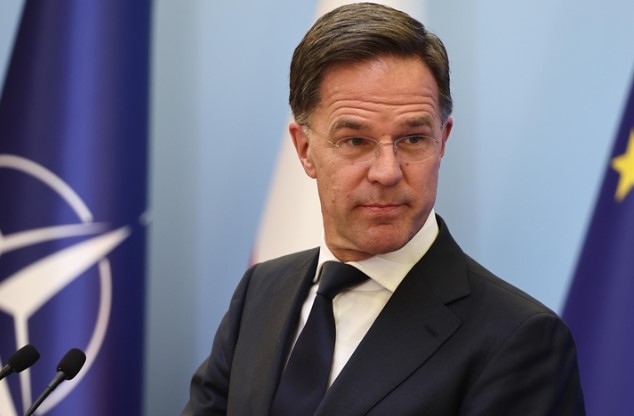

NATO Secretary-General Mark Rutte said Europe cannot guarantee its security without US support and rejected calls to build a separate defense system. Speaking to German news agency dpa, he stressed that cooperation with the United States remains essential and that NATO continues to be the backbone of Europe’s security.
Europe’s Security Tied to the United States
NATO Secretary-General Mark Rutte said he firmly believes the United States remains fully committed to NATO and continues to play a vital role in protecting Europe. He rejected suggestions that Europe should move away from US support and stressed that Europe cannot guarantee its security without Washington’s involvement. According to Rutte, NATO draws its strength from collective defense, under which all members respond together if one country comes under attack.
He explained that the United States is central to this system because of its military power, resources, and long experience in global security, making US support essential to NATO’s effectiveness. Rutte also pointed out that while NATO includes many European Union members, the alliance is broader than the EU. Of NATO’s members, 23 also belong to the EU, but together they represent only about a quarter of NATO’s total economic strength. This highlights how much NATO depends on contributions from non-EU allies, particularly the United States.
NATO warns of war while Washington pulls back, exposing a dangerous strategy gap
Rather than creating a separate European security structure, Rutte said Europe should focus on sharing responsibilities more fairly within NATO. He called on European countries to increase defense spending and improve military readiness, but emphasized that these efforts must be carried out alongside US support. Rutte warned that boosting Europe’s defenses independently would weaken NATO unity, adding that close cooperation between Europe and the United States remains the cornerstone of security across the continent.
Debate Over European Troops, Ukraine, and US Support
Rutte’s remarks also followed comments made by Manfred Weber, the leader of the European People’s Party in the European Parliament. Weber suggested deploying European troops under the European Union’s command to help secure peace in Ukraine.
In an interview with Germany’s Funke media group, Weber said he would like to see soldiers carrying the European flag working alongside Ukrainian forces. He argued that such a move could help guarantee peace and stability in the region.
Rutte openly disagreed with this proposal. He said he does not share the view that European troops should be deployed under EU command in this way. His stance reflects NATO’s long-standing position that military efforts related to Ukraine should remain carefully coordinated within NATO, where US support plays a key role.
No NATO, but U.S. protection—Trump redraws Ukraine’s defense future with Article 5 twist
The NATO chief reiterated that support for Ukraine remains essential, but it must be delivered within the framework of existing alliances and agreements. NATO has consistently provided political and military assistance to Ukraine while avoiding direct troop deployment under its own banner, relying instead on coordination and US support.
Rutte’s disagreement highlights a broader debate within Europe about how far the EU should go in building its own military role. While some leaders see an EU-led force as a sign of independence, others, including Rutte, believe NATO remains the most effective and trusted platform for collective defense with US support at its core.
Arctic Security, Russia, and Defense Efforts
Beyond Europe and Ukraine, Rutte also underlined the growing importance of Arctic and North Atlantic security. He said these regions are critical not only for Europe but also for the United States. According to Rutte, protecting the Arctic can only be achieved through close cooperation between European allies and continued US support.
He pointed to the increasing presence of Chinese and Russian vessels in Arctic waters as a serious concern. These developments, he said, make the region a major security issue that requires collective defense and constant monitoring by NATO members with US support.
Rutte also issued a warning about Russia’s military intentions. He said intelligence assessments suggest Russia could pose a serious threat to NATO countries as early as 2027. This warning underlines why NATO places such importance on preparedness, unity, and US support.
He reminded members that NATO’s Article 5 is clear. Rutte said NATO treats an attack on one member as an attack on all, and this principle remains the strongest deterrent against aggression, reinforced by US support.
Trump moves to shield Ukraine with NATO-style defense pledge as war talks reach critical moment
In this context, Rutte stressed the importance of continued support for Ukraine and higher defense spending across Europe. He praised Germany for its plan to increase defense spending to 3.5 percent of its gross domestic product by 2029, saying such steps strengthen NATO and complement US support.
Calling Germany’s move impressive, Rutte said the country is taking a leading role in strengthening Europe’s defense. He noted that these actions send a strong signal of commitment to NATO, collective security, and enduring US support.