
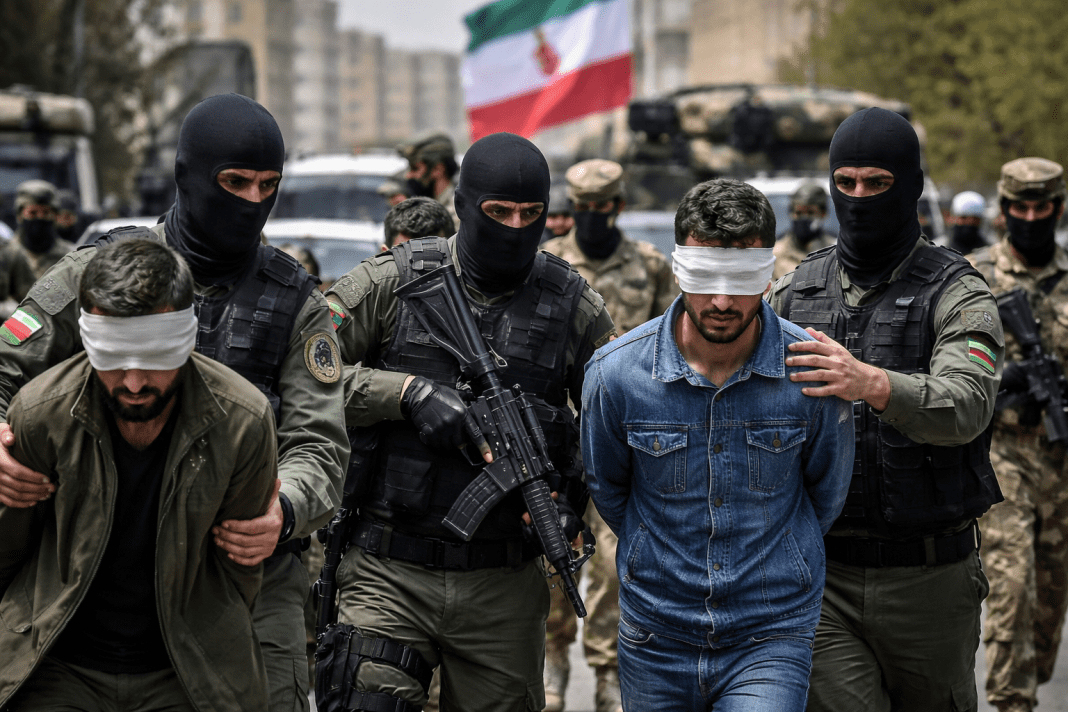

Iranian authorities have arrested dozens of people across multiple provinces on accusations of spying for Israel and sharing sensitive military information, according to reports from Iranian media on Sunday. The arrests come as the conflict between Iran and Israel escalates, with continued air strikes targeting military and security infrastructure inside the country.
Iranian officials claim the suspects were acting as informants for Israel, allegedly passing along details about military installations, security checkpoints, and strategic infrastructure that could be used to guide attacks.
Arrests reported across several regions
According to the semi-official Tasnim News Agency, authorities in northwestern Iran detained at least 20 people. The arrests were carried out by a provincial prosecutor’s office, which accused the individuals of transmitting location details of Iranian military and security assets to Israel.
Officials allege that the information may have helped Israeli forces identify targets during the ongoing air campaign.
Additional arrests were reported in northeastern Iran, a region that has so far remained relatively untouched by the latest air strikes. Tasnim reported that another 10 people were detained there on Sunday.
Those individuals were accused of collecting intelligence about sensitive locations and economic infrastructure, which authorities claim could be used by hostile actors.
Revolutionary Guards accuse spies of aiding attacks
A regional branch of the intelligence arm of the powerful Islamic Revolutionary Guard Corps said the alleged informants were part of a broader effort by foreign adversaries to destabilize Iran.
“As the Zionist enemy and the United States attempt to invade Iran, they simultaneously activate mercenaries and spies to carry out riots as the next step,” the statement said, according to Tasnim.
Iranian officials frequently use the term “Zionist enemy” when referring to Israel.
Authorities claim the arrests are part of a nationwide crackdown on suspected intelligence networks operating inside the country during the ongoing conflict.
Additional detentions linked to unrest
Another Iranian outlet, the Student News Network, reported that three additional people were detained in the western province of Lorestan.
Those suspects were accused of attempting to “disturb public opinion” and burn mourning symbols, actions authorities said could inflame tensions during wartime.
While the details of the allegations remain limited, Iranian officials say the arrests are linked to attempts to spread unrest while the country faces external military pressure.
Informants allegedly guiding Israeli strikes
The arrests come amid claims that Israeli forces are increasingly relying on human intelligence from inside Iran.
According to a source familiar with Israel’s military strategy cited by Reuters, Israeli forces have begun targeting security checkpoints and other sensitive locations based on tip-offs from informants on the ground.
If confirmed, the use of such intelligence networks would mark a new phase in the conflict, suggesting a deeper level of infiltration within Iranian territory.
Analysts note that Israel has historically relied on covert operations and intelligence gathering inside Iran as part of its long-running shadow war with Tehran.
Conflict unfolds amid domestic tensions
The latest arrests also take place against a backdrop of internal unrest inside Iran.
In January, weeks before the current war escalated, widespread anti-government protests erupted across the country. The demonstrations quickly turned into one of the most serious challenges to the Iranian leadership in recent years.
Iranian authorities responded with a sweeping crackdown that human rights groups described as one of the deadliest in the history of the Islamic Republic.
Tehran blamed foreign powers — particularly Israel and the United States — for encouraging what officials described as violent riots aimed at destabilizing the government.
Information war intensifies
The latest developments highlight the growing role of intelligence operations and information warfare in the conflict.
Iranian authorities have not released detailed evidence against the suspects, and independent verification of the allegations remains limited.
Israel strikes Zrariyeh bridge in Lebanon and launches new wave of airstrikes on Tehran
However, the arrests underscore how the conflict is expanding beyond conventional military strikes to include covert operations, espionage, and domestic security measures.
As air strikes continue and tensions remain high, analysts warn that both sides may increasingly rely on intelligence networks, cyber operations, and internal destabilization efforts alongside traditional military actions.
For now, Iran’s latest crackdown signals that Tehran is moving aggressively to eliminate suspected informant networks it believes could be assisting Israeli targeting efforts inside the country.