European nations are investing heavily in defense as security concerns continue to rise. However, defense industry leaders say Europe cannot fully replace the United States as a supplier of critical military equipment.
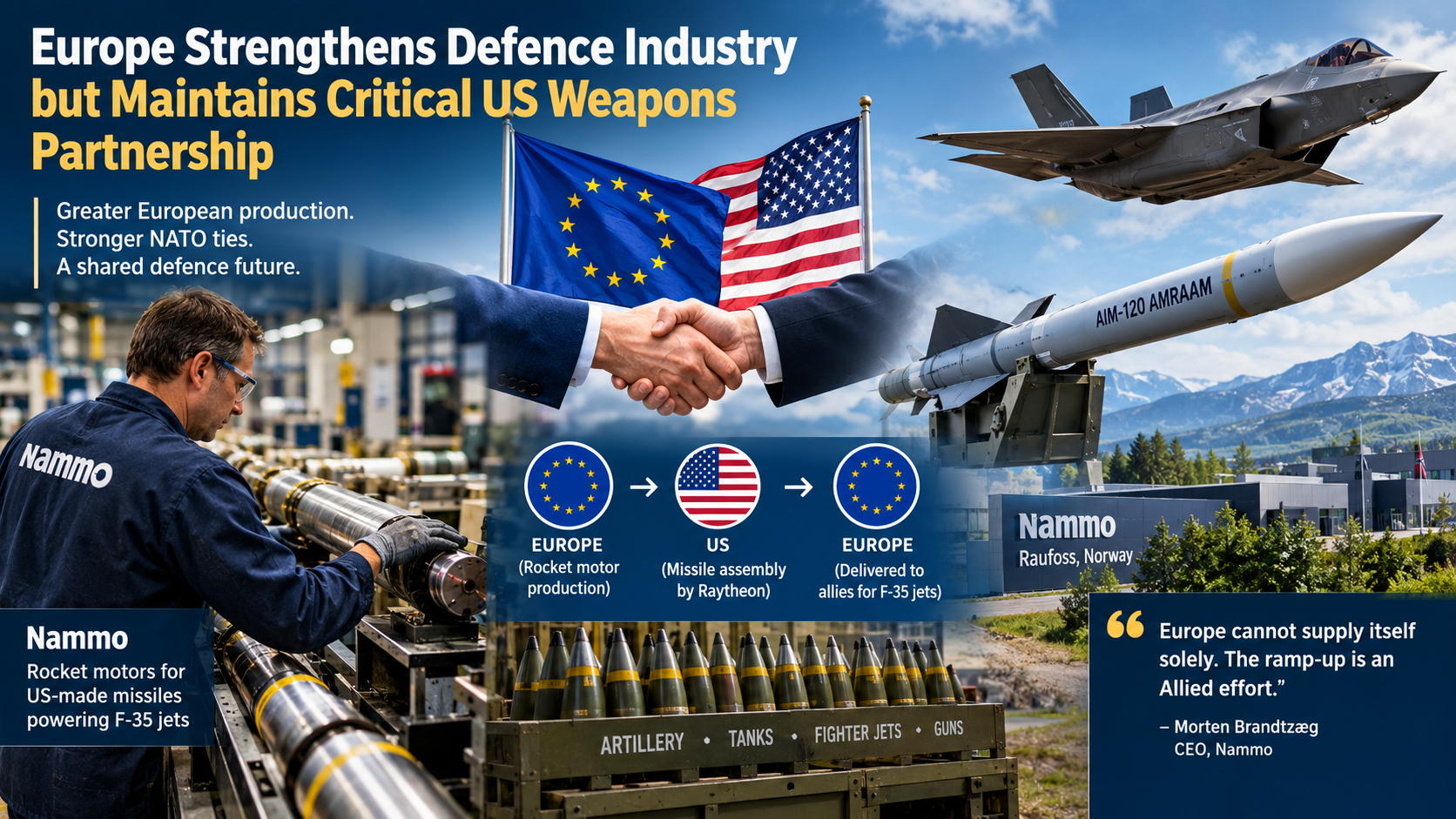
Morten Brandtzæg, CEO of Norwegian ammunition manufacturer Nammo, said the current defense expansion should be viewed as a joint effort among NATO allies rather than a Europe-only project. According to him, Europe still lacks the capacity to produce all the weapons and systems it requires.
NATO Supply Chains Remain Deeply Connected
Brandtzæg highlighted how European and American defense companies work together through integrated supply networks.
One example is Nammo’s contribution to missiles used by F-35 fighter jets. The company manufactures rocket motors in Norway, which are then shipped to the United States. There, defense contractor Raytheon integrates them into AMRAAM missiles before supplying them to allied nations operating F-35 aircraft.
This process shows how closely linked defense manufacturing has become across NATO countries.
Europe Faces Challenges in Replacing US Production
Many European governments are working to strengthen domestic defense production and reduce dependence on foreign suppliers. These efforts have gained momentum as governments seek greater military self-sufficiency.
Despite these ambitions, Brandtzæg cautioned that shifting entire defense supply chains to Europe would be difficult. Existing production networks have been built over decades and support a wide range of military systems.
He noted that rapidly relocating manufacturing operations could disrupt production at a time when defense demand continues to increase.
Weapon Delivery Delays Drive Search for Alternatives
Several European countries have faced delays in receiving US-made military equipment. Missile systems and air-defence platforms have experienced longer delivery schedules as Washington prioritizes replenishing its own stockpiles.
These shortages have encouraged some nations to explore alternative suppliers and invest in European-made systems.
Industry experts believe demand for defense equipment will remain high for years, creating opportunities for European manufacturers to expand their capabilities while still working alongside American partners.
European Defense Companies Gain New Opportunities
Growing demand has boosted interest in European defense products. One example is the Franco-Italian SAMP/T NG air-defence system, developed by Thales, MBDA, and Leonardo.
France-based Thales reported interest from multiple countries across Europe and the Middle East. The company attributes this interest to both system performance and challenges surrounding the availability of competing platforms.
Denmark became one of the first countries to move forward with procurement plans for the SAMP/T NG, with deliveries expected later this decade.
Defense Leaders Call for Long-Term Allied Cooperation
Brandtzæg emphasized that short-term political disagreements should not undermine long-standing defense partnerships. He said Nammo is expanding production facilities in the United States while also increasing capacity in Europe.
According to the company, this balanced approach allows allied nations to strengthen production without disrupting established supply networks.
Meanwhile, Thales is discussing options with the United Kingdom to help address shortages of certain rocket systems currently supplied by US manufacturers.
As military spending rises across Europe, defense companies appear focused on a strategy that combines greater European production with continued cooperation among NATO allies. Industry leaders argue that maintaining these partnerships will be essential for meeting future defense requirements and ensuring reliable access to critical military equipment.