
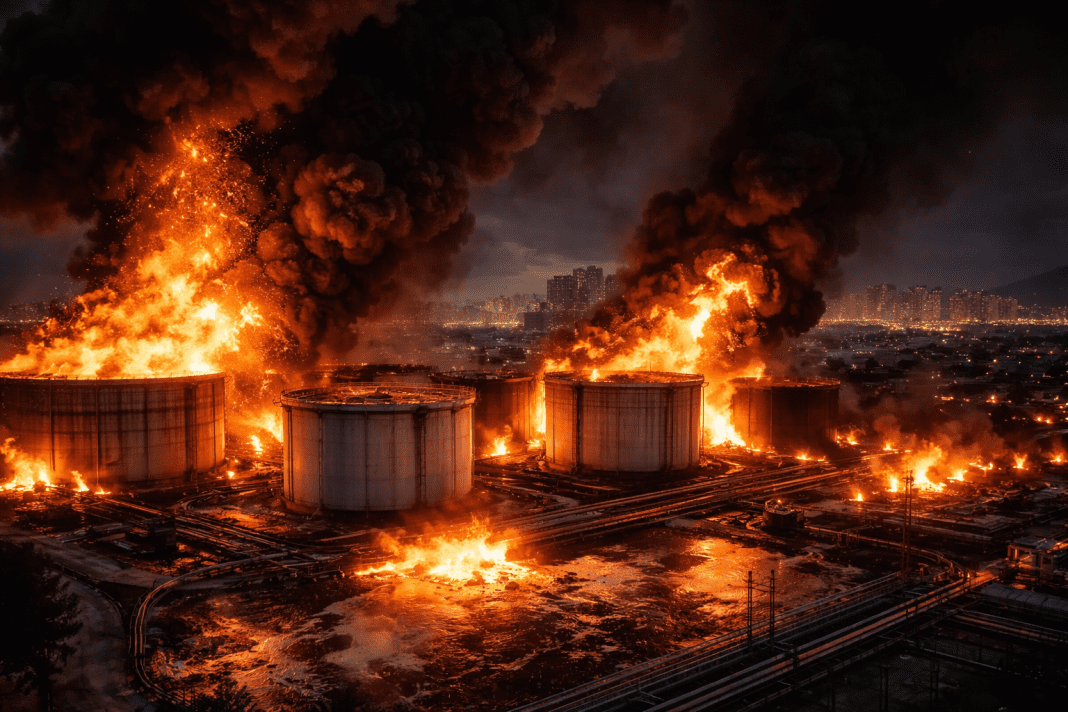

In a startling development over the weekend, Israel launched heavy strikes on Iranian oil facilities near the capital, Tehran. The attacks triggered massive fires, killed four people, and created scenes of chaos across the city. According to US reports, the White House reacted with surprise and concern, reportedly sending a blunt “WTF” message to Israeli officials.
The strikes marked the first significant disagreement between the United States and Israel since the ongoing conflict began on February 28. While Israel claimed the oil facilities were being used to fuel missile launches, the scale and intensity of the attacks reportedly went far beyond what the US expected.
Apocalypse-Like Scenes in Tehran
The Israeli military targeted three oil facilities and a refinery around Tehran. Satellite visuals and local reports described uncontrolled fires spreading rapidly across large areas. Thick, black smoke covered the city, and fuel leaking from one oil facility created what witnesses called a “river of fire” flowing through the streets.
Authorities warned residents to stay indoors after reports of rain mixed with oil and soot, which was described as a dangerous form of “acid rain.” The fires at the oil facilities created a humanitarian and environmental crisis, forcing city officials to respond urgently to contain the damage and protect civilians.
The scale of destruction was unprecedented. Local observers said that the attacks left several neighborhoods in blackout conditions, with air quality plummeting due to the toxic smoke. Emergency crews worked to extinguish fires at the oil facilities while civilians were advised to avoid all outdoor activities.
U.S. Alarm and Global Economic Shock
The United States voiced strong concern over Israel’s weekend strikes on Iranian oil facilities. Officials said the attacks were far larger than expected, catching Washington by surprise. They warned that hitting critical energy infrastructure could have serious political consequences and could stir anti-American or anti-Israeli sentiment among local populations.
The economic fallout was immediate. Brent crude, the global oil benchmark, jumped to $107.97 per barrel, a 16.5 percent rise from the previous Friday. West Texas Intermediate, the U.S. standard, surged to $106.22 per barrel, up nearly 17 percent. Oil prices crossed $100 a barrel for the first time in almost four years, sparking concern in financial markets worldwide.
Experts said the strikes could destabilize the energy market even further. Targeting oil facilities and refineries puts global fuel supplies at risk, potentially creating shortages or disruptions that affect countries dependent on imported oil.
Rising oil prices could also push up costs for everyday consumers and businesses. Analysts warned that higher fuel expenses may ripple across transportation, manufacturing, and goods pricing, creating additional economic pressure both locally and globally.
Iran Responds and Regional Tensions Rise Over Oil Facilities
Iran issued a stern warning after the strikes. Officials indicated that any further attacks on oil facilities could provoke retaliation, further escalating tensions. The Iranian military emphasized that it had not attacked foreign energy infrastructure so far but suggested that the situation could change if the strikes continued.
The strikes are part of a growing cycle of regional conflict. Last week, Iran reportedly launched drone attacks on a major oil refinery in Saudi Arabia. Satellite images showed that missiles and debris from the attacks forced the Saudi refinery to halt operations temporarily, affecting production at one of the world’s largest oil export hubs.
The combination of military strikes, economic shocks, and environmental damage underscores the seriousness of the current conflict. With oil facilities under threat and civilian areas affected, both the humanitarian and economic stakes remain high.
The situation has sparked worldwide attention, with governments and markets closely watching developments. The unprecedented scale of Israel’s strikes on oil facilities and the blunt response from Washington highlight the complexities of the ongoing war and its ripple effects beyond the battlefield.