
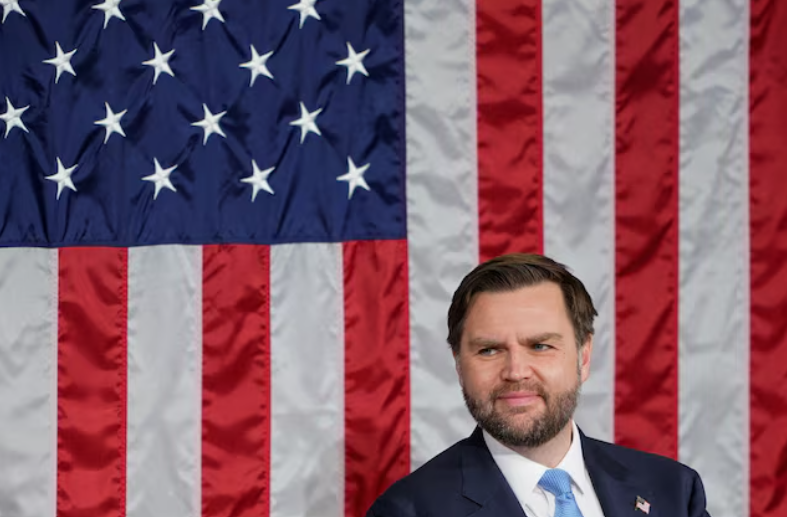

The United States has warned Iran ahead of the Geneva talks. Vice President JD Vance said Washington has evidence of renewed nuclear activity. Secretary of State Marco Rubio also raised concerns. He said Iran’s refusal to discuss its missile program could complicate negotiations.
US raises concerns over Iran’s nuclear activity before Geneva nuclear talks
Ahead of the Geneva meeting, US Vice President JD Vance repeated Washington’s position that Iran must never obtain nuclear weapons. Speaking to reporters, he said US intelligence had detected signs that Iran may be trying to restart nuclear-related work after earlier US-led strikes targeted Iranian nuclear sites in June.
Vance stated that rebuilding such capabilities would create serious problems for the United States, stressing that the principle remains simple: Iran cannot have a nuclear weapon.
He said the US president prefers diplomacy but warned that other options remain available if talks fail or if Iran continues activities seen as threatening. In earlier television remarks, Vance argued that a nuclear-armed Iran would pose a global security risk, reflecting long-standing US concerns about Tehran’s nuclear ambitions.
US says Ukraine war talks in Geneva make progress as fighting drags into fourth year
The Geneva talks will bring together US envoys Steve Witkoff and Jared Kushner with Iranian Foreign Minister Abbas Araghchi and his team, following months of heightened tensions after strikes that Washington says weakened Iran’s nuclear infrastructure.
Rubio flags ballistic missile dispute as major sticking point
While nuclear enrichment remains the main focus, US Secretary of State Marco Rubio highlighted Iran’s ballistic missile program as another major point of disagreement ahead of negotiations. He said Iran’s refusal to include missile discussions in talks is a “big, big problem.” US officials argue that long-range missiles raise serious security concerns because they could potentially carry nuclear warheads if developed.
American leaders believe any lasting agreement must address both nuclear activities and missile technology. According to Washington, limiting only nuclear development without addressing delivery systems would leave important risks unresolved.
The US president reinforced this stance during his State of the Union speech, warning that Iran was developing missiles capable of reaching the United States. He described Iran as a leading sponsor of terrorism and said he would not allow it to obtain nuclear weapons. The president also accused Iran of supporting violence and instability for decades and praised the earlier military operation “Op Midnight Hammer,” claiming it destroyed key nuclear facilities. However, he alleged Iran was trying to restart its efforts.
He also referenced past US military actions, including the killing of Iranian commander Qasem Soleimani, emphasizing Washington’s readiness to respond to perceived threats ahead of the Geneva talks.
Iran rejects US claims and defends nuclear program
Iran has strongly rejected accusations from US leaders, calling claims about rebuilding nuclear facilities and expanding missile threats false. In a statement, Iran’s foreign ministry described the allegations as “big lies” and denied secretly pursuing nuclear weapons. While the statement did not directly name the US president, it criticized the accusations and defended Iran’s nuclear activities as peaceful.
Foreign Minister Abbas Araghchi also addressed the issue ahead of the Geneva talks, saying Iran is prepared for both conflict and cooperation but remains hopeful that diplomacy can succeed. He repeated Iran’s long-standing stance that nuclear energy is its legal right under international agreements and insisted that the country has never sought to develop nuclear weapons and will not do so in the future.
Iran close to deal with China for supersonic anti-ship missiles that could threaten US Navy
Araghchi additionally criticized Israel, accusing it of trying to damage relations between Iran and the United States. He suggested that American views about Iran are shaped by misunderstandings and external influence rather than direct engagement with Iranian society.
Iranian officials continue to maintain that their nuclear program focuses on civilian energy and scientific progress. The sharply different positions taken by Washington and Tehran underline deep mistrust as negotiators prepare to meet in Geneva amid ongoing tensions and disputes over nuclear and missile issues.